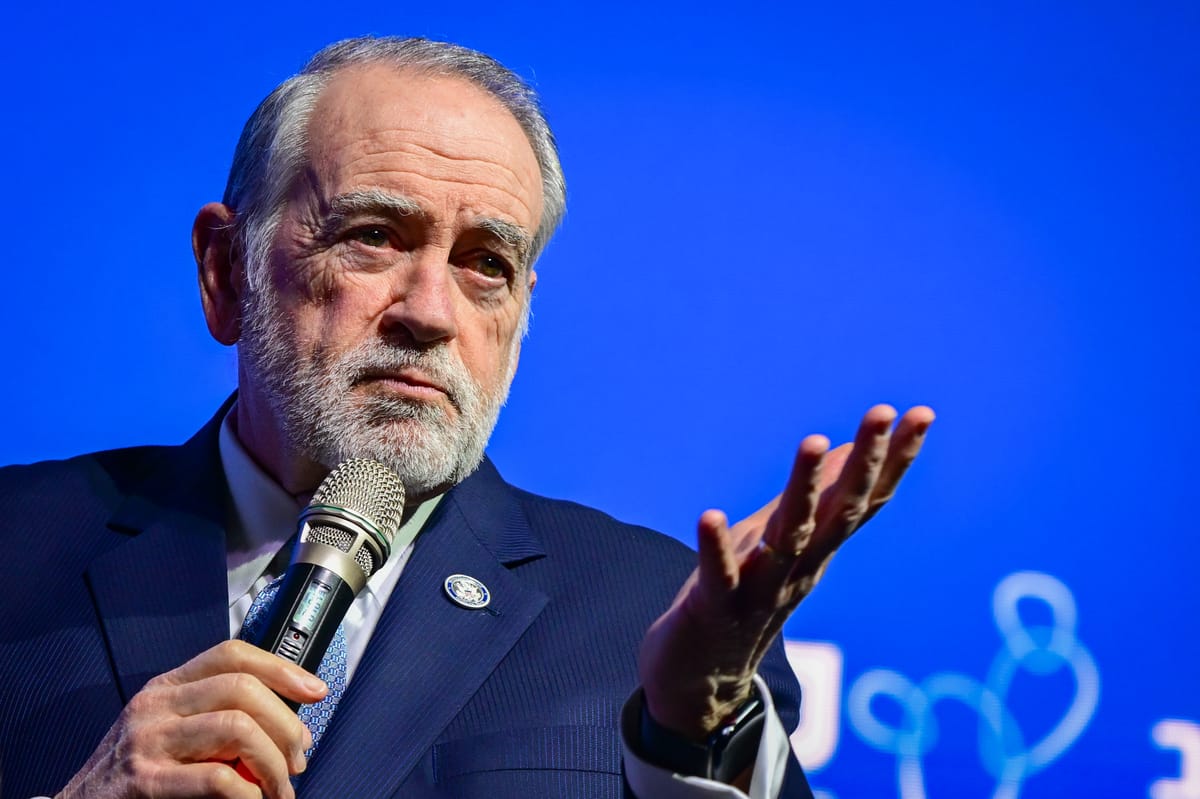
U.S. Ambassador to Israel Mike Huckabee ignited a fresh firestorm Tuesday when he told a conference in Judea and Samaria that the United States owes its very existence to Israel, a declaration that drew both fierce condemnation and passionate support, and put him in direct public conflict with his own president.
"Without Israel, without the Jewish foundation, there would not be America. We owe our very existence to what happened in this land," Huckabee told the International Conference on Israeli Heritage in Judea and Samaria.
The crowd loved it. The internet did not know what to do with it.
The Trump Contradiction
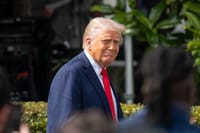
The most immediately striking aspect of the remarks was not the theology, it was the timing. Huckabee's assertions directly contradict President Donald Trump, who recently said the U.S. deserves total credit for Israel's ongoing survival. Speaking at the annual G7 summit in France, Trump delivered a sharp public dressing-down of Israeli leadership.
In other words: Trump says there would be no Israel without America. His own ambassador, standing on Israeli soil, just said the opposite, that there would be no America without Israel.
Huckabee's statements came following claims made by Trump that there would be no Israel without the US. The ambassador, a Baptist minister and former Arkansas governor who has never been shy about his Christian Zionist convictions, appeared entirely unbothered by the contradiction.
Who Is Huckabee, and Why Does This Keep Happening?
This is not the first time Huckabee has set off an international incident since taking the ambassadorship. During a prominent conservative interview with journalist Tucker Carlson, the ambassador repeatedly used the terms "Judea and Samaria" to describe the West Bank and affirmed Israel's expansionist territorial aims.
That interview produced perhaps the most explosive Huckabee quote to date. When Carlson asked him about the biblical promise of land spanning the area between the Euphrates River in Iraq and the Nile River in Egypt, Huckabee said: "It would be fine if they took it all."
Such territory would encompass modern-day Lebanon, Syria, Jordan, and parts of Saudi Arabia. Nearly every Middle Eastern country aside from Israel condemned those remarks in a joint statement. A statement led by the United Arab Emirates and backed by Saudi Arabia, Egypt, Jordan, Qatar and others denounced the comments as "dangerous and inflammatory."
Jordan's foreign ministry dismissed his remarks as "absurd and provocative," a violation of diplomatic norms and "an infringement on the sovereignty of states in the region."
Huckabee's views on the region have a long history. Back in 2008, Huckabee went so far as to question Palestinian identity altogether, saying, "There's really no such thing as a Palestinian."
What He Actually Meant — and Why It's Not Crazy
Here is the part that gets lost in the outrage cycle: Huckabee's theological argument, whatever one thinks of its diplomatic wisdom, is not without a serious intellectual tradition behind it.
The claim that American civilization is rooted in Hebrew scripture, Jewish monotheism, and the moral framework of the Torah is not fringe Christian Zionism. It is a mainstream argument made by serious historians, philosophers, and theologians across centuries. The Founding Fathers steeped themselves in Old Testament imagery, the Exodus narrative, the covenant, the concept of a chosen people with a providential mission. John Adams wrote that the Jews had "done more to civilize men than any other nation." The Puritan settlers saw themselves explicitly as a new Israel.
Huckabee, as a Baptist minister, is drawing on that tradition. Whether he is the right person, in the right diplomatic role, in the right geopolitical moment to be making that argument on a hilltop in Judea and Samaria is a separate and entirely legitimate question.
The Reaction
On social media, the remarks split predictably along existing fault lines. Pro-Israel voices celebrated the ambassador for saying plainly what many American Christian Zionists believe. Critics, ranging from Arab governments to American progressives to some within Trump's own orbit who found the comments diplomatically inconvenient, reacted with predictable fury.
Huckabee has consistently faced scrutiny for prioritizing Israeli interests over American ones. His detractors argue that an ambassador's job is to represent U.S. interests, not to deliver theological lectures that complicate U.S. diplomacy across an entire region.
His supporters argue that stating a deep historical truth about Western civilization's debt to Jewish tradition is not a diplomatic error, it is moral clarity.
The White House has not commented on the contradiction between the ambassador's remarks and the president's own framing of the U.S.-Israel relationship.
Huckabee, for his part, shows no signs of dialing it back.