The blue flame that has cooked countless meals in Maya Rani's kitchen flickered and died. When her husband carried their empty cylinder to the local refiller, he found nothing. Now she waits, day after agonizing day, outside a government office for a subsidy voucher that may never come—all while her six-month-old daughter cries in her arms, as reported by the Guardian today.
"I feel like crying," Rani said, sitting on the cracked pavement, her frustration barely contained. "We have been waiting for days and still don't know when we will get gas." Her husband cannot afford to miss work, so she makes the rounds. "We are eating just one meal a day from outside. I've had to ask neighbours to help boil milk for my baby."
The Guardian explains that Rani's story is now playing out across India. The closure of the Strait of Hormuz, a consequence of the escalating Iran war, has severed a critical artery in the global energy supply. Before the conflict, this narrow maritime chokepoint carried about a fifth of the world's fuel shipments, much of it destined for Asia. Now, India faces a liquefied petroleum gas crisis that is scrambling supply chains, forcing factories to shut their doors, and pushing millions toward hunger.
For years, energy analysts have warned of the Strait of Hormuz's vulnerability. "This level of exposure was absolutely anticipated," said Akhtar Malik of the Bureau of Research on Industry and Economic Fundamentals in Delhi. "The strait as a chokepoint and the risks it poses have been extensively studied and debated."
Yet India never prepared. While the country built strategic crude oil reserves, it built no equivalent buffer for LPG. Today, India maintains just over 20 days of LPG storage, far below the global standard of 40 to 60 days. The current stress, Malik explained, is as much a planning failure as it is a supply crisis.
With alternative supplies from the US taking weeks to arrive and costing far more, the Indian government has scrambled to ration domestic LPG. Refineries have been ordered to maximize production for household use. Supplies have been prioritized for hospitals and schools, leaving businesses to fend for themselves. The results are stark.
At Shawaya House, a celebrated restaurant in Delhi's Muslim neighborhood of Zakir Nagar, the menu has collapsed. "We have 30 items on the menu, but we're selling no more than six," said manager Nandu Kishore. "Even those are only possible because we've started using coal." With Eid al-Fitr approaching, when demand typically surges, the restaurant should be in its peak season. Instead, it is barely surviving.
The human toll is immediate and brutal. Shahidul Alam, 46, worked at a now-shuttered factory unit. On Wednesday, he waited at a railway station for a train home to West Bengal, jobless and desperate. "The manager told us the factory is shutting and we won't be paid," he said. "We were already struggling to get cooking gas. Without work, we can't survive—how will we eat?" For thousands of workers displaced by the crisis, the situation echoes the trauma of the Covid-19 lockdown, when industrial towns emptied as desperate workers fled home.
Tensions are rising visibly across the country. Distribution centers have become flashpoints of anger, with dealers reporting heated arguments turning ugly. LPG trucks, now carrying liquid gold—have become targets for thieves exploiting the shortage, per the Guardian's report.
Some households with means are adapting. Retailers report that demand for electric induction burners has exploded in recent weeks, with some Delhi stores reporting tenfold increases as families race to switch away from gas. But for the overwhelming majority, India's poor, there is no such escape route.
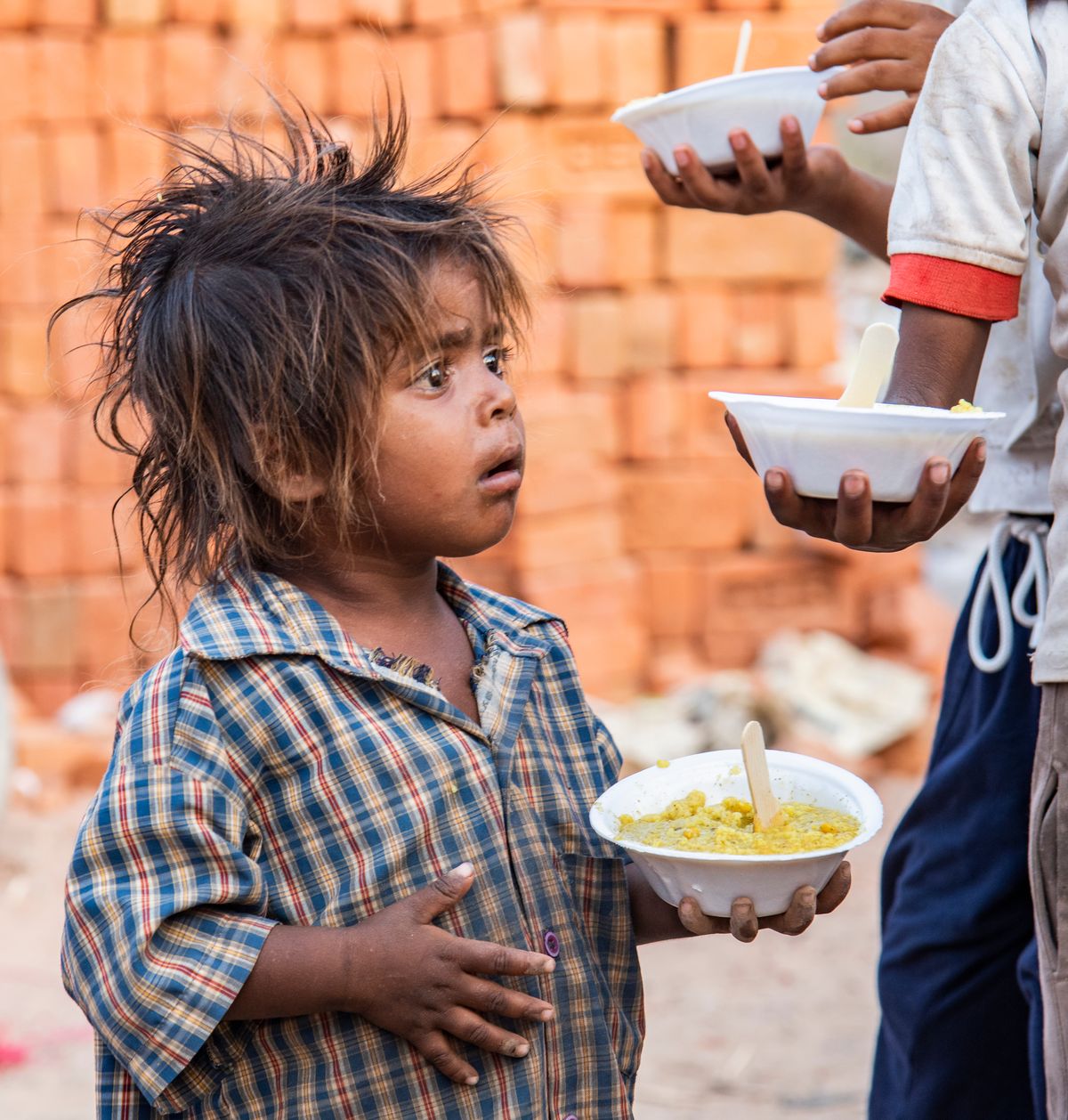
Ajay Mandal, 30, a construction laborer, said he felt genuine relief after his first proper meal in 24 hours at a government-subsidized canteen on Wednesday. The canteen, which serves meals for five rupees, had been shuttered for two days due to the gas shortage. His family of six includes elderly parents and toddlers. He works 10-hour shifts for 500 rupees a day, barely enough to survive. A gas cylinder that once cost 900 rupees is now selling for 4,000 on the black market. Roadside meals have doubled in price. "How are we supposed to survive?" he asked quietly, then added a stark thought: "People like us will have to eat grass if this goes on."
The Iran war has exposed not just India's energy vulnerability, but the fault lines of inequality running through the world's most populous nation. While the wealthy adapt, the poor face the prospect of genuine hunger in one of Asia's largest economies.