Iran is tearing itself apart from within.
A rare public dispute has erupted inside Iran's Assembly of Experts, the powerful clerical body responsible for appointing the Supreme Leader, after a majority of its members issued a statement on the U.S.-Iran memorandum of understanding, prompting an extraordinary public rebuke from the body's own leadership within hours.
The controversy began after more than 60 of the Assembly's 84 members published a statement that ventured far beyond the body's customary role, laying out detailed positions on the memorandum, the Strait of Hormuz, Lebanon, nuclear negotiations, and retaliation against the United States and Israel.
The signatories declared it a religious obligation to punish those responsible for the death of Ali Khamenei, with some calling outright for the execution of the officials who led the diplomatic engagement with Washington.
The backlash was swift and bitter. The Assembly's own presidium issued what observers described as an unprecedented public dressing-down of the signatories, accusing them of damaging institutional unity by airing political positions outside accepted channels.
That rebuke only deepened the crisis. Hardline media outlet Raja News, aligned with factions fiercely opposed to any contact with Washington, accused the secretariat of suppressing internal dissent and questioned how such a sweeping majority within the council could be dismissed.
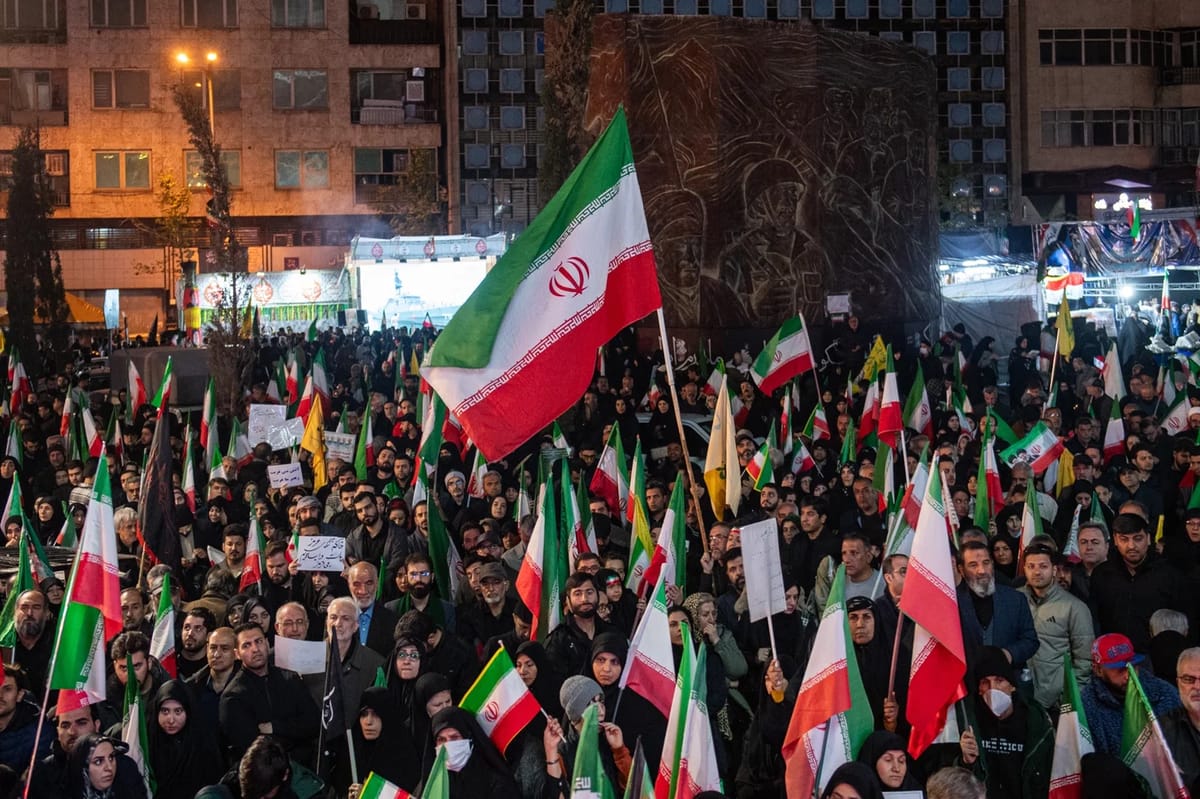
The fractures didn't stay behind closed doors. Islamist protesters arrived in Tehran from the city of Mashhad draped in white burial shrouds, transforming a national mourning site near the location of Khamenei's assassination into a flashpoint of anti-MOU fury. Authorities shut the site down entirely.
Iran's hardliners have directed their rage specifically at chief negotiators Abbas Araghchi and Mohammad Bagher Ghalibaf, with death chants at demonstrations. Hardline newspaper Kayhan went further still, with its editor, a direct representative of the Supreme Leader's office, writing that Iran's first negotiating demand should be the extradition of President Trump to stand trial in Iranian courts.
Experts who spoke to Iran International caution that the backlash, while combustible, is unlikely to derail the deal, which the ruling elite views as essential to the regime's survival. Much of the visible dissent appears to be emanating from the hardline Paydari Front, which sees itself as a guardian of the values of the 1979 revolution.
Iran's new Supreme Leader Mojtaba Khamenei has not yet commented on the memorandum.
Meanwhile, the country's financial infrastructure continues to buckle. Iranian newspaper Sharq reported that multiple major banks have suffered repeated cyberattacks, knocking out digital services and ATMs across the country. Technology experts told the outlet that the vulnerability stems from core banking infrastructure nearly three decades old, compounded by sanctions that have left Iran unable to modernize or adequately defend its financial systems.
US-Iran talks expected to resume in Switzerland have stalled amid recent hostilities. The clock is ticking: the Assembly's statement itself warned that the terms of the MOU must be resolved within the stipulated 30-day and 60-day deadlines, and that any prolongation of negotiations must be firmly avoided.