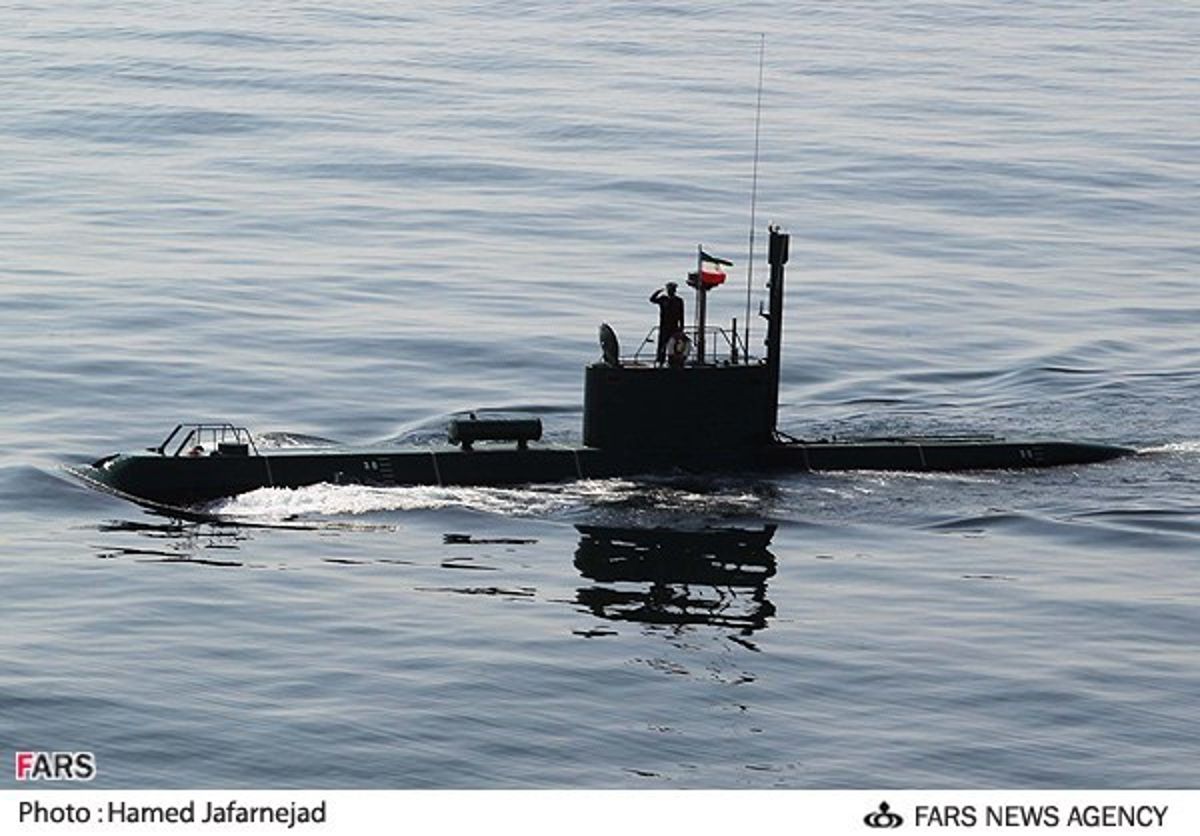
While American airstrikes target Iranian surface assets and missile infrastructure in the Persian Gulf, a quieter threat lurks beneath the water, one that is far harder to neutralize from the air.
As the United States works to keep the Strait of Hormuz open, the narrow passage through which approximately a fifth of global oil supply flows, military planners are grappling with an adversary that exploits the strait's unique geography rather than confronting American firepower directly. At the center of this challenge is a class of vessels that look almost laughably small by naval standards: Iran's Ghadir-class miniature submarines.
Built for the Shallows
The Ghadir is not a conventional weapon of war. Weighing in at around 120 tons and stretching less than 30 meters in length, it is roughly one-tenth the displacement of a standard attack submarine. For context, a U.S. Ohio-class submarine tips the scales at nearly 19,000 tons and runs close to 170 meters long. The Ghadir is, by comparison, a sliver.
But that small footprint is precisely the point. The Strait of Hormuz is notably shallow, in places no deeper than 30 meters, and its waters are clouded by sediment, ambient noise from tanker traffic, and interference from offshore drilling operations. These are conditions that defeat sophisticated sonar systems and frustrate aerial surveillance. They are also conditions that the Ghadir was purpose-built to exploit. Iran is reported to operate up to ten of these vessels.
A Dual-Purpose Threat
What elevates the Ghadir beyond a mere curiosity is its operational versatility. These craft can fire torpedoes at commercial shipping, but their more strategically significant capability is minelaying, deploying large numbers of naval mines across busy shipping lanes under the cover of darkness, without ever needing to surface.
Mine warfare is slow, patient, and devastatingly effective. Clearing a mined waterway is a painstaking and dangerous process that can take weeks, grinding international shipping to a halt long after any direct military confrontation has subsided. Tehran has reportedly spent decades studying Hormuz's environment and preparing its forces for exactly this kind of campaign, turning the strait's geography into a weapon.
A Broader Undersea Arsenal
The Ghadir is the sharpest point of a larger submarine force. Iran also fields the heavier Fateh-class boats, around 600 tons, equipped with more capable sonar and torpedoes suited for deeper water operations. Rounding out the fleet are older Nahang-class minisubs and three Soviet-era Kilo-class diesel-electric submarines, each around 3,000 tons, acquired from Russia in the 1990s. The Kilos, while capable in open water, are largely unsuited to the shallow-water environment where the Ghadirs operate most effectively. A newer mid-size class called the Basset has also been referenced, though little detail about its capabilities has emerged publicly.
Asymmetric Logic
The strategic calculus here is not about defeating the U.S. Navy in a head-to-head engagement , a battle Iran could not win. It is about blockade. A handful of mines, laid quietly across Hormuz's shipping lanes by submarines too small and too shallow-running to be easily detected or targeted from the air, could paralyze global energy flows without a single Iranian surface vessel firing a shot.
American military dominance in the air and on the surface remains unquestioned. But the Ghadir operates in a different domain, one where size is a disadvantage, where murky water is cover, and where the cost of disruption falls not on Iran but on the global economy.
Although some reports claim that all 11-17+ Ghadir-class midget submarines and larger submarines were destroyed during Operation Epic Fury, others suggest some vessels may still be hidden or unaccounted for.