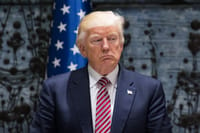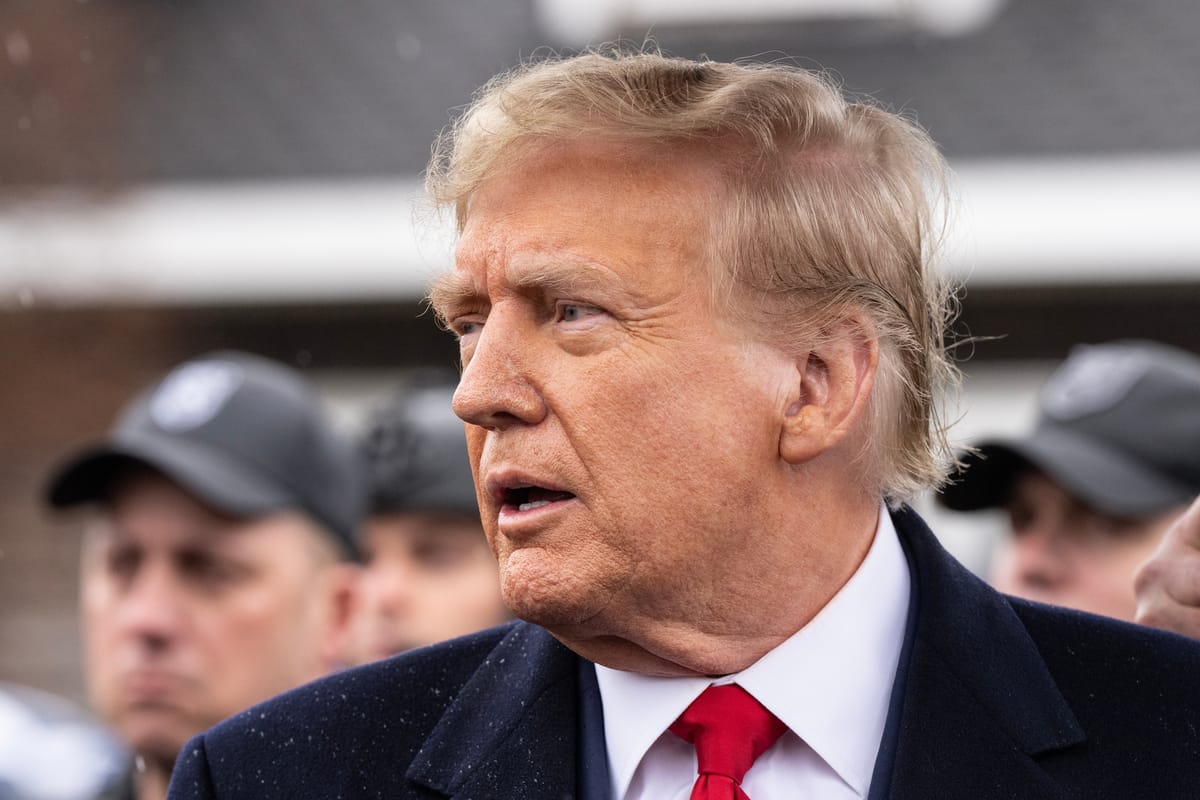
Nine weeks into a war that Donald Trump once promised would last no more than six, the president finds himself in a trap of his own making and the walls are closing in from every direction. The Iran conflict has become the defining liability of his second term, and no amount of bravado from the Oval Office can disguise what his own allies now acknowledge privately: the war is costing Republicans the midterms.
The numbers are unsparing. Trump's approval rating on his handling of Iran has collapsed to just 33 percent, according to an AP-NORC poll released last week. A separate Washington Post-ABC News-Ipsos survey puts his overall disapproval at 62 percent, the worst of either of his two terms in office. Most damaging of all, his approval among Republican-leaning independents has sunk to an all-time low of 56 percent. These are not numbers a party survives in a midterm environment.
"You're looking at an ugly November... at a point in time when we need every break possible to hold the House and Senate, our edge is being chipped away."
That warning came from veteran Republican pollster Neil Newhouse, speaking to PBS NewsHour. It is not the voice of a Democrat. It is the sound of a party in quiet panic. According to CNN, more than a half-dozen Republicans have privately told the network the conflict's economic ripple effects may have negated nearly all the gains they planned to campaign on, falling gas prices, easing inflation, the promise of a renewed American economy. All of it, incinerated in the Strait of Hormuz.
The economic mechanism of Trump's political crisis is straightforward. Before the war began, average national gas prices sat below $3 a gallon. As of this week they stand at $4.48, according to AAA, a near-record surge that more than 8 in 10 Americans say is straining their household budgets, per the latest NPR/PBS News/Marist poll. By a margin of 63 to 37 percent, those same respondents blame Trump for the increase. That includes a third of his own Republicans.
The Pentagon has told lawmakers the war has cost the United States $25 billion so far. Meanwhile, the political cost is accumulating faster. A NBC/Reuters/Ipsos poll found independent registered voters, the constituency that decides close elections, favoring Democratic congressional candidates by 14 points. Democrats need a net gain of just five House seats to retake the chamber. Republicans, by their own private admission, currently cannot guarantee they will hold it.
So what is Trump's strategy? On the surface, he projects iron confidence. "The blockade is genius," he told reporters last week. "Now, they have to cry uncle, that's all they have to do." He has posted AI-generated images of himself holding a gun. He has threatened to bomb Iran "off the face of the Earth." But beneath the performance, CNN reports, senior aides and allies privately acknowledge the political peril of maintaining the status quo.
The current approach rests on a naval blockade of Iranian ports and a shaky, repeatedly violated ceasefire brokered by Pakistan in early April. Trump has been reviewing a 14-point Iranian peace proposal, calling it a "workable basis on which to negotiate." His foreign envoy Steve Witkoff, when pressed on the state of talks, offered only: "We're in conversation." That is not the language of a man with an exit ramp in sight.
"Everything's on hold until the war's over."
That line, from a Trump adviser quoted by CNN, may be the most honest thing said about the administration's domestic political strategy in months. The White House had painstakingly built a midterm campaign around Tax Day affordability messaging, a pivot toward kitchen-table economics. The Iran war, launched on February 28 with Operation Epic Fury alongside Israel, shredded that plan. There is no fallback. There is only the war.
The president's timeline pressure is compounding. Under the 1973 War Powers Resolution, Trump faces a legal deadline requiring him to withdraw U.S. forces roughly 60 days after first reporting their deployment, a cutoff that arrives this week. Defense Secretary Pete Hegseth has argued the ongoing ceasefire nullifies that clock, a position that Senate Democrat Tim Kaine flatly rejected as legally unsupportable. Even some Republican senators, Susan Collins of Maine, John Curtis of Utah, Thom Tillis, Todd Young, have warned that continued military action requires congressional authorization it has not received.
Iran, for its part, is not capitulating. Tehran has rejected further negotiations unless the American blockade is lifted first. Trump has refused, insisting Iran must first surrender on nuclear enrichment. American intelligence, according to CNN, suggests Iran's economy may only have weeks to survive the blockade — but energy analysts told CNBC that Iran likely has months. Trump predicted the war would last six weeks. It has now stretched into its ninth, with no clear end in view.
History is unkind to presidents who fight unpopular wars heading into midterm elections. The 2006 cycle, when Republican fatigue over Iraq cost the party 31 House seats and six Senate seats, haunts every Republican strategist alive today. Forecasting models from Sabato's Crystal Ball and the Brookings Institution had already identified roughly 29 Republican-held seats as vulnerable before a single bomb fell on Tehran. The war has only widened that map.
Democrats are acutely aware of this. House Minority Leader Hakeem Jeffries has tied the war directly to affordability, framing Republican inaction on gas prices as a betrayal of working families. Senate Democrats have forced repeated war powers votes, putting Republicans on record again and again in an election year. The Republican National Committee, notably, has largely avoided the Iran war in talking points issued to surrogates.
The bottom line is this: Donald Trump did not enter this war with a plan to exit it. He entered it with the confidence that it would be short, decisive, and transformative, a display of American strength that would dominate the political landscape heading into November.
Instead, it has become the defining weight around his party's neck. The exit he is searching for is not diplomatic. It is electoral. And with six months to go before voters decide the fate of Congress, time is not on his side.