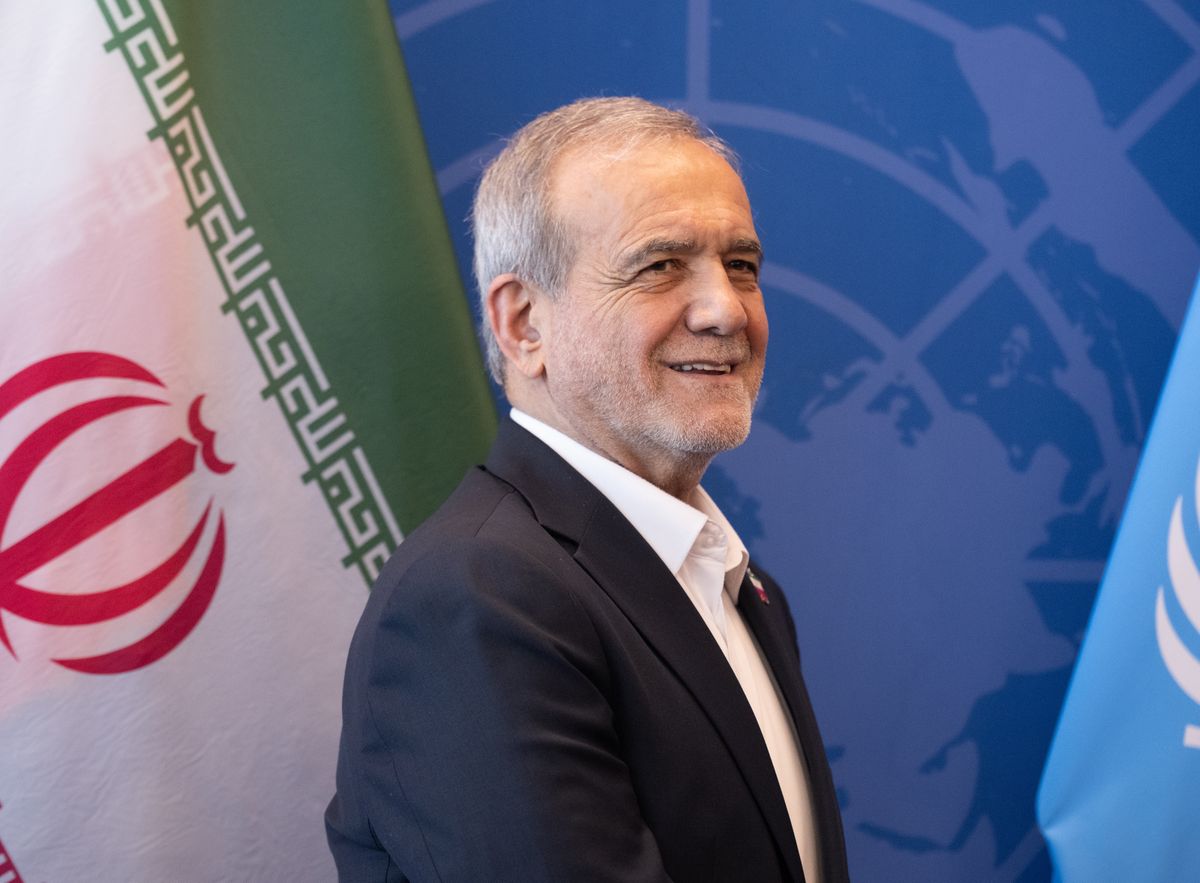
Iran's new Supreme Leader Mojtaba Khamenei only authorized the ceasefire and negotiation framework with Washington after President Masoud Pezeshkian threatened to resign if the deal was rejected, according to a New York Times report citing four Iranian officials. Pezeshkian reportedly warned Khamenei directly that Iran's economy was on the brink of collapse under the ongoing US naval blockade.
According to the report, Pezeshkian visited Khamenei in person to deliver the warning, telling him the economic situation had become dire. Iran's central bank governor separately warned the Supreme Leader that the country was facing a severe financial crisis, and that food and medicine supplies would run out by the end of August if the blockade continued. The combination of those appeals, according to the officials cited by the Times, proved decisive in Khamenei's final decision to back the agreement.
In his own written statement on the matter, Khamenei said he opposed the deal "in principle," but instructed the president to move forward if the Supreme National Security Council backed it. The council did, overwhelmingly, according to the report.
The episode adds new detail to the picture of an Iranian leadership in disarray since the killing of former Supreme Leader Ali Khamenei and the wounding of his son in the opening strikes of the US-Israeli campaign on February 28. Mojtaba, who has not appeared in public since being injured, has communicated with officials and the public almost exclusively through written statements, a pattern that has fueled growing questions inside Iran over who is actually steering the country.
The Times report described a broader split within the regime that runs deeper than the traditional reformist-hardline divide. On one side stands what the paper calls a more pragmatic camp, including Pezeshkian, Parliament Speaker Mohammad Bagher Ghalibaf, senior Revolutionary Guard generals, and Supreme National Security Council chief Mohammad Bagher Zolghadr, all of whom pushed for the memorandum of understanding and direct talks with Washington. Facing Mojtaba Khamenei directly, that camp has reportedly gained the upper hand for now, though hardliners have pushed back publicly, including in an incident this week in which a televised interview with Ghalibaf discussing the agreement was abruptly cut off mid broadcast.
Iranian officials quoted by the Times said the appointments Khamenei makes once the funeral period for his father concludes will offer the clearest signal yet of which camp he ultimately favors.