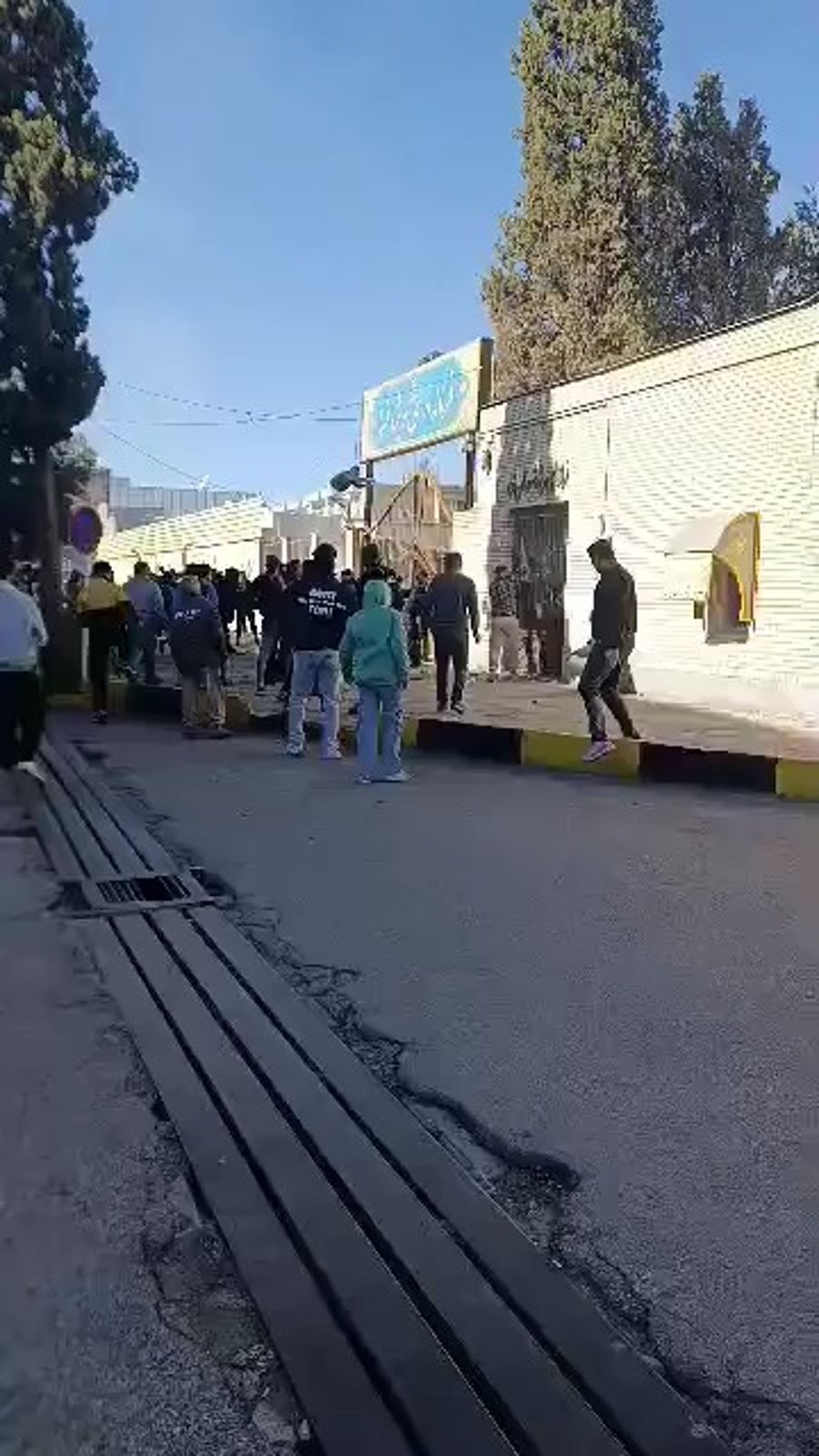
Protests across Iran entered a fourth day on Wednesday as new footage appeared to show regime security forces firing on demonstrators in the southern city of Fasa, underscoring an intensifying crackdown as unrest spreads nationwide.
Demonstrations, initially sparked by economic hardship and the rapid collapse of the Iranian rial, expanded to universities, commercial districts, and major urban centers, with security forces responding with arrests, tear gas, and live fire in several locations.
Human rights and student groups reported at least 11 arrests near Tehran’s Shoush Square, while five students were detained at universities in the capital. Four of those students were later released. At Tehran’s Amirkabir University, student outlets said one protester was severely injured after members of the Basij militia affiliated with the Islamic Revolutionary Guard Corps attacked a campus gathering.
Videos circulating on social media showed students chanting anti-government slogans, tearing down signs linked to offices representing the Supreme Leader, and confronting security forces at university gates. In some clips, officers appeared to retreat as crowds advanced. In others, security forces were seen firing tear gas and, in multiple locations, shooting toward demonstrators.
Footage from Fasa appeared to show armed security personnel opening fire in the direction of protesters. Similar scenes were reported in Hamadan, while riot police in Tehran and the nearby city of Malard used tear gas to disperse crowds. Heavy security deployments were reported in Tehran, Mashhad, and Kermanshah, with residents describing checkpoints, constant patrols, and the presence of both uniformed and plainclothes officers.