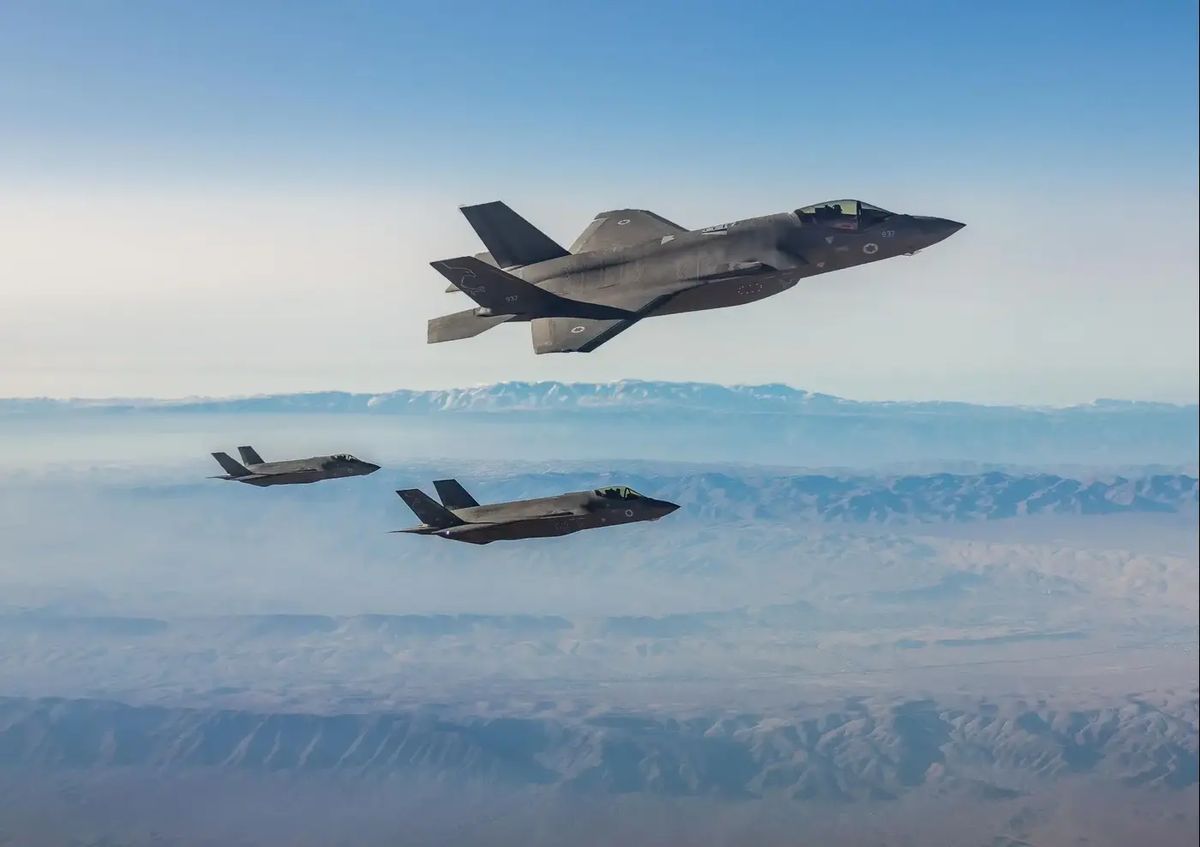
The Israeli defense establishment is entering a period of critical decision-making as they await the full details of the Trump-Xi summit in Beijing. While early signals from the meeting appear positive but vague, the IDF is completing its operational plans for every possible extreme scenario, including a massive, independent aerial offensive against Iranian nuclear sites. Jerusalem has made it clear to Washington that any agreement failing to remove 60% enriched uranium from Iranian soil is a non-starter.
Military analysts in Israel are warning that the Iranian regime is expert at identifying "blinking" or weakness from a distance. Security sources argue that a "slim" or limited strike designed only to bring Tehran back to the table would be ineffective. Instead, they are pushing the political echelon to consider a strategic blow to national infrastructure from the very start of any renewed hostilities. This approach is intended to collapse the regime's ability to govern and neutralize its nuclear breakout capability in one decisive move.
One of the primary concerns for Israeli intelligence is the role of Mojtaba Khamenei, the son of the Supreme Leader. He is identified as the key figure behind Iran’s current refusal to compromise, leading an ideological faction that refuses to back down on enrichment. His stance has created a head-on collision with the Trump administration’s requirements, leading many in the Kirya to believe that the diplomatic track is essentially a tactical ruse used by the Iranians to buy time.
The Israeli cabinet is weighing three distinct options: a combined U.S.-Israeli massive strike, a localized "warning" strike, or a continuation of the economic "stranglehold." While the economic siege could potentially lead to a domestic uprising within months, there are fears that the White House may not have the patience to wait, especially as global energy prices continue to fluctuate. This creates a dangerous timeline where Israel might feel forced to act alone to prevent Iran from reaching the "point of no return."
A major coordinated action between Israel and the U.S. would likely trigger a multi-front regional war, testing the endurance of the Israeli home front. Despite the risks, senior IDF generals, including Chief of Staff Eyal Zamir and the heads of Military Intelligence and the Air Force, maintain a unified front. They believe that deferring a decision only allows Iran to rebuild its proxy networks and scientific knowledge, making a future confrontation even more costly and difficult.
The coming 24 hours are expected to be some of the most tense in recent history as the diplomatic reports from Beijing are analyzed. If Jerusalem concludes that the summit did not produce a concrete Iranian commitment to disarm, the order for "Operation Lion's Roar" to expand into the heart of Iran could be issued. Israel's leadership remains focused on the absolute destruction of the nuclear threat, regardless of the diplomatic friction it may cause with its Western allies.