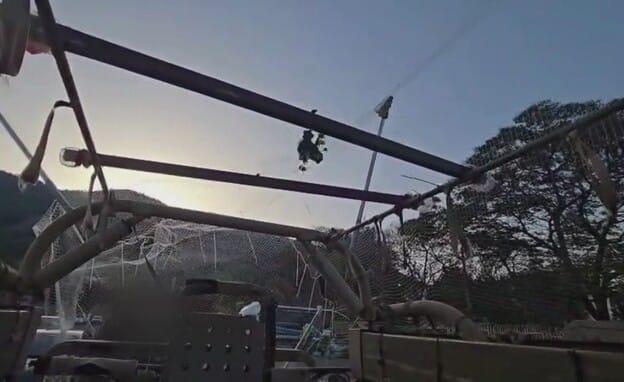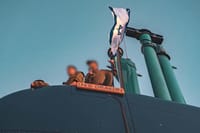
The Israel Defense Forces have begun a massive deployment of wire netting across the Lebanese front to counter the increasing threat of explosive suicide drones. Led by the Ground Forces Technology Brigade, the military is issuing specialized anti-explosive mesh to units operating in southern Lebanon. This physical barrier is designed to prematurely detonate or snag drones before they can reach high-value targets like troop clusters, command centers, or armored vehicles.
To date, approximately 158,000 square meters of this netting have been distributed to forces in the field. This volume is already staggering, but the military is currently in the process of procuring an additional 188,000 square meters to be delivered in the coming weeks. To put the scale into perspective, the total amount of netting acquired so far is equivalent to the area of roughly 20 soccer fields, marking one of the largest defensive engineering projects of the current war.
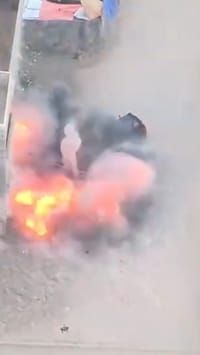
The urgency of this deployment was highlighted by a coordinated attack on May 12, where Hezbollah launched a four-drone strike on an IDF position along the border. During that incident, two mobile military communications shelters, a Merkava Mk 4 tank, and a D-Max pickup were all successfully targeted and hit. The success of such strikes has forced the IDF to seek immediate physical solutions to supplement their electronic warfare and air defense systems.
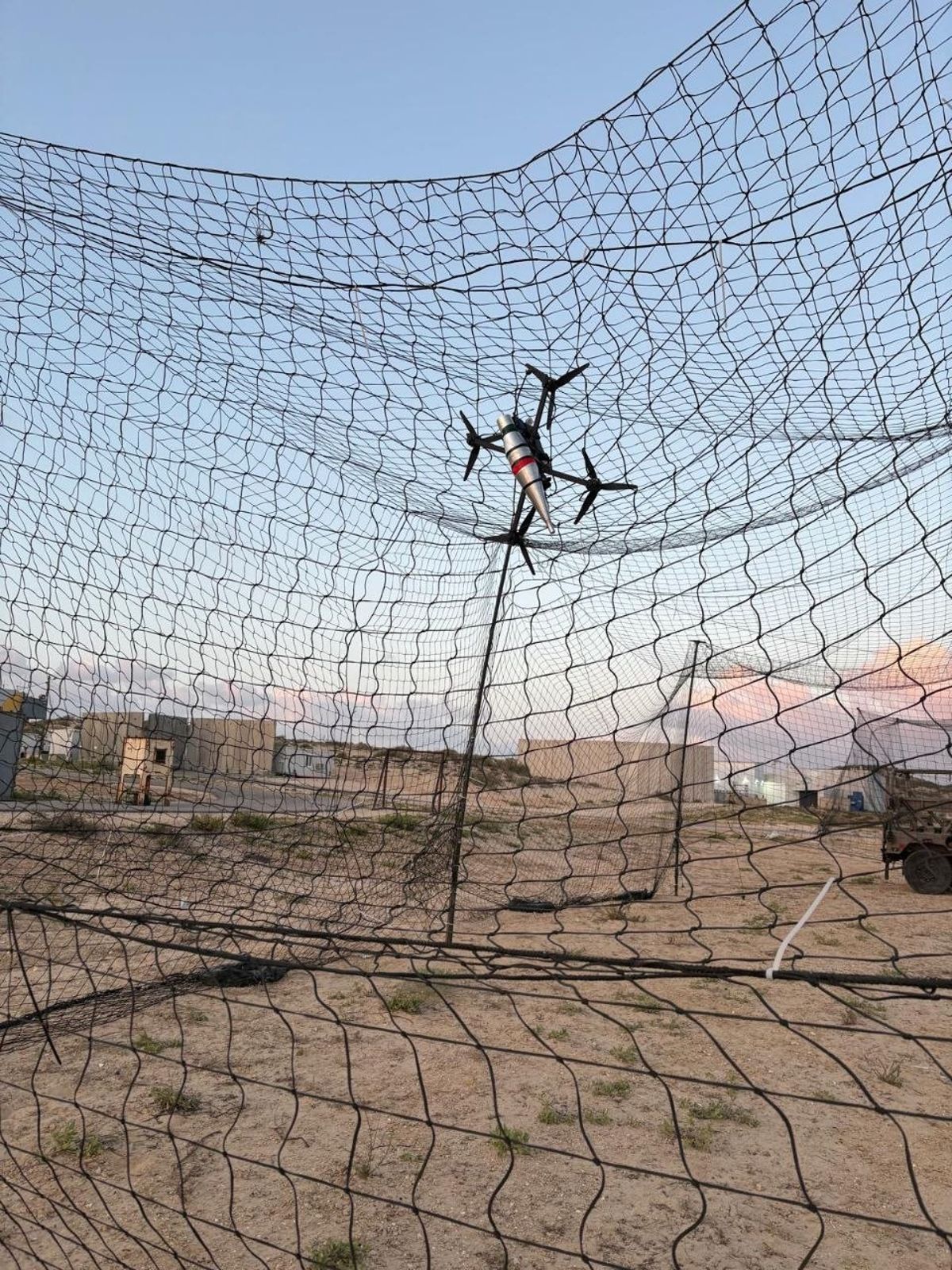
In the file PHOTO-2026-05-14-20-58-44.jpg, the military demonstrated the effectiveness of the countermeasure. The images show various types of wire mesh installed over military posts and vehicles, with one frame clearly showing a captured drone entangled in the netting. The IDF statement clarified that the drones shown in these trial images are part of an ongoing evaluation to refine how the mesh is deployed to ensure maximum protection for the soldiers.
The threat from Hezbollah's drone fleet is significant and multifaceted. Since the start of the war, the terrorist organization has launched 450 surveillance drones, 120 fiber-optic-guided "wired" suicide drones, and 120 standard wireless suicide drones at Israeli forces. While Israeli interceptors and jamming technology are effective, the sheer volume of attacks necessitates a physical "last line of defense" that can stop a drone even if its navigation systems remain functional.
Despite the deployment of these "soccer field" sized defenses, the battle for the skies over southern Lebanon remains intense. Just this week, nearly 200 terrorists were eliminated in Lebanon through targeted strikes and ground combat, yet the drone launches continue. For the soldiers on the ground, these wire nets represent a vital layer of security, turning a high-tech aerial threat into a manageable tactical problem.