Lebanon went to Washington asking for help getting Israel out of its south. Washington sent back a message that amounted to a reprimand.
According to sources close to the Lebanese government, Beirut recently approached the United States and asked it to apply increased pressure on Israel, specifically, to enforce a comprehensive ceasefire and compel an IDF withdrawal from southern Lebanon ahead of the next round of negotiations. The White House didn't just decline. Senior American officials made clear that the request itself had caused irritation, with the administration viewing the neutralization of Hezbollah as a non-negotiable precondition for any agreement, not a matter to be bargained away under diplomatic pressure.
The message delivered to Lebanese representatives was unambiguous: the US has already been working to limit Israeli strikes on Beirut, and it will continue doing so. But any Israeli withdrawal from Lebanese territory is fully conditional on Hezbollah's disarmament. An agreement that sidesteps that issue, American officials said, would only "create the conditions for the next war." Israel and the US did agree to extend the current ceasefire in its existing form to allow negotiations to continue, but on their terms, not Beirut's.
A 10-Kilometer Reality on the Ground
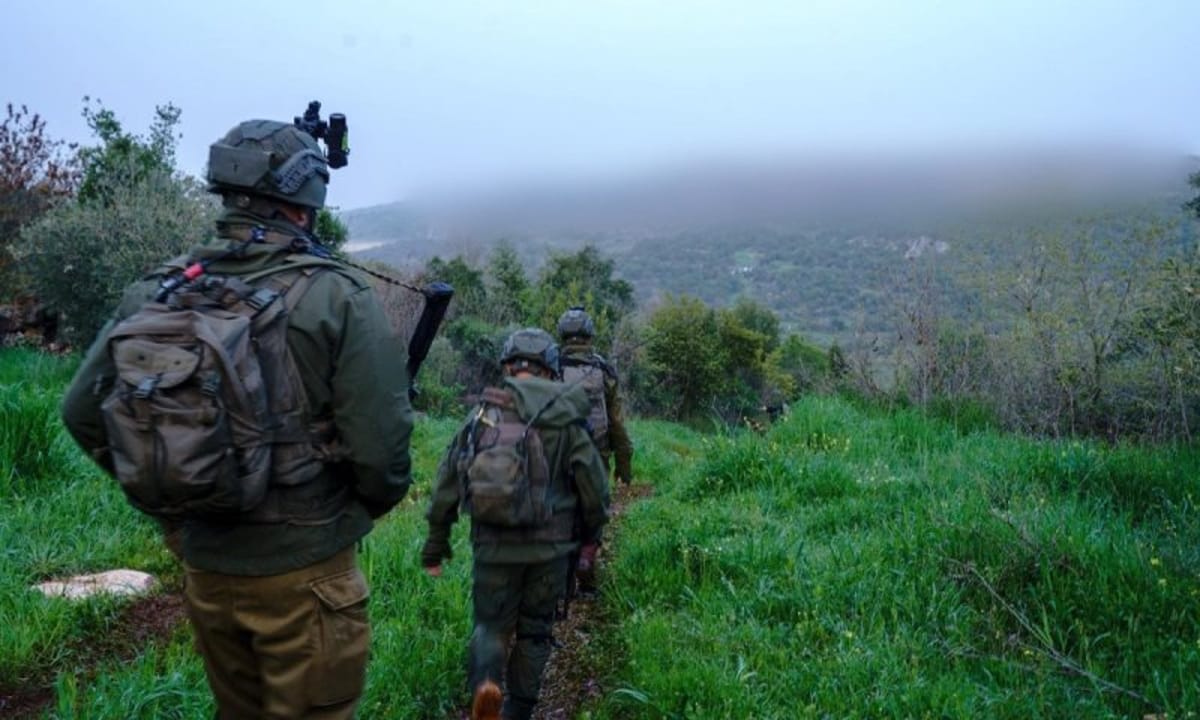
The diplomatic exchange reflects a military reality that is already being physically constructed in southern Lebanon. Israel has established what it calls a "Yellow Line" security zone extending up to 10 kilometers north of the border, giving it control over a line of anti-tank fire and the ability to deploy heavy armor and artillery inside Lebanese territory.
Five Israeli maneuvering divisions are currently deployed in Lebanon, the same number that were inside Gaza at the height of that conflict. A source briefed on the matter told NPR that Israel has no intention of withdrawing from the buffer zone for the coming months and potentially years, unless it sees tangible progress on Hezbollah's disarmament.
The zone is being shaped in ways that suggest permanence. Defense Minister Israel Katz has signaled that border villages, long used as Hezbollah staging grounds, are being demolished to create a sterilized perimeter, and Netanyahu has described the goal as a "solid, deeper security zone" designed to prevent any Hezbollah ground force from approaching Israeli territory.
The Drone War That Changed the Calculus
A key driver of Israel's insistence on a deeper buffer is a threat that didn't exist in the same form during its previous occupation of southern Lebanon: fiber-optic FPV drones that cannot be jammed by standard electronic warfare systems. Unlike GPS-guided munitions, these drones run on physical tethers, making them immune to the jamming that Israel has used effectively against other aerial threats.
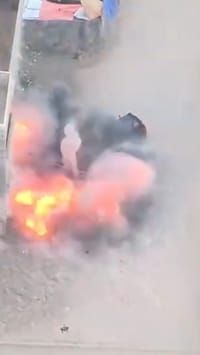
Hezbollah has already deployed drone swarms against Israeli troops inside Lebanon, including attacking a newly established Israeli artillery position with coordinated strikes. Former Israeli Air Force commanders speaking at a conference in Netanya on Thursday acknowledged that Israel "arrived unprepared" for this threat in Lebanon, and that the primary solution, interception at the point of launch, has not yet been fully developed or deployed.
The 10-kilometer buffer is, in part, a geographic answer to a technological problem: put enough distance between Hezbollah's launch teams and the Israeli border that even unjammable drones run out of range or tether before reaching civilian communities.
Hezbollah Says No - Loudly
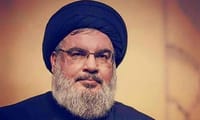
If Israel and the US are holding firm on disarmament as the price of withdrawal, Hezbollah's answer so far has been equally unambiguous. Hezbollah leader Naim Qassem declared in a televised address that the group's weapons are strictly an internal Lebanese matter and will not be placed on the negotiating table, warning: "We will not abandon the field. We will turn it into hell for Israel."
As of mid-May 2026, the US-brokered ceasefire, technically in place since April 17 and subsequently extended, is widely viewed as existing only on paper, with daily military exchanges continuing on the ground and Israeli forces maintaining their foothold across roughly 6% of Lebanese territory.
The Lebanese government finds itself caught between incompatible pressures: it cannot be seen endorsing Israeli influence over Lebanese soil, yet its own institutions cannot compel Hezbollah to disarm, and the international environment, with Iran under unprecedented military and economic strain, offers Hezbollah less cover than at any point in recent memory.
The Wider Picture
Direct talks between the Israeli and Lebanese ambassadors to the US took place in Washington on April 14, framed as exploratory negotiations. Lebanon emphasized ending hostilities and securing an Israeli withdrawal; Israel insisted on Hezbollah's disarmament. The two positions have not moved measurably closer since.
What has moved is the ground. Each week that negotiations stall, Israel deepens its physical presence in the south, clearing terrain, demolishing structures, and establishing what it describes as forward defense lines. The message to Beirut, delivered both diplomatically through Washington and kinetically through bulldozers and airstrikes, is the same: the IDF will stay as long as it takes.
Lebanon asked America to change that equation. America told Lebanon to change Hezbollah instead.