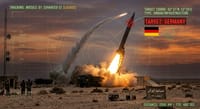
The escalation surrounding Iran has transcended the security realm, causing significant disruption to the global tourism industry. Travelers are increasingly avoiding unstable regions, leading to a sudden surge in demand for European destinations. The ripple effects of the current regional situation are being felt throughout the aviation and tourism sectors.
Escalating fuel costs, coupled with the need for airlines to alter flight paths to avoid sensitive airspace, have resulted in longer travel times and higher ticket prices. Major aviation hubs in the Gulf, including Dubai, Abu Dhabi, and Doha, are facing logistical constraints that directly impact travelers’ wallets.
Research from the IFO Institute in Munich reflects a sharp decline in tourism industry sentiment, with the sector index dropping to minus 41.7 points in March compared to minus 14.8 the previous month. The proximity to the theater of war, even in areas where the actual security risk remains low, is enough to deter tourists. Data shows a more than 90 percent drop in bookings for the United Arab Emirates, alongside sharp decreases in tourism to Egypt, Turkey, and Greece. Even more distant areas like Thailand have reported drops in bookings, with suppliers on the island of Koh Samui reporting a 50 percent decline in demand during the Songkran festival.
Despite warnings from international bodies regarding potential jet fuel shortages in Europe, the travel industry has not stalled; it has simply changed direction. Germany has seen a 60 percent increase in domestic tourism, and tour operators are reporting that 75 percent of summer bookings are now focused on European destinations, with Spain, Italy, Portugal, and Scandinavia serving as the primary beneficiaries. Even central and eastern European countries, including the Czech Republic, Croatia, and Austria, are anticipating a wave of new visitors as airlines shift their focus. Lufthansa Group, for instance, has announced an addition of 1,600 flights to its summer schedule, primarily targeting southern Europe, as the aviation industry adapts to the changing landscape of global stability.