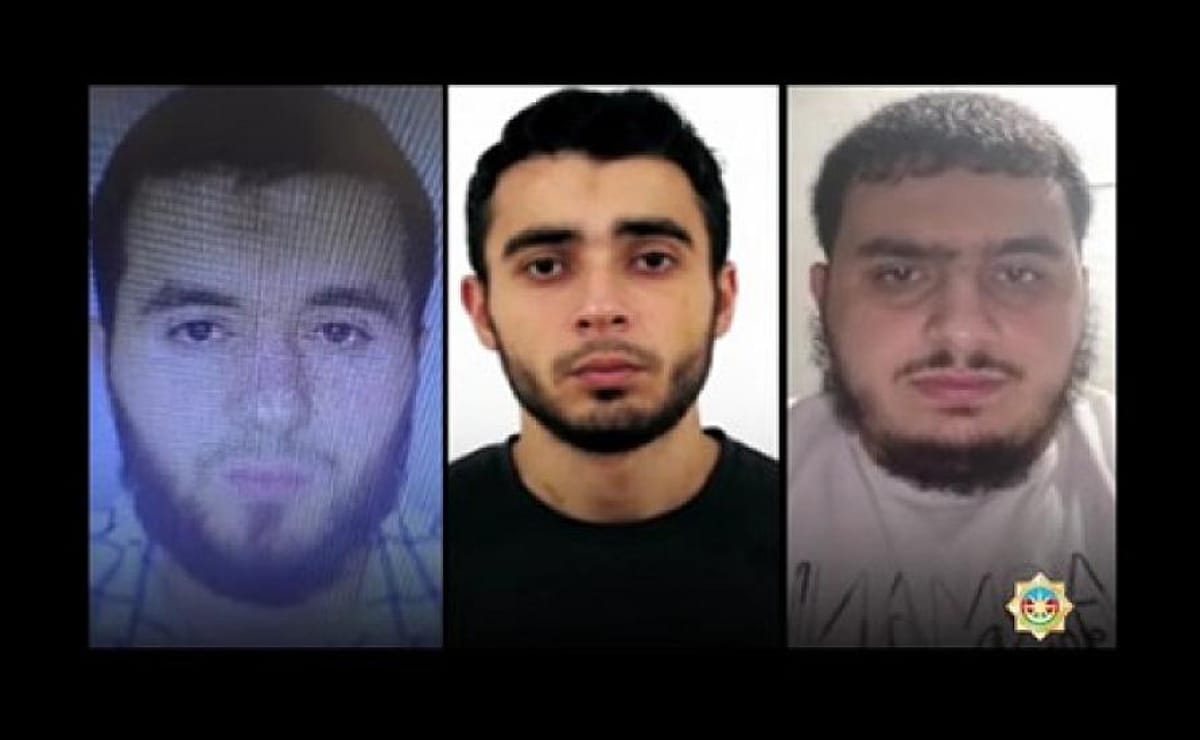
Azerbaijan’s State Security Service (DTX) has successfully neutralized a terror cell linked to ISIS-K that was in the advanced stages of a lethal plot to attack the Israeli Embassy in Baku. The operation, which led to the arrest of three Azerbaijani citizens in their early 20s, resulted in the seizure of an arsenal of firearms, ammunition, and improvised explosive devices. This breakthrough comes at a critical geopolitical moment, occurring just one day after Israeli Foreign Minister Gideon Sa’ar concluded a high-level diplomatic mission to Baku to strengthen energy and security ties with President Ilham Aliyev. The thwarting of this attack not only highlights the operational efficiency of Azerbaijan’s security apparatus, often compared to Israel’s Shin Bet, but also sheds light on the grave security environment that previously forced the relocation of major international Jewish events from the region due to the dual threats of Sunni extremism and Iranian-backed proxies.
The Suspects and the Plot
The DTX identified the three detained terrorists as Guliyev Ilgar Ilham oglu, known by the alias “Abu Zar al-Muhajir,” Piriyev Amin Elshad oglu, nicknamed “Abdurashid,” and Alizade Elvin Sanan oglu, referred to as “Abdurrahman al-Azari.” According to security officials, the cell had transitioned from ideological radicalization to active operational planning, which included detailed surveillance of the embassy’s physical perimeter and the specific transit routes used by Israeli diplomats stationed in the capital. The group was motivated by “religious hostility” and had coordinated with broader ISIS-K networks to procure the weaponry necessary for a mass casualty event.
The court has ordered the preventive arrest of the suspects as investigators continue to trace the origins of their funding and explosive materials. This specific branch of ISIS, known as the Khorasan Province, has a history of high-profile brutality, including the March 2024 attack on Crocus City Hall in Moscow where 150 people were murdered. The Baku cell intended to replicate this level of violence, utilizing a combination of small arms fire and IEDs to strike at the burgeoning Jerusalem-Baku alliance.
A Crossroads of Global Threats
Azerbaijan is increasingly finding itself at the center of a shadow war, battling both the Sunni threat of ISIS-K and the Shi'ite threat of Iranian-backed groups like the Husseiniyyun, often called the "Hezbollah of the Caucasus." These Iranian proxies aim to destabilize the secular government of Azerbaijan and punish it for its strategic cooperation with Israel. The depth of this threat was illustrated recently when a man affiliated with ISIS-K was sentenced to 13 years for a plot to firebomb a synagogue in Baku with Molotov cocktails.
The reality of these threats explains the extreme caution taken by Israeli intelligence, which recommended moving the European Rabbis Conference to Jerusalem last November despite Azerbaijan’s assurances. As Gideon Sa’ar hails the leaders of Azerbaijan and Kazakhstan as visionaries for their roles in the expanding Abraham Accords, the DTX continues to work in lockstep with Israeli agencies to monitor these extremist networks. The failure of the embassy plot marks a significant victory for the strategic partnership between the two nations, ensuring that diplomacy continues even as terrorists attempt to use the region as a battlefield.