Get our mobile app
Download on the App StoreGet it on Google Play

Crisis in the Ayatollahs' Regime

Iran Speaker: Regime Faces Internal Suicide

Mohammad Bagher Ghalibaf's unprecedented public confession of criminal negligence and economic collapse exposes deep fractures in Tehran's leadership — and signals a regime at war with its own people

Tehran in turmoil

The cracks at the heart of Tehran's power structure have never looked so stark or so lethal. In a rare moment of truth-telling that crossed every red line the regime has drawn, Iran's parliament speaker Mohammad Bagher Ghalibaf did the unthinkable: he declared out loud what millions of Iranians dare only whisper behind closed doors. While the country is drowning in a merciless economic and military war with the United States, Ghalibaf announced that the people are indeed willing to die for the struggle — but will not bear "one more second of failed management and criminal negligence."

Those earth-shaking sentences instantly became the epicenter of a political earthquake. While the regime's gatekeepers tried to contain the fallout, opposition analysts in Iran did not hesitate to define the event as "the regime's official declaration of suicide from within."

Even if some try to present this as calculated rhetoric, the reality on the ground is completely different: Iran today stands not only against a terrifying external enemy in American crosshairs, but is crumbling from within before a deep, brutal and irreversible internal abyss that could swallow the entire regime.

External Threats, Internal Screams

Ghalibaf, a veteran conservative figure who previously served as a senior commander in the Islamic Revolutionary Guard Corps and as Tehran's mayor, found himself climbing a tall tree trying to maneuver between two completely contradictory messages that are tearing the regime apart from within.

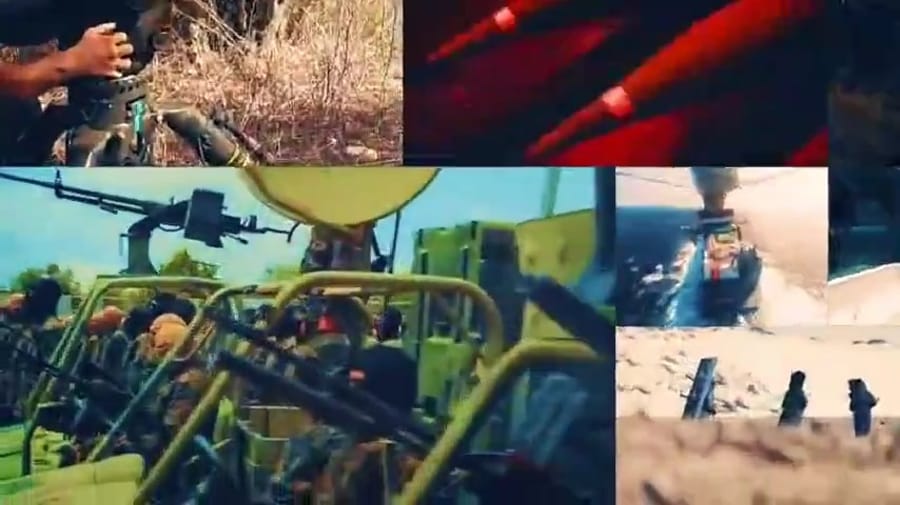
Externally, he broadcast an utterly unrestrained militant tone and made clear to the Americans that "the era of measured responses has passed from the world. Any aggression against Iran's security will be answered with a swift, heavy blow several times more painful." According to him, the rules of the game have changed from end to end.

But immediately afterward came the earth-shaking internal admission: dizzying economic collapse, a reeling currency exchange rate, rampant inflation and market management bordering on criminal abandonment have put Iranian citizens on the edge of an abyss. "This people is ready to stand against the enemy to its last drop of blood," he declared with rare and searing honesty, "but it will never again bear failed management and criminal negligence. This is its inalienable right."

This dramatic admission did not fall into a vacuum. Under the iron blow of American sanctions, the choking naval blockade and an endless war, food and fuel prices have skyrocketed to fantastical dimensions, and the gaping chasm between the religious leaders and the burning, hungry street has become wide and unbridgeable.

Why "Suicide"? The Real Threat From Within

Behind the parliament speaker's bitter words lies a far darker reality that senior analysts are not ashamed to call by its explicit name: "regime suicide." Critical analysis of the statement exposes three critical cracks that endanger the regime's future more than any external threat:

1. Fear of 'popular explosion': When a distinctly conservative figure like Ghalibaf openly admits that the public has reached the absolute limit of its capacity, he shatters the regime's image of invincibility. This admission proves that the greatest threat to the ayatollahs' rule does not come from an American or Israeli missile, but from an enraged street that has nothing left to lose.

2. The blind strategic trap: The Iranian regime continues to pour billions into regional confrontations, ostentatious military projects and proxy funding, while the domestic economy plunges into the abyss. Leadership that chooses to ignore its citizens' empty refrigerators and deepens with its own hands the disconnect from the people — sentences itself to political suicide with open eyes.

3. Leadership wars exposed: Beyond the public criticism, the speech reflects fierce power struggles within the regime's own garb. Ghalibaf is essentially trying to defend parliament and place blame on competing government mechanisms, but in doing so he exposes to the entire world the deep cracks and fractures tearing apart the country's leadership from within.

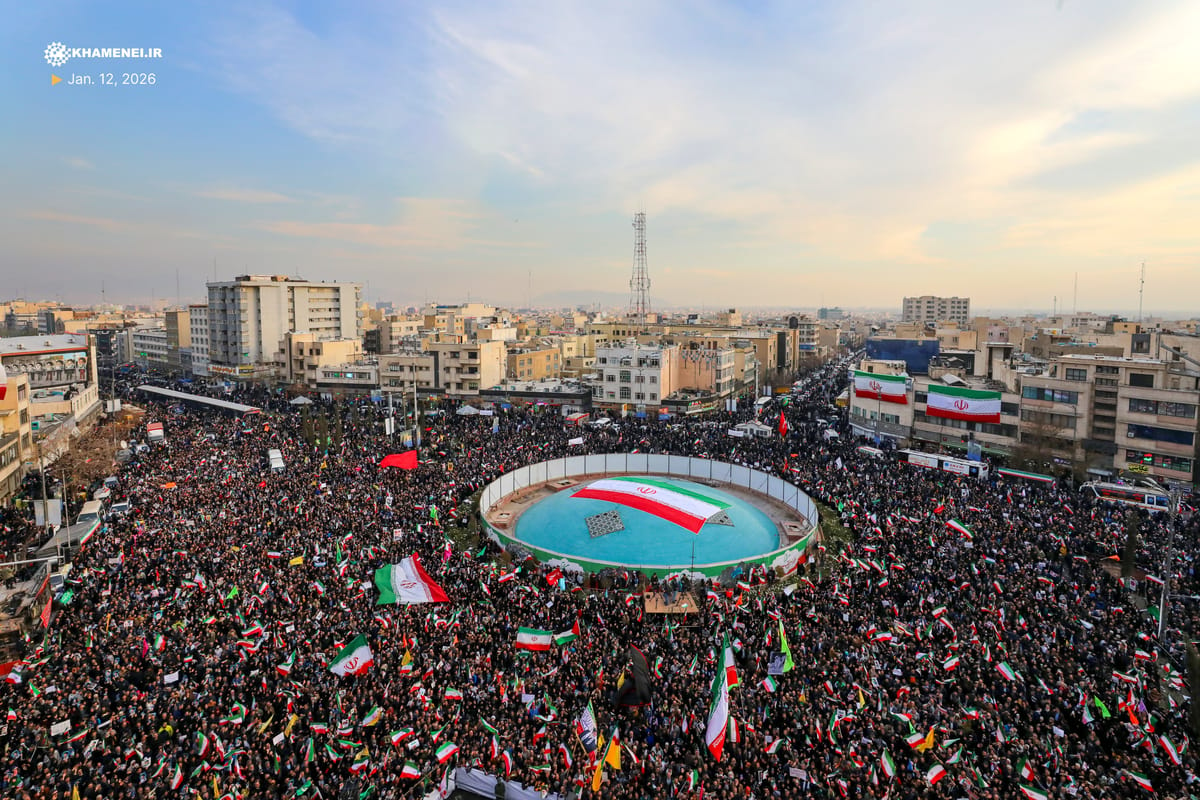
Iranian propaganda
Iranian propaganda (Photo: Khamenei's account)

Ghalibaf's earth-shaking speech did not merely expose the cracks — it immediately ignited an open war between three central camps in Iran's leadership and street, each of which interpreted the words through its own agenda.

1. The Street and Opposition: "You're Part of the Corruption"

The general public and opposition bodies responded with unrestrained rage and cynicism. On social networks, citizens asked with bitter justice: "What failed management are you wailing about? You yourself have been running this system for decades." Users rushed to resurface dark corruption scandals connected to Ghalibaf and his family members, and presented his attempt to don the mantle of "defender of the people" as pure hypocrisy.

2. The Reformist and Moderate Stream: "The Hard Line Has Failed"

The moderate camp and reformists seized the speech with both hands as a powerful political weapon. From their perspective, an admission by a senior conservative figure like Ghalibaf is official confirmation that the regime's hard and oppressive line has collapsed. Their message is sharp: if the central problem is not only external sanctions but internal managerial rot, the time has come to return to diplomacy and seek removal of the economic siege.

3. Radical Conservatives: "Weakness in Wartime"

From the other side, the extremist camp within the regime treated the speech as an unforgivable act of weakness. His critics accused Ghalibaf of fatally damaging national morale in the midst of war and providing ammunition to enemies. Their demand was unequivocal: zero self-criticism, absolute resilience and unity of ranks at any price, even as the country drowns in problems.

Summary: The Dangerous Game Threatening to Dismantle Iran From Within

Ghalibaf tried to accomplish the impossible: broadcast muscle and harsh threats externally, while simultaneously admitting in soft language an internal collapse that is already hard to hide. The result is a disturbing picture of an entire regime trapped in lethal pincers from every direction.

From outside, military and economic pressure does not relent for a moment; from within, the people are exhausted to the bone, the economy is bleeding, and the political leadership is torn and shattered.

The harsh expression "regime suicide" may not be official, but it precisely embodies the accumulating feeling: the blind policy of regional military adventurism at the expense of citizens' basic needs is pushing the Islamic Republic straight into a direct and bloody collision course with its own public.

Now, the great question hovering over Tehran no longer concerns only resilience against external pressure. The truly threatening question is how much longer the ayatollahs' regime can force its citizens to bear the unbearably heavy price — a moment before the crack that even a senior conservative admitted out loud becomes an open, final and irreversible break.

Ready for more?

Join our newsletter to receive updates on new articles and exclusive content.

We respect your privacy and will never share your information.

Enjoyed this article?

Yes
No
Follow Us:

Unmissable content


Loading comments...

Also of Interest