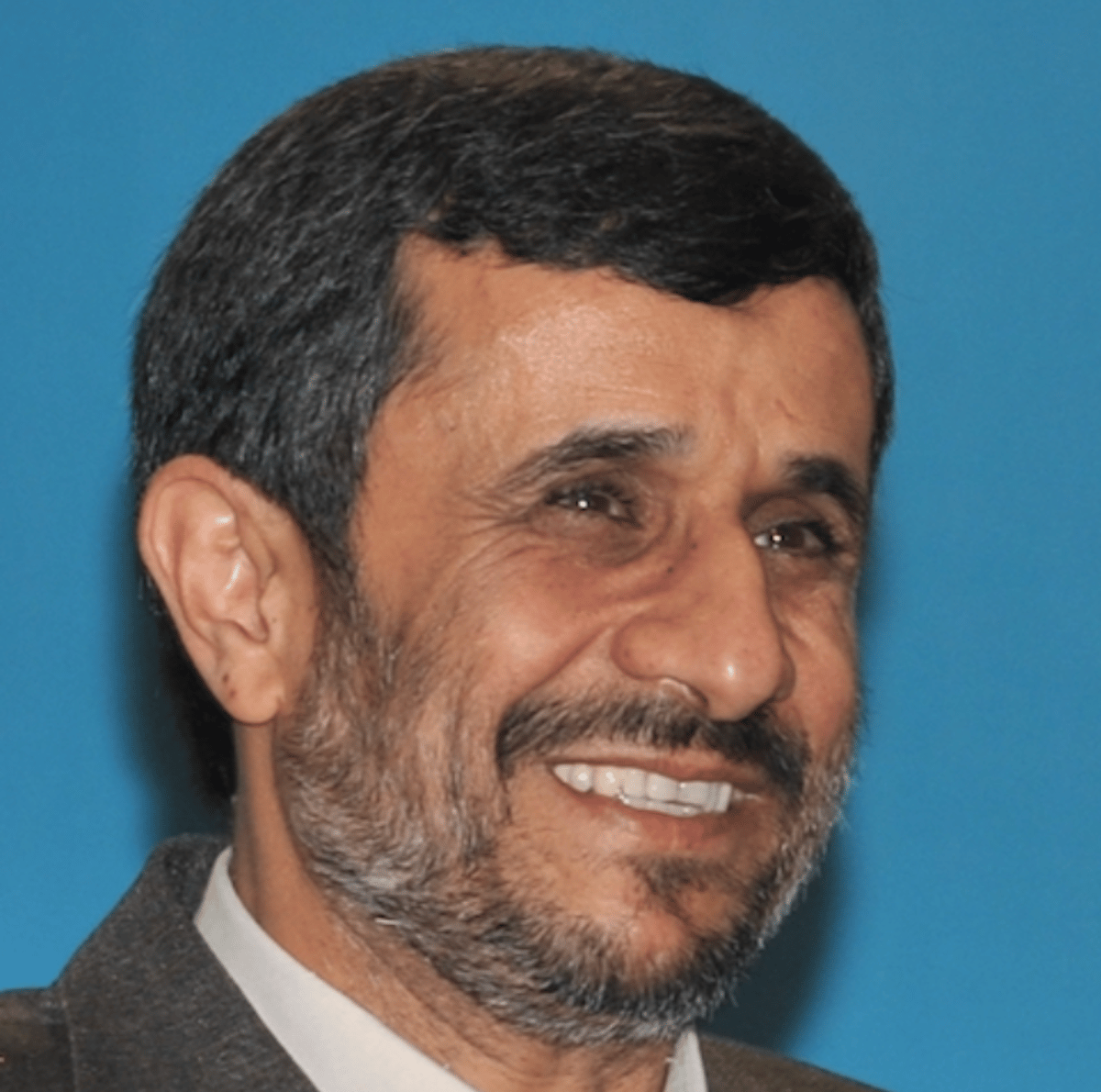
Mossad Director David Barnea personally met with former Iranian President Mahmoud Ahmadinejad in 2024, The New York Times reported Monday, adding a new layer of detail to an already extraordinary account of Israel's plan to install Ahmadinejad as a transitional leader in Iran after this year's war.
The meeting, described in a Times report published Monday and first summarized in English by Israel National News, marks the most direct account yet of Barnea's personal role in cultivating Ahmadinejad, whom the Times has reported was assessed by Israeli and American officials as a potential figure to help lead Iran through a political transition following the toppling of its theocratic government.
The brief report does not specify where the 2024 meeting took place, though Ahmadinejad is separately known to have made closely watched trips to Hungary in both 2024 and 2025, according to contemporaneous reporting by Euronews and RFE/RL. Those visits drew condemnation at the time from Hungarian Jewish organizations and Israel's embassy in Budapest, and fueled long-standing speculation inside Iran, some of it dating back to the start of his presidency, that Ahmadinejad maintained undisclosed ties to Israeli intelligence.
Monday's report builds on a more extensive investigation the Times published on May 20, which first revealed that Israel and the United States entered the February 2026 war with Ahmadinejad specifically in mind as a potential transitional leader, despite his history of Holocaust denial, his calls to "wipe Israel off the map," and his role in violently suppressing Iran's 2009 Green Movement protests. The Times reported the choice startled even some officials within the Trump administration, who found the plan implausible given Ahmadinejad's ideological record.
According to that earlier investigation, the plan called for a multistage effort to destabilize and eventually topple Iran's government, an effort that also involved mobilizing Kurdish forces and mounting Israeli influence operations. On the war's opening day, in the final days of February, Israeli warplanes struck Ahmadinejad's home in the Narmak district of eastern Tehran, an attack American officials told the Times was designed not to kill him but to eliminate the Revolutionary Guard members holding him under house arrest and clear the way for him to assume a political role. Ahmadinejad was injured in the strike but survived, and satellite imagery reviewed by the Times showed that the security outpost guarding the entrance to his street had been destroyed.
An associate of Ahmadinejad's told the Times that the former president understood the strike as an attempt to free him, and that American officials had privately compared his intended role to that of Delcy Rodríguez in Venezuela, who assumed power after a US intervention there and went on to cooperate with the Trump administration. But the near-miss appears to have changed his calculus. According to the Times, Ahmadinejad grew disillusioned with the regime-change plan in its aftermath and has not appeared publicly since. His current whereabouts and condition remain unknown.
Barnea has continued to defend the operation privately. The Times reported that the Mossad chief told associates in multiple conversations that he believed the plan, which he said was built on decades of Israeli intelligence collection and covert operational activity inside Iran, had a strong chance of succeeding had it received full authorization to proceed.
The Mossad has not commented publicly on the reporting, and a White House spokeswoman, Anna Kelly, did not directly address the regime-change plan when asked for comment in May, saying only that President Trump's stated objectives for the military campaign, known as Operation Epic Fury, were to destroy Iran's ballistic missile capabilities, dismantle its production facilities, sink its navy, and weaken its regional proxies.
Taken together, the emerging details paint a picture of a regime-change strategy far more personal, and far more precarious, than officials initially let on. What began as a broad plan to destabilize Tehran narrowed, by the war's opening hours, into a bet on one man, an aging former president watched over by his own government's guards, whom Israel's spy chief had cultivated for years and was prepared to risk lives to free. That bet did not pay off. Ahmadinejad survived the strike meant to liberate him, but walked away from the plan itself, and has not been seen since. Whether Barnea's confidence in the operation was ever justified, or whether Iran's resilience simply outlasted Israel's wager, remains one of the central unanswered questions of the war.