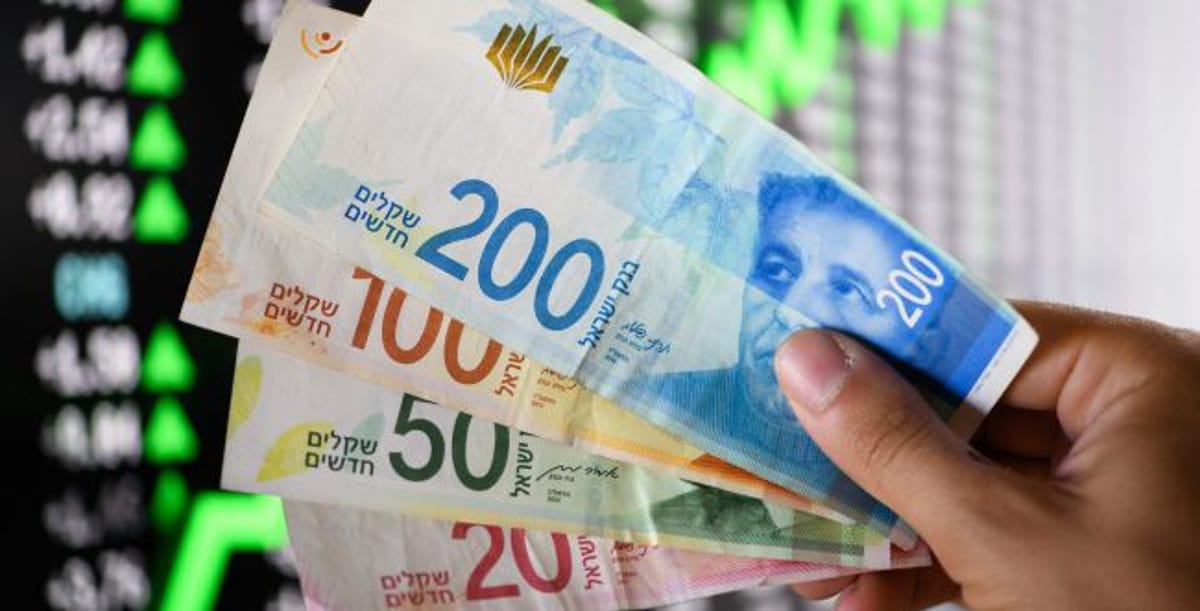
The shekel strengthened sharply against the dollar Monday morning, reaching its strongest level against the US currency since October 24, 1993, as markets awaited the Bank of Israel’s interest rate decision and followed signs of progress in US-Iran talks.
The dollar fell nearly 0.5% in local trading to 2.88 shekels, while the euro rose 0.3% to around 3.36 shekels. Globally, the dollar also weakened, with the dollar index down 0.3% to 99 points. Trading volumes were lower than usual because of Memorial Day in the United States and a market holiday in London.
The Bank of Israel is expected to cut its benchmark interest rate later Monday from 4% to 3.75%, according to market forecasts. Economists said the case for a rate cut has strengthened because of slowing inflation, a lower risk premium and the sharp appreciation of the shekel.
Leader Capital Markets economists, led by Yonatan Katz, said the central bank is likely to lower rates despite security risks, a tight labor market and renewed global inflation pressures. They noted that the shekel has strengthened 7.4% against the currency basket since the previous rate decision, creating a stabilizing force for inflation.
Meitav chief economist Alex Zabezhinsky also said economic and financial conditions support a cut, arguing that the cost of not lowering rates may now be higher than the potential risk of reducing them. He pointed to Israel’s unusually high real interest rate, moderate inflation expectations and weak economic activity.
The strong shekel is creating a growing dilemma for policymakers. It lowers the cost of imports and foreign travel, but hurts exporters, especially companies earning revenues in dollars while paying salaries and expenses in shekels. The concern is not theoretical, because apparently currency markets enjoy turning macroeconomics into a workplace relocation program.
Water-meter company Arad reported that it has moved some production for Europe to Italy and Spain, and some US-focused production to Mexico, in part to reduce the impact of the shekel’s appreciation. CEO Gabi Yankovitz said the company did not fire Israeli workers, but added that new hiring took place abroad rather than in Israel.
Manufacturers Association president Avraham Novogrocki warned that if the dollar remains near 2.9 shekels and does not return toward 3.5, more companies will move production lines or future investment overseas.
The currency moves also come as the White House reports progress in talks with Iran on ending the war and reopening the Strait of Hormuz, a development that has reduced perceived regional risk and supported Israeli assets.