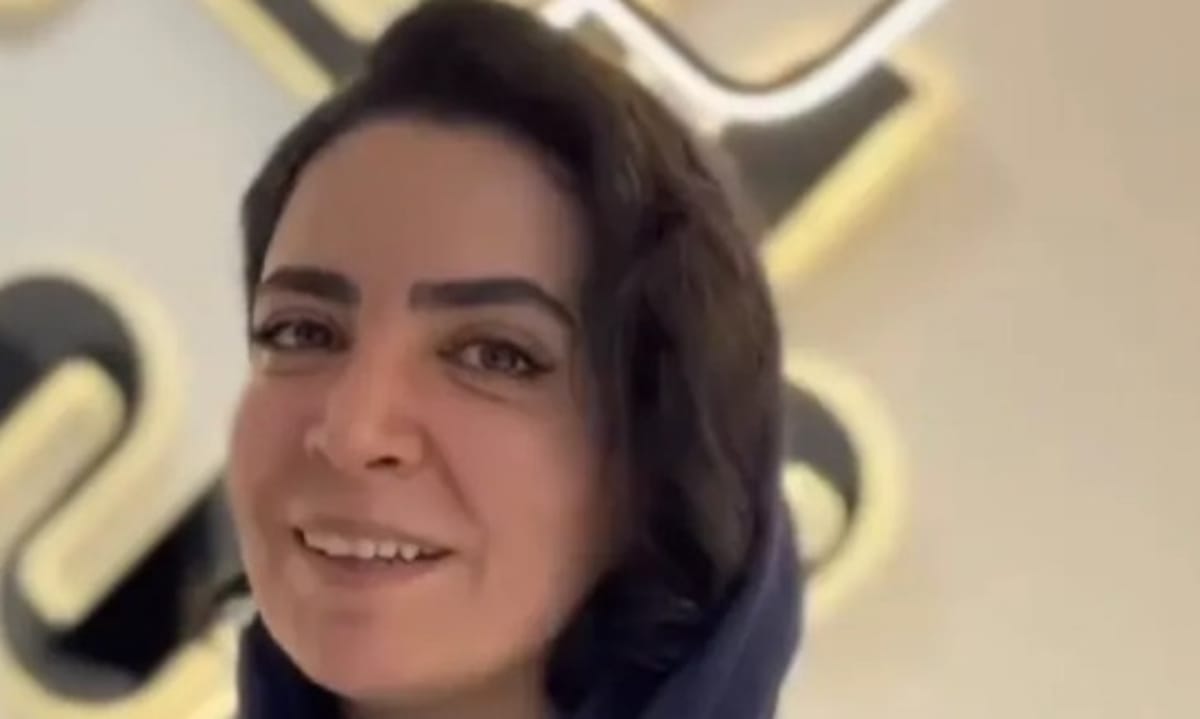
Marzieh "Sooda" Ebrahimi Shamsabadi, a 33-year-old blogger from the southern Iranian port city of Bandar Abbas, has been sentenced to death by an Iranian court, according to Iran International. She was arrested by security forces in March.
According to information obtained by international human rights organizations and monitoring groups, the conviction was handed down by Branch 3 of the local court. The charges include deliberately insulting the honor of Iran's Supreme Leader, conducting extensive propaganda activity against the Islamic Republic's national security, carrying out alleged intelligence and security operations on behalf of hostile governments and entities, and transmitting photographs and documentation to private media outlets operating outside the country's borders.
On February 23, shortly before her arrest and disappearance, Ebrahimi Shamsabadi published what turned out to be her final post on Instagram to her approximately 10,000 followers.
She wrote: "If one day I leave this world, know only one thing – I chose the path I believed in." Alongside this, she added a particularly blunt and pointed caption declaring "either I die, or these bastards will," accompanied by a symbolic image of a dove and a red rose.
Beyond the death sentence itself, the court imposed a series of additional cumulative punishments, including prison terms ranging from two to five years, a complete ban on accessing and using various government services, and an official order mandating the full confiscation of all her property and assets.
According to the report, the blogger's attorney was officially notified of the harsh sentence on August 23, without being given a realistic opportunity to respond or appeal under fair conditions in real time.
The early period of Ebrahimi Shamsabadi's detention was marked by a drastic and severe deterioration in her conditions of confinement, which activists say was designed to exert heavy psychological and physical pressure on her. According to the report, she was held for a full 20 days in complete solitary confinement, cut off from all contact with the outside world, and forced to endure intense pressure during interrogations by security agencies. Throughout that time, her worried family members received no official or reliable information from the authorities regarding her exact whereabouts, her health condition, or the conditions of her detention during those difficult days. The verdict itself was ultimately issued by a controversial judge in the judicial system, in part due to the high volume of cases and decisions he issues.