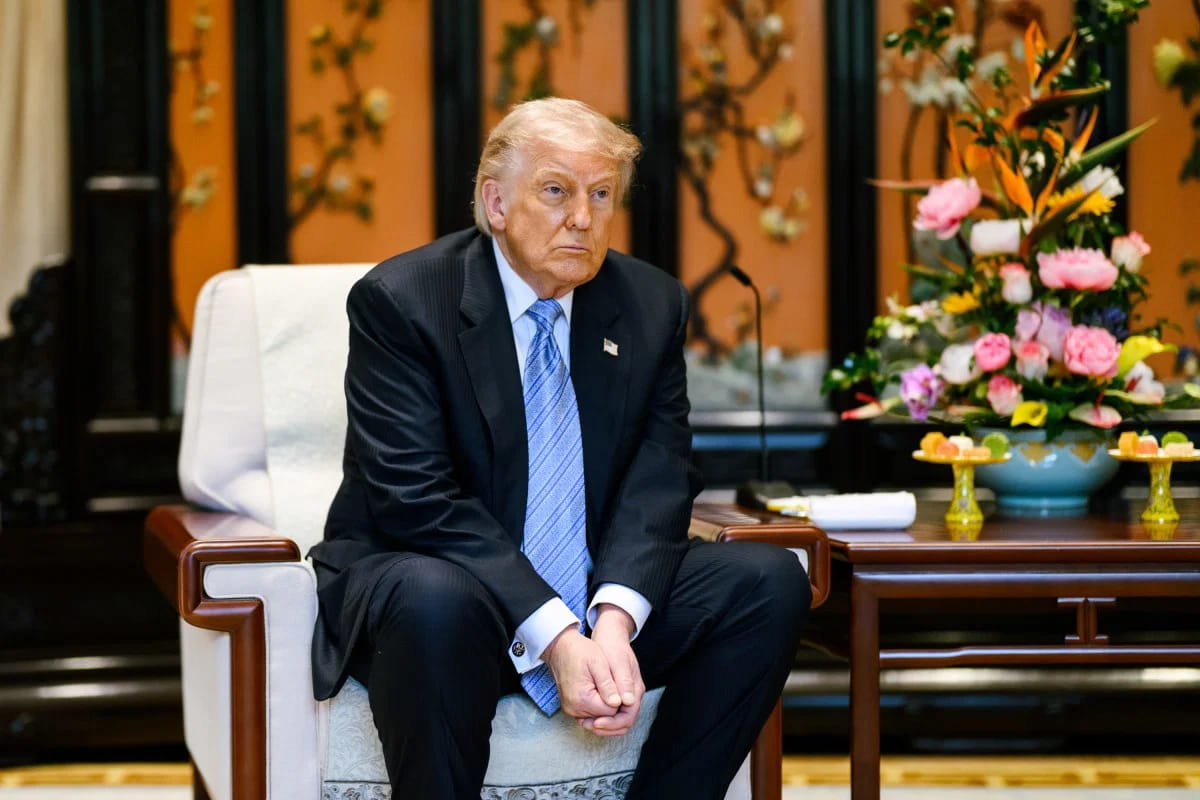
US President Donald Trump issued an unusually detailed statement on Truth Social overnight, laying out what he described as a non-negotiable condition for any nuclear agreement with Iran: the Islamic Republic's stockpile of enriched uranium must either be transferred immediately to the United States or destroyed on-site.
"The enriched uranium will be transferred immediately to the United States to be returned there and destroyed, or alternatively, and preferably, in coordination and cooperation with the Islamic Republic of Iran, destroyed where it is located or at another agreed-upon site," Trump wrote, adding that an atomic energy commission or equivalent body would serve as witness to the process.
The statement comes amid reports of stalling in back-channel negotiations between Washington and Tehran. According to sources cited by the Wall Street Journal, American officials have expressed concern that Iran may accept economic relief early in any deal while dragging its feet on the nuclear components — a sequencing problem that has haunted previous diplomatic efforts.
Iran pushed back swiftly. Ibrahim Rezaei, spokesman for the National Security Committee in the Iranian parliament, told Al Jazeera that Tehran is currently holding "no negotiations whatsoever with the US on the nuclear issue," and that uranium enrichment is "not something that can be bargained over. This technology has cost us a great deal and we will not give it up."
Iran's enrichment program has long been the central sticking point in nuclear diplomacy. Under the 2015 JCPOA, Tehran agreed to cap enrichment at 3.67% and reduce its stockpile significantly. Since the US withdrawal from that deal in 2018 under Trump's first term, Iran has accelerated enrichment to up to 60% purity,close to weapons-grade levels, according to IAEA reports.
The diplomatic tensions were underscored by military action overnight, with US Central Command confirming strikes against Iranian Revolutionary Guard Corps targets in southern Iran, including vessels allegedly attempting to plant naval mines and missile launch sites. CENTCOM described the operation as an act of "self-defense." Iranian reports indicated four IRGC naval personnel were killed.
Meanwhile, Israeli Prime Minister Benjamin Netanyahu reportedly acknowledged in closed conversations with associates that Israel has little ability to influence Trump's decision-making on Iran at this stage. A senior Israeli official confirmed to Reuters that Netanyahu admitted: "We currently have no ability to influence President Trump."