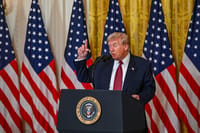
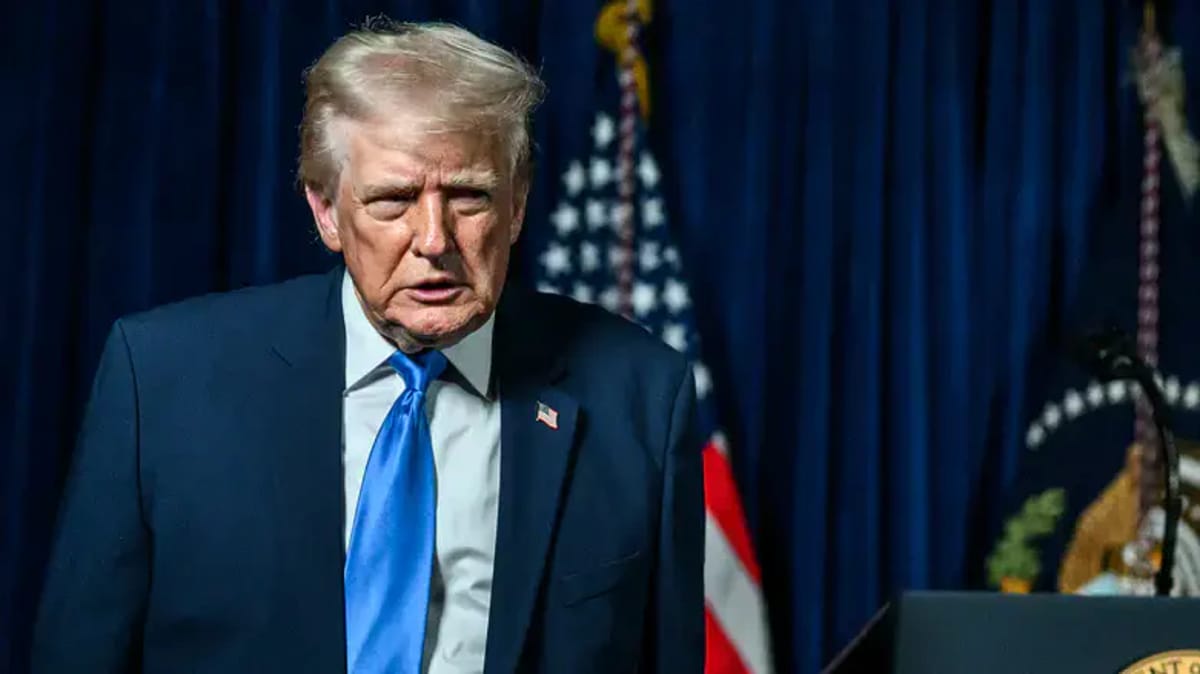
US President Donald Trump has issued a blunt warning to Venezuela’s incoming leader Delcy Rodríguez, saying she could face consequences “bigger than Maduro” if she fails to comply with US demands, as deposed president Nicolás Maduro is set to appear in federal court in New York.
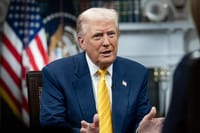
In an interview with The Atlantic, Trump said that if Rodríguez “doesn’t do what’s right,” she would “pay a very big price,” underscoring Washington’s intention to retain direct leverage over Venezuela’s post-Maduro leadership. His comments came as Rodríguez prepared to be sworn in as president on Monday, backed by Venezuela’s Supreme Court and senior military leadership.
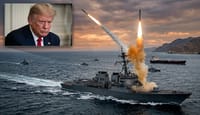
Maduro, who was captured during a US special forces operation over the weekend and flown to the United States, faces charges related to drug trafficking and weapons offenses. US officials have long accused him of running a “narco-terrorist” state, allegations he has repeatedly denied.
Rodríguez, who served as Maduro’s vice president and is widely viewed as part of his inner circle, struck a more conciliatory tone at her first cabinet meeting on Sunday, calling for cooperation with Washington “within the framework of international law.” Her remarks contrasted sharply with Trump’s rhetoric and with her later public statements denouncing Maduro’s detention as a “kidnapping” and insisting Venezuela would not become a US “colony.”
US Secretary of State Marco Rubio said Washington was not at war with Venezuela, describing the operation as a law-enforcement action targeting criminal networks rather than the Venezuelan state. He stressed that US policy would be judged on Rodríguez’s actions, not her words, adding that Washington retains “multiple levers of leverage,” including restrictions on Venezuelan oil exports.
Those levers were made explicit by Trump, who said the United States would effectively “run” Venezuela until a “safe, proper and judicious transition” could be arranged. He also suggested US energy companies would enter the country to rehabilitate infrastructure and restart oil production, a move critics see as tying political compliance to economic access.
Despite US claims, power inside Venezuela remains largely intact. Rodríguez appeared publicly flanked by senior regime figures, including her brother Jorge Rodríguez, Defense Minister Vladimir Padrino, and Interior Minister Diosdado Cabello, signaling continuity rather than rupture.
That continuity has unsettled Venezuela’s opposition. The United States and dozens of other countries rejected the results of Venezuela’s 2024 election and recognized opposition candidate Edmundo González as president-elect. González, backed by opposition leader María Corina Machado, has been living in exile, while Machado remains in hiding inside Venezuela.
Machado declared after Maduro’s capture that “the hour of freedom has arrived,” signaling readiness to assume power. However, Trump dismissed her political viability, saying she lacked the support or respect to lead the country and confirming that US officials had not consulted her following the operation.
Some analysts believe Washington views Rodríguez as a temporary custodian who can ensure institutional stability without forcing a full US-led occupation or immediate regime collapse. Former US officials described the approach as akin to an external “guardianship,” unprecedented in modern US foreign policy.
The strategy has drawn sharp criticism from US Democrats, who argue the operation amounted to an undeclared act of war. Senate Minority Leader Chuck Schumer and House Minority Leader Hakeem Jeffries questioned its legality and vowed to pursue legislation restricting further military action without congressional approval.
International reaction has also been swift. Several Latin American and European governments warned the intervention sets a dangerous precedent for sovereignty and regional stability.
For now, Venezuela appears headed toward an uneasy interim period: Rodríguez in charge domestically, Maduro in US custody, the opposition sidelined, and Washington applying pressure through economic, diplomatic, and military means. Whether Rodríguez can balance US demands with regime survival remains the central question shaping Venezuela’s immediate future.