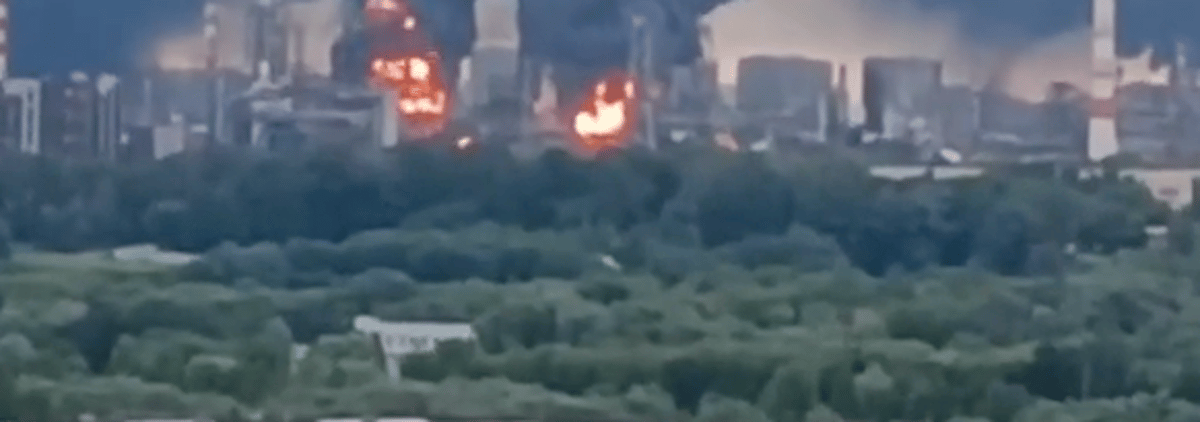
Moscow is burning

All Four Moscow Airports Shut Down as Ukraine Escalates Drone Campaign

Ukraine Launches Major Drone Attack on Moscow, Striking Key Oil Refinery

Moscow after Ukraine drone strikes

Ukrainian forces carried out a sustained drone assault on the Russian capital and surrounding region, with at least one successful strike on the Moscow Oil Refinery in the Kapotnya district, a primary fuel supplier to the city.

Russian authorities, including Moscow Mayor Sergey Sobyanin, reported intercepting at least 60 Ukrainian drones overnight into Wednesday. However, the refinery, located roughly 15 kilometers southeast of the Kremlin, came under repeated attack. Sobyanin confirmed that "one of the drones damaged a facility on the territory of the Moscow Refinery," with emergency services deployed to the scene. The mayor reported no immediate casualties at the facility itself.

Videos circulating on Ukrainian Telegram channels and verified by independent monitors showed flames and smoke rising from the refinery following the coordinated strike. The attack marked the second consecutive day of successful hits on the facility, following an earlier strike on June 16 that forced a complete shutdown of operations.

Reuters reported that the refinery sustained damage forcing a halt in processing. Industry sources said the strike targeted critical infrastructure at the sprawling complex.

Ukrainian President Volodymyr Zelenskyy described the operation as part of Kyiv's campaign of "long-range sanctions," aimed at disrupting the economic machinery funding Russia's war effort. The assault on Moscow's energy sector is consistent with Ukraine's expanding deep-strike capability targeting Russian rear areas, military production, and oil refining capacity.

Ready for more?

Context and Impact

The Moscow Oil Refinery processes up to 11 million tons of crude oil annually and accounts for approximately 40% of the Moscow region's gasoline supply. Andriy Kovalenko, head of Ukraine's Counter-Disinformation Center, noted that the facility is among Russia's largest fuel-processing operations, critical to sustaining both civilian and military logistics.

Russian air defenses claimed high interception rates, but the successful penetrations underscore the strain on Moscow's multilayered defensive network. This month alone, Sobyanin has reported intercepting 1,134 Ukrainian drones en route to the capital, already exceeding the total for all of 2025.

The refinery strikes are part of a broader Ukrainian campaign targeting Russia's energy infrastructure. In May, Ukraine's Unmanned Systems Forces reported that ten major Russian oil refineries had been struck, with six either fully or partially suspending operations.
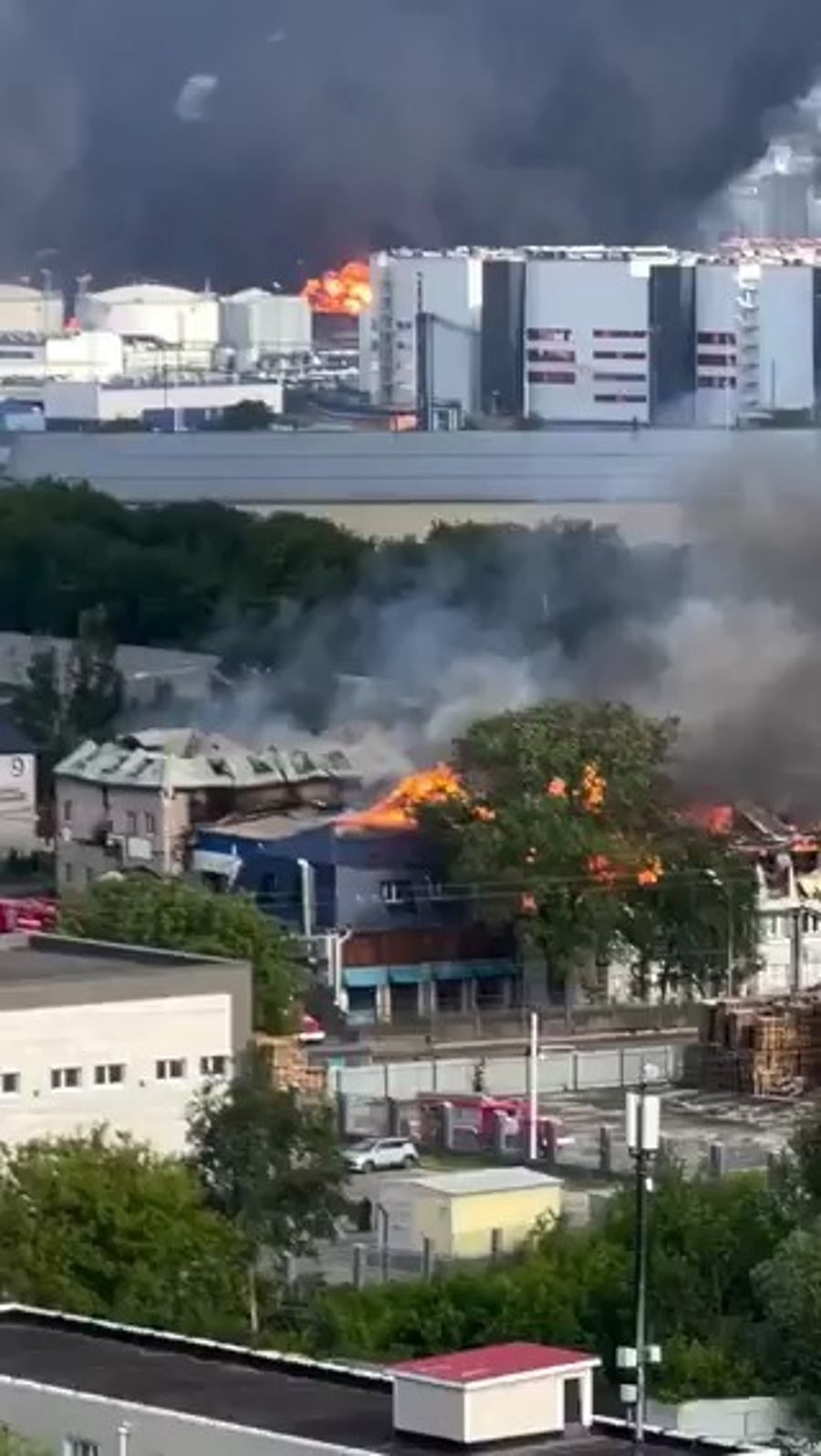

Ukraine launches wave of drone strikes towards Moscow

Immediate Disruptions

Flight restrictions were imposed at all four of Moscow's major international airports, Domodedovo, Vnukovo, Zhukovsky and Sheremetyevo, as Russian federal air transport authorities responded to the ongoing drone activity. Restrictions were also implemented at airports across southern and western Russia stretching from Sochi on the Black Sea to locations some 750 miles away.

Regional Governor Andrei Vorobyov reported 86 Ukrainian drones intercepted over the wider Moscow region, with six people injured from falling debris. Drone debris also fell on the Sadovod shopping center, causing minor damage to buildings.

Escalating Pattern

This marks the ninth consecutive day of Ukrainian drone attacks on Moscow, according to Sobyanin. The sustained campaign reflects Ukraine's intensified efforts to strike targets deep inside Russian territory using long-range unmanned systems, the FP-5 Flamingo cruise missile, and other weapons.

Ready for more?

Ukrainian Unmanned Systems Forces stated that the refinery operation was coordinated with Ukraine's Special Operations Forces, Main Intelligence Directorate, and Security Service, suggesting a high-level strategic targeting decision.

Kovalenko said the refinery strikes demonstrate the limits of Russian air defense despite "Putin deploying almost all of the key air defense and missile defense systems to Moscow."

Russia's Defense Ministry said the overnight attack on Moscow was one element of a larger wave of strikes across multiple regions. Russia's federal response has been described as "systemic" by Kremlin spokesman Dmitry Peskov, though no new operations have been announced.

The situation remains fluid, with both sides continuing long-range operations into June 19. No independent damage assessment of the refinery's processing capacity has been made available yet, and Ukrainian assessments of operational impact remain to be confirmed through secondary sources.

The Broader Campaign

Ukrainian officials have signaled an intention to expand strikes on Russian energy and military production targets to degrade Russia's capacity to sustain its military machine. Zelenskyy stated during a June 17 visit to Estonia that "our long-range impact on Russian logistics, Russian oil refining and Russian military production is also significant."

The strikes come as Russia escalates its own long-range campaign against Ukrainian cities, killing at least 22 civilians in recent days and wounding dozens more across Kyiv, Dnipro and eastern regions. NATO Chief Mark Rutte arrived in Kyiv on June 18 for an unannounced visit following the Russian barrage.

Ready for more?

Join our newsletter to receive updates on new articles and exclusive content.

We respect your privacy and will never share your information.