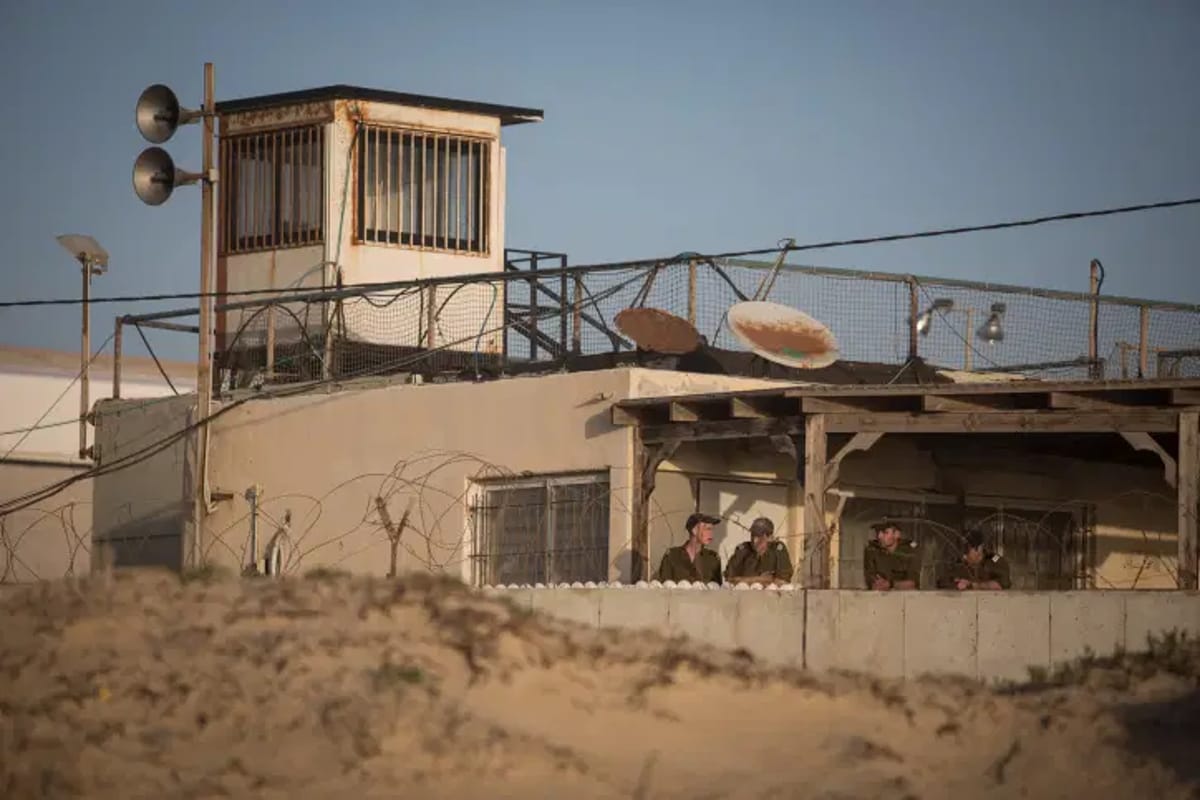
The United States military is examining the possibility of establishing a large forward operating base in Israel, in what would mark a significant strategic realignment of American force posture in the Middle East, according to a report published Sunday by Walla.
The discussions reflect a growing American assessment that its bases across the Gulf are dangerously exposed.
According to security sources cited in the report, the U.S. has notified Israel's Defense Ministry and IDF officials that it intends to renew supply contracts through at least 2030, with the possibility of extending those arrangements further depending on operational considerations.
The initiative follows repeated Iranian missile and drone attacks on dispersed U.S. bases since the February 28 joint U.S.-Israeli strikes on Iran. Confirmed targets have included Al Udeid in Qatar, Al Dhafra in the UAE, and facilities in Bahrain and Kuwait, demonstrating that American installations across the Gulf are within range of Iranian assets.
At the peak of the war, the U.S. deployed more than 6,000 troops across Israel, many of them operating air defense systems inside existing IDF bases and servicing American aircraft that flew missions from Israeli soil. In the two weeks since the MOU was signed, American force levels in Israel have been scaled back slightly, though the bilateral military relationship remains deep.
Two options are reportedly under consideration. The first would involve expanding an existing IAF base in the Negev and designating a dedicated compound for exclusive American use, building on infrastructure already in place. The second, more ambitious option, would involve constructing an entirely new base in the Negev capable of absorbing the full range of American military systems currently distributed across the region.
Israel already hosts a small U.S. air defense and missile-warning facility inside the IAF's Mashabim base in the Negev, which houses roughly one hundred American personnel focused on detecting ballistic launches from Iran. Reports from earlier this year indicated that F-22s were deployed to Ovda Airbase, described as the first offensive U.S. aircraft deployed to Israel.
A permanent, large-scale American presence would go far beyond those arrangements. According to the Walla report, such a base would require its own air defense envelope, and would strengthen the strategic relationship between the two militaries and governments at an institutional level.
Israeli civilian aviation officials have reportedly expressed reservations. During the height of the war, American use of runways and flight lanes disrupted commercial air traffic in and out of Israel, limiting the flexibility of civilian aircraft. That tension, sources suggest, would need to be resolved before any permanent arrangement could be finalized.
The discussions come at a moment when the U.S. has also curtailed Israel's autonomy in Lebanon, with Washington suggesting alternative arrangements for handling Hezbollah rather than backing continued Israeli operations, and amid reported warnings from Trump to Netanyahu that Israel risks being left to manage Iran alone. A permanent American military footprint in Israel would cut against that narrative, potentially anchoring the alliance in concrete infrastructure even as the diplomatic relationship remains turbulent.
Iranian threats to attack Gulf states that host American forces have been a recurrent feature of Tehran's posture for years. The war made clear those threats were not empty. From Jerusalem's perspective, the consolidation of U.S. forces inside Israel, rather than in neighboring countries whose governments answer to different pressures, represents a more reliable strategic reality.
Formal approval from either government has not been announced. But the fact that American defense officials are actively approaching their Israeli counterparts on the matter suggests the conversation has moved well past the theoretical stage.