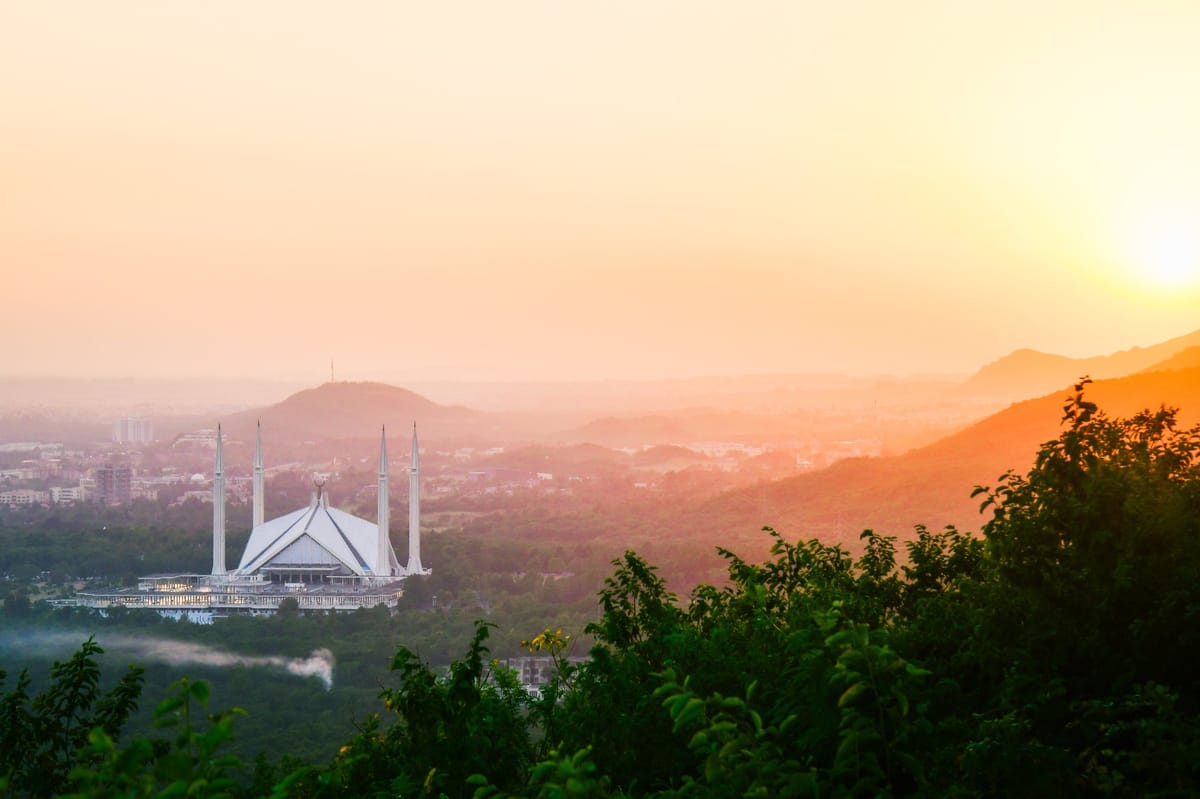
The wide boulevards of the government quarter in Islamabad, lined with rows of polished police units, are serving as the dramatic backdrop for critical peace talks that could decide the future of the Middle East and the global economy.
The city's streets have been cleared of civilians, and residents were granted a two-day paid holiday by the government to ensure maximum quiet for the historic and high-tension negotiations between the United States and Iran.
A Fragile Peace on the Brink
The talks are scheduled to open tomorrow (Saturday) morning, aiming to end the war that erupted on February 28 following a joint US-Israeli strike against Iranian targets.
However, the two-week ceasefire, declared only this past Tuesday, moments before President Trump’s ultimatum to "erase an entire civilization" expired—already appears more fragile than ever. Mutual accusations of violations continue to cloud the atmosphere before the first meeting has even begun.
The Delegations
The American delegation is led by Vice President JD Vance, accompanied by Special Envoy Steve Witkoff and Jared Kushner, President Trump’s son-in-law.
For Vance, previously known for his skepticism regarding foreign military intervention, this represents a massive diplomatic and political test. Analysts suggest the outcome could have significant implications for a potential 2028 presidential run. Supporting the US delegation from the sidelines are allies including Israel and the Gulf states, who, while not in the room, are exerting heavy influence behind the scenes.
On the other side, Tehran has yet to officially announce its full roster. However, Iranian media reports indicate the delegation will be headed by the conservative Speaker of the Parliament, Mohammad Baqer Qalibaf. Qalibaf, a figure close to the regime's top leadership, has emerged as the primary contact for the Trump administration during the conflict, particularly as several high-ranking Iranian leaders were eliminated in strikes over recent weeks.
Deep Gaps and Conflicting Agendas
The divide between the two sides appears bottomless, with fundamental disagreements even on the basic agenda of the talks.
- The U.S. Position: President Trump recently claimed there is a "10-point proposal" serving as the basis for negotiations.
- While not fully disclosed, it is expected to demand:
An Iranian commitment to never use nuclear weapons.
The surrender of all enriched uranium stockpiles.
Severe restrictions on Tehran's defense capabilities.
The immediate and full reopening of the Strait of Hormuz.
- The Iranian Position: Tehran has released its own list of demands, including:
Recognition of its control over the Strait of Hormuz.
Reparations for war damages.
The lifting of all sanctions.
Recognition of its right to enrich uranium.
The Strait of Hormuz: A Global Choke Point
The issue of the Strait of Hormuz is already a point of fierce contention. President Trump recently attacked Iran on social media, claiming they are doing a "shameful job" in allowing the passage of oil tankers, stating: "That is not the deal we have!"
Data from the first 24 hours of the ceasefire underscores the crisis: only one oil tanker and five dry cargo ships passed through the strait. In normal times, the artery sees approximately 140 ships a day and serves as a vital vein for the world's energy supply.
The Lebanon Obstacle
Another immediate threat to the talks is the ongoing fighting in Lebanon. Iran and Pakistan argue that the ceasefire should extend to Lebanon. Speaker Qalibaf has clarified that the "Land of the Cedars" and other allies in the "Axis of Resistance" are inseparable from any agreement.
Conversely, the US and Israel have remained firm: the current lull applies to Iran only. The Israeli military operation to uproot Hezbollah continues unabated.
Parallel Tracks
While the Islamabad talks proceed, Israel is signaling a separate diplomatic path. Prime Minister Benjamin Netanyahu has announced instructions to open peace talks specifically focused on the disarmament of Hezbollah.
US and Israeli officials noted that these separate talks are expected to begin next week in Washington, aiming for a model similar to the one being pursued with Iran.
The Host's Role
Pakistan, utilizing its position as a mediator to bring the parties to the table, must now navigate a diplomatic minefield. Analysts expect Islamabad to voice the concerns of Gulf nations regarding Iranian attacks while simultaneously pressing the US to expand the ceasefire to include Lebanon.
The overarching question remains: Will the coming days yield a historic interim compromise, or will the talks collapse, dragging the Middle East into another round of total war?