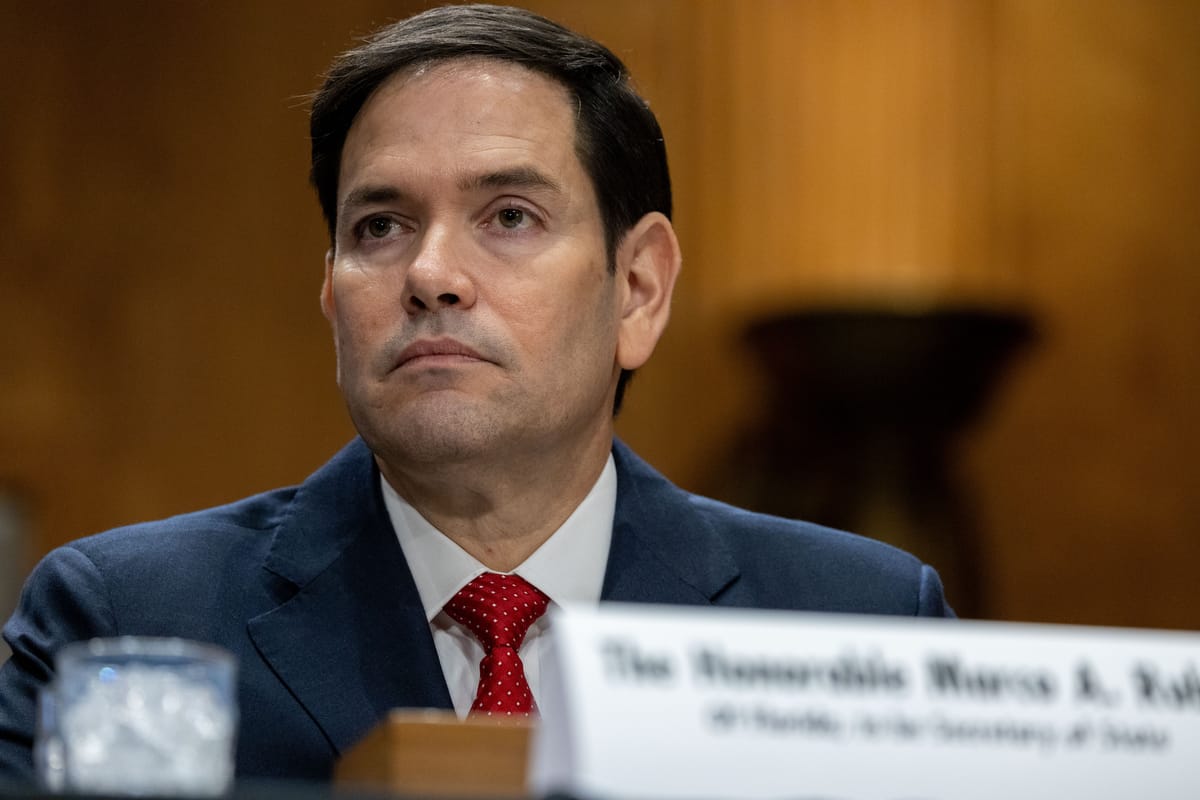
US Secretary of State Marco Rubio delivered a detailed assessment of the Iranian threat during a Senate hearing originally focused on Venezuela but quickly shifting to Middle East security and Iran policy. Rubio stressed the uncertainty surrounding Iran's leadership succession, saying, "Nobody can give an answer as to what will happen the day after if the Iranian regime falls." He highlighted the vulnerability of American forces, noting that between 30,000 and 40,000 US troops are stationed across eight or nine facilities in the region, all within striking distance of thousands of Iranian drones and ballistic missiles.
Rubio explained the rationale for maintaining a robust military presence, stating, "The President always keeps for himself the option of launching a defensive preemptive strike. That’s why it is wise to have forces in the region that can respond and, if necessary, carry out a preemptive strike to protect American troops and our allies. I hope it doesn’t come to that." He described the deployment as a calculated and cautious step to enable rapid response or prevention of attacks on US personnel, bases, and allies including Israel.
The Secretary portrayed the current Iranian regime as significantly weakened. "The Iranian regime is weaker now than at any time in the past," Rubio said, pointing to its inability to handle protester grievances over a collapsing economy. He predicted that demonstrations would erupt again in the future. Rubio tied the force posture directly to security commitments, explaining, "We have security agreements, including defense of Israel and others, that obligate us to position force in the region to protect against an Iranian attack threat." He added that bolstering US presence aims to defend against potential Iranian aggression toward American personnel.
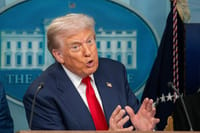
This testimony came as President Donald Trump repeatedly referenced a large naval armada en route to the area, including the aircraft carrier Abraham Lincoln, and urged Iran to negotiate a deal eliminating its nuclear program. Trump warned that failure to reach an agreement could lead to far worse consequences than previous US actions against Iranian targets. The statements reflect a US approach combining military deterrence with pressure for diplomacy while acknowledging the risks of escalation in a volatile region where American lives and key alliances hang in the balance.