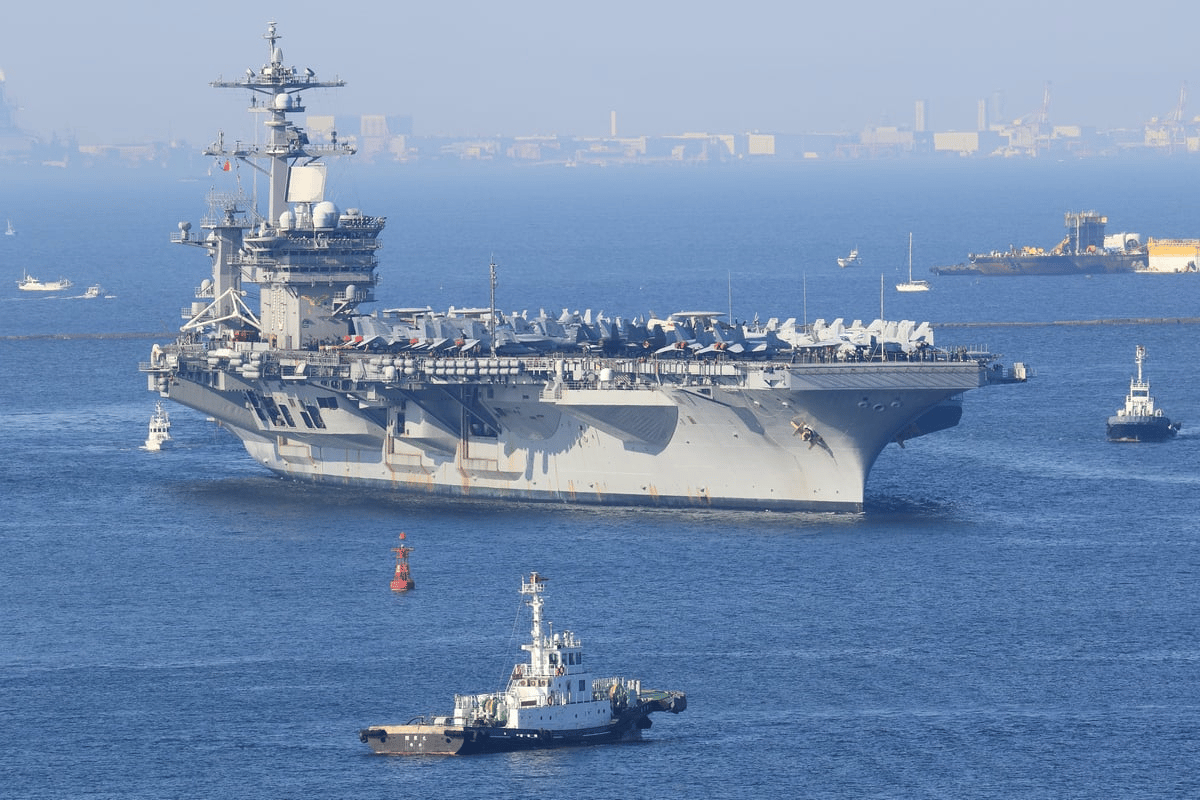
The maritime arena has emerged as the most volatile theater in the current standoff between the United States and Iran, with President Donald Trump repeatedly highlighting the presence of a massive American armada positioned off the Iranian coast. As the USS Abraham Lincoln carrier strike group takes its station, Tehran has responded by placing its naval forces on the highest possible alert level. While the United States possesses overwhelming technological and numerical superiority, military analysts warn that the geographical reality of the Persian Gulf provides Iran with unique opportunities to inflict significant damage. Danny Citrinowicz, a senior fellow at the Institute for National Security Studies (INSS), notes that this war may see the maritime dimension play a far more central role than in previous encounters, as Iran prepares to utilize land based assets to target American ships in the narrow waters of the Middle East.
The Iranian Toolkit: Land, Sea, and Sabotage
According to Citrinowicz, the primary threat to the American fleet does not actually come from the Iranian navy itself, which remains in a state of significant inferiority, but from the Iranian landmass. Iran possesses an extensive arsenal of land based ballistic missiles and long range suicide drones specifically designed to target moving naval vessels. By launching these from the safety of their 3,000 kilometer coastline, the Iranians can force the American fleet to stay further out at sea, complicating air operations and missile defense. This land based strategy is a deliberate attempt to negate the American advantage in traditional ship to ship combat.
The second tier of the Iranian threat involves elite naval commando units trained in asymmetric warfare. History provides a clear precedent for this, in 2019, Iran was accused of using frogmen to attach limpet mines to commercial tankers to pressure the West over economic sanctions. In a full scale war, these units would likely target American support vessels and destroyers using high speed boats and underwater sabotage. While the official Iranian navy consists of approximately 20,000 personnel and 100 vessels including 20 submarines, they are widely expected to avoid direct confrontations, opting instead for "hit and run" tactics that exploit the cluttered and congested waters of the Gulf.
Chokepoints and Carrier Defense
The most drastic card in Tehran's hand remains the closure of the Strait of Hormuz. Citrinowicz explains that Iran has the capability to mine the narrow passage or use scuttled ships as physical barriers to block the flow of global energy. This was a significant concern during the "12 Day War" in June and remains the ultimate leverage for the regime. "Hormuz is perhaps the most important story," Citrinowicz explains, noting that the threat of a global economic meltdown is Iran's primary deterrent against a sustained American campaign.
On the other side of the ledger, the arrival of the USS Abraham Lincoln brings a staggering amount of firepower to the region. The carrier, which houses 5,500 personnel and up to 90 aircraft, is a floating fortress equipped with the world’s most advanced missile interception systems. It is flanked by a fleet of destroyers and cruisers that form a multi layered defensive shield. However, the proximity of the Iranian coast remains a challenge, as the reaction time for intercepting land based missiles is significantly reduced in these waters. As both sides signal their readiness, the question remains whether the American armada can effectively neutralize the land based threats before they can be deployed against the fleet.