Read plainly, that is a statement of fact. Read in context, it is something else: a reminder that the Iron Dome interceptors, the munitions, the air defense systems keeping Israeli cities alive during Iranian missile barrages — all of it flows from Washington. And Washington is watching.
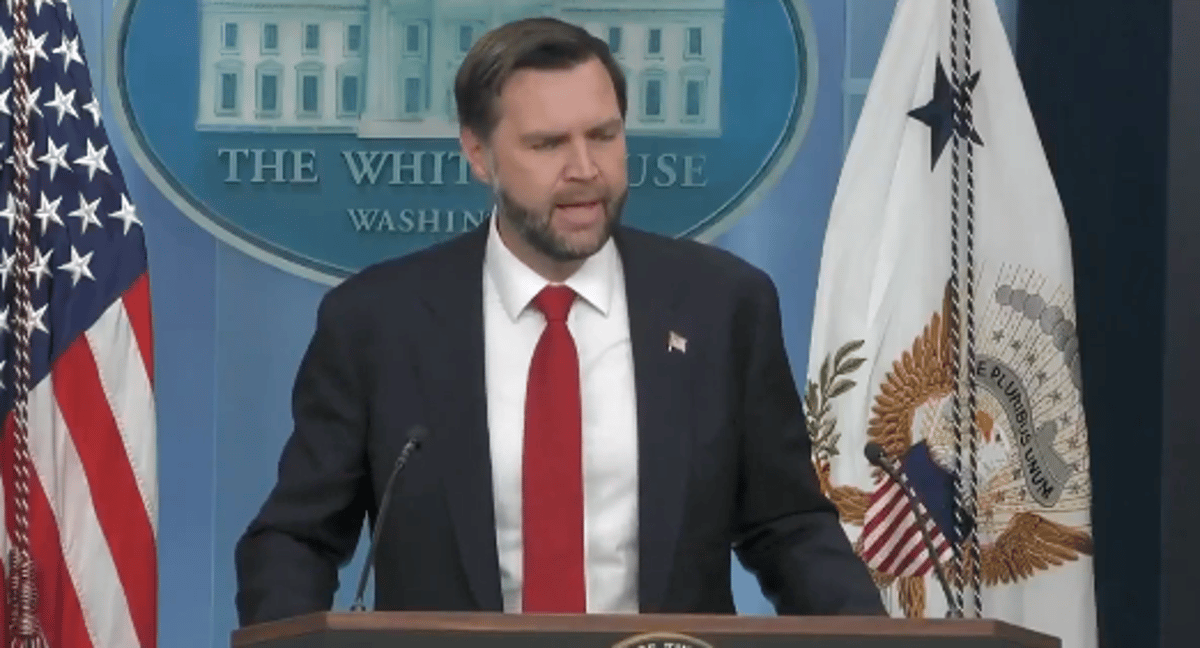
"If I was in the Cabinet of the Israeli government, I might not be attacking the only powerful ally that I have anywhere left in the entire world," Vance added.
The implication, which Vance left studiously unstated, was obvious to anyone paying attention: allies who attack their benefactors can find themselves without a benefactor.
The target of the sharpest criticism was the Israeli far-right. Vance singled out Finance Minister Bezalel Smotrich and National Security Minister Itamar Ben-Gvir by name, asking, "What is your exact proposal?" and telling them bluntly that Israel, as a country of nine million people, "can't just kill your way out of solving every single national security problem."
But the message reached well beyond those two ministers. Vance acknowledged that "large segments of the Israeli political system and population are very sensitive about this deal," before attributing their anxiety to "misinformation" and what he called a "panic." In other words: the concern is not legitimate — it is a failure to understand the situation correctly. Trust us.
That framing is itself significant. The MOU Vance was defending contains no firm program for destroying Iran's nuclear program, and its most controversial provisions include sanctions relief on Iran's fossil fuel industry and a U.S. pledge to develop a $300 billion reconstruction fund for Tehran. Israeli anxiety about those terms is not, by any serious accounting, a "freakout." It is a strategic assessment from a country that shares a region with Iran and is not a party to the deal.
The threat calculus behind Vance's remarks becomes clearer when set against the broader posture the Trump administration has adopted toward Israel in recent weeks. Trump has expressed public frustration with Netanyahu, described the Israeli prime minister as "crazy," sidelined Jerusalem throughout the Iran negotiations, and criticized Israeli airstrikes in Beirut. Vance's remarks Thursday were not a departure from that posture — they were its logical extension, delivered from the podium rather than through a leak.
What Vance was communicating, stripped of diplomatic packaging, amounts to this: Israel's military survival has been subsidized by the United States. That subsidy comes with expectations. Those expectations currently include accepting a U.S.-Iran deal that Israel's own security establishment views as dangerous, withdrawing from positions in Lebanon the IDF believes are operationally necessary, and doing so without public complaint from cabinet ministers.
Vance urged the hardliners in Netanyahu's coalition to "wake up," while simultaneously accusing Israel of sabotaging peace negotiations through continued military operations in Lebanon.
He insisted that Israel "has to respect this peace process," framing the Lebanon ceasefire provisions in the MOU as non-negotiable.
Netanyahu's office declined to comment on Vance's remarks. The prime minister himself has, so far, avoided directly attacking the deal — a restraint Vance publicly acknowledged and praised. "Bibi, to his credit, has not gone down that path," Vance said. The compliment was also a signal: Netanyahu is being rewarded for his silence. The ministers speaking out are being warned about theirs.
For Jerusalem, the message Thursday was not subtle. The most powerful voice in the Republican Party — the man many expect to succeed Trump — just told Israel, from the White House briefing room, that its security umbrella is contingent on political cooperation. That it has no other friends. And that it should choose its words carefully.
Whether that constitutes a threat depends on how much faith one places in the relationship that supposedly makes such a warning unnecessary.