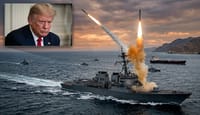
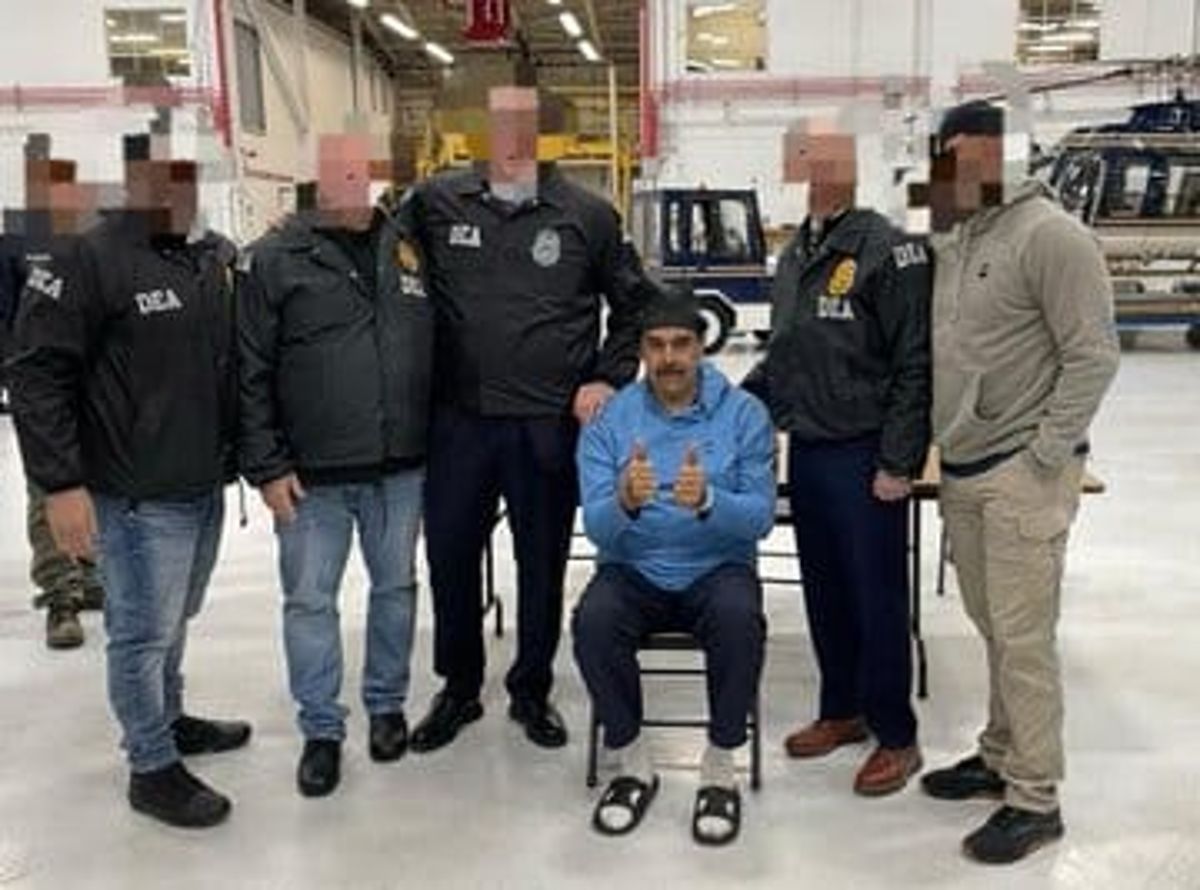
Venezuela plunged deeper into uncertainty overnight after the country’s Supreme Court ordered Vice President Delcy Rodríguez to assume the powers of president on an interim basis, following the US military’s capture of Nicolás Maduro and his wife. The ruling came as officials inside Venezuela reported roughly 40 people killed during American strikes on Caracas, underscoring how violently the transfer of power has unfolded.
Rodríguez, who has served as vice president and oil minister since 2018, addressed the nation shortly before the court decision, demanding Maduro’s immediate release and insisting that he remains Venezuela’s only legitimate president. Even as the court moved to elevate her, she framed the US operation as an illegal act of aggression and rejected any suggestion that the government had collapsed.
Inside Caracas, fear and confusion dominated. Residents described explosions near military installations, widespread power outages and empty streets, broken only by long lines outside supermarkets and gas stations. Venezuelan officials said the US strikes hit a mix of military and civilian targets, including an air force facility and government buildings. Explosions were also reported near the country’s main port and on Margarita Island.
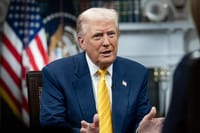
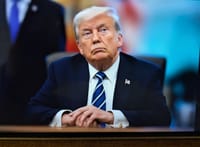
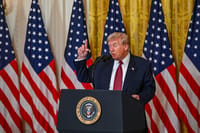
The political shock was amplified by remarks from Donald Trump, who openly suggested that the United States would now “run” Venezuela, at least temporarily. Speaking to reporters, Trump portrayed the intervention as a chance to stabilize the country and restart its oil-driven economy, hinting that Washington would oversee key decisions while “the right people” were put in place. The comments went far beyond regime-change rhetoric and landed closer to an admission of direct US control, sending shockwaves through diplomatic circles.
Those remarks immediately ignited a storm online. Social media in the US and Latin America filled with memes joking that Marco Rubio was effectively replacing Maduro, casting him as everything from Venezuela’s new strongman to an oil executive-in-chief. Some images mocked a “handover ceremony” between Maduro and Rubio; others depicted US officials running ministries or renaming Caracas landmarks. The humor barely masked unease, even among critics of Maduro, over how explicit Trump was about American dominance.
International reactions were sharply divided. Canada’s prime minister welcomed the US operation as an opportunity for democratic renewal, while China condemned it and demanded Maduro’s release, calling for dialogue and respect for international law. Washington, meanwhile, warned several Caribbean and Latin American governments that they could face similar action if they sheltered hostile regimes, widening fears of a broader regional confrontation.
Rodríguez’s sudden elevation has done little to clarify who is actually in charge. State television did not broadcast a formal swearing-in ceremony, and military leaders continued issuing statements pledging loyalty to Maduro rather than acknowledging an interim presidency. Defense Minister Vladimir Padrino López vowed resistance, while Interior Minister Diosdado Cabello urged supporters to take to the streets in defense of sovereignty.
For now, Venezuela remains suspended between realities: a captured president, an interim leader whose authority is contested, a US president openly talking about running the country, and a population caught between relief, fear and exhaustion. Whether this moment marks the collapse of two decades of authoritarian rule or the beginning of a new and uncertain form of external control is still an open question.