
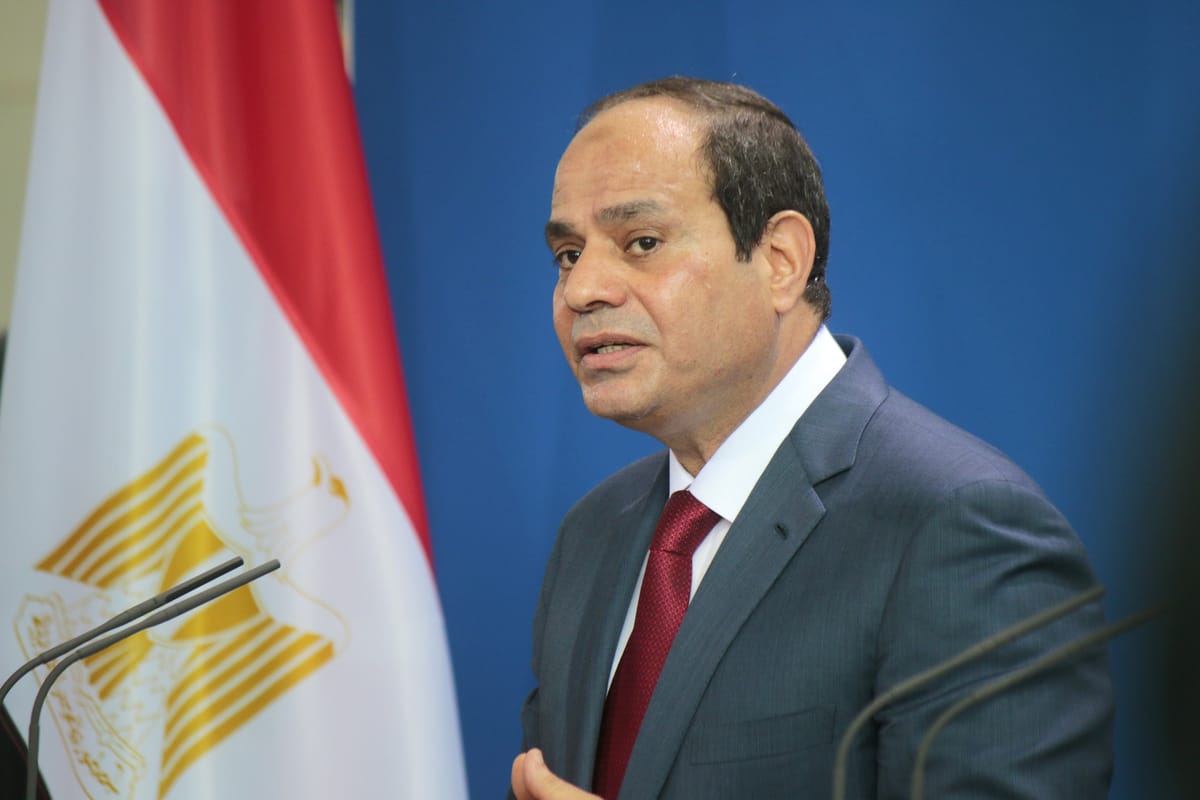
Egypt's Foreign Ministry on Wednesday rejected the maritime boundaries memorandum between Libya and Turkey, branding it legally void. On the same day, Israel's Foreign Ministry strongly condemned the deal's ratification and accused Ankara of destabilizing the eastern Mediterranean.
"Egypt reaffirms that this memorandum is null and void … possesses no legal effect," the Egyptian ministry said. Cairo said the ratification carries no legal consequences for Egypt and that it reserves the right to protect its maritime rights under international law.
Libya's eastern-based parliament, the House of Representatives, voted unanimously to approve the memorandum on Tuesday. The internationally recognized government in Tripoli at the time, the Government of National Accord, first agreed to the deal in 2019. The rival eastern administration under military commander Khalifa Haftar held back its approval for years.
"Regretfully, once again, we see Turkey working to destabilize the eastern Mediterranean region," Israel's Foreign Ministry said in a post on X. The ministry added that the agreement infringes upon "the sovereign rights of our close allies in the region." Greece, Cyprus and the European Union also condemned the move. Athens maintains that Turkey and Libya have no shared maritime boundary.
Ankara pushed back on the criticism. Turkish Foreign Minister Hakan Fidan called the agreement legitimate and said the Libyan parliament's ratification was a formality, since the deal was already in effect for Turkey. Turkey's state disinformation watchdog went further and labeled claims that Ankara is destabilizing the region "open disinformation." It did not name Israel in its statement, but its accompanying graphic reproduced the Israeli Foreign Ministry's post marked with a large red X.
Egypt, Greece and Cyprus have long opposed the Libya-Turkey deal, viewing it as an encroachment on their own maritime claims, Reuters reported. In 2020, Athens and Cairo concluded a competing agreement that carves out an exclusive economic zone of their own in the eastern Mediterranean. Ankara rejects that agreement.
Eran Lerman, a reserve colonel who serves as vice president of the Jerusalem Institute for Strategy and Security, told The Jerusalem Post that the deal was "very troubling" for Israel. He warned that it could threaten Israel's ability to develop underwater infrastructure connections, such as an electricity cable, and create more serious maritime security challenges.
"I'm not sure the Turks will actually intervene to disrupt the laying of an electricity connector… but this is going to be a source of growing tension in the coming years," Lerman said.
Lerman also urged Jerusalem to do what it can to keep Egypt from fully aligning with Turkey, and to deepen cooperation with Greece and Cyprus.