It's Official: The Testimony Has Ended

"They Invented a Crime": Netanyahu Ends Year-Long Testimony with Blistering Attack on Prosecution

Prime Minister completes grueling year of cross-examination with fierce rebuke of legal system • Prosecution declares no further questions as historic trial enters final phase | The dramatic conclusion to Case 2000 (Israel News)

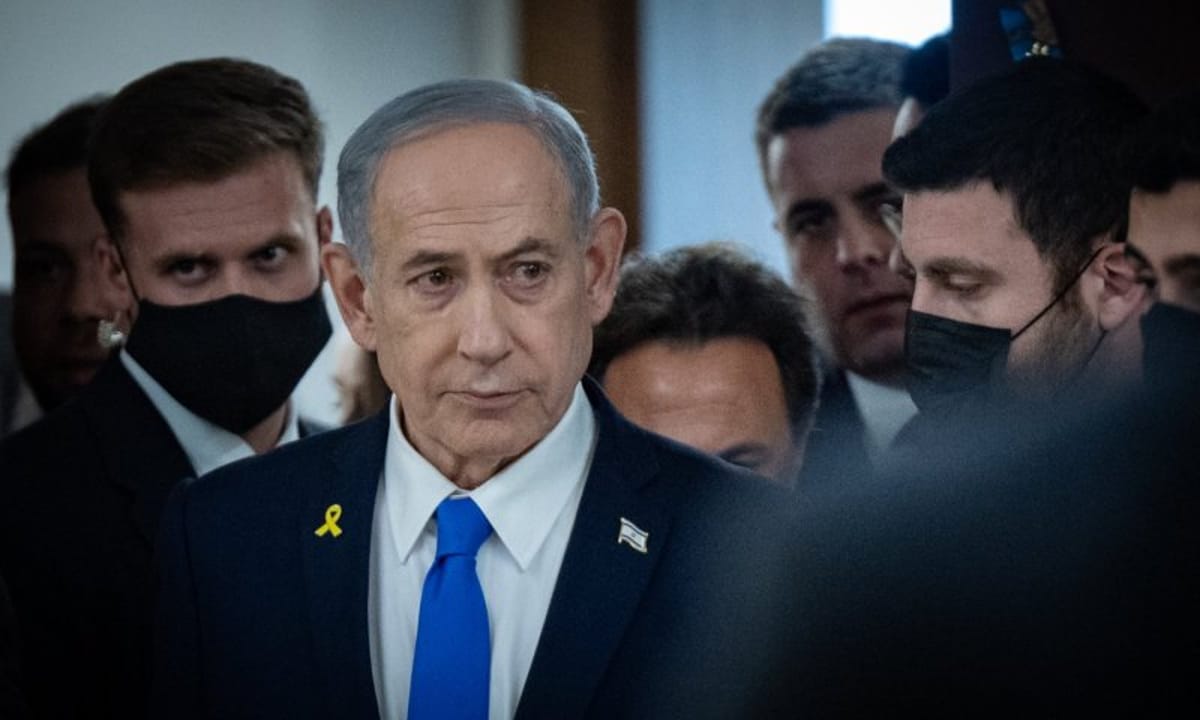
Prime Minister Benjamin Netanyahu
Prime Minister Benjamin Netanyahu (Photo: Yonatan Sindel/Flash90)

After a full year of exhausting and complex testimony, Prime Minister Benjamin Netanyahu's cross-examination in his corruption trial concluded Tuesday in dramatic fashion, with the premier launching a blistering attack on the prosecution and declaring that the entire case represents an invented crime applied retroactively.

Prosecutor Yoni Tadmor informed the judges that she had no further questions for the prime minister, bringing to a close one of the most dramatic chapters in Israeli legal history. The conclusion came after a final day marked by exceptionally high tensions, with Netanyahu losing his composure and unleashing a frontal assault on the State Attorney's Office.

Despite requests from Netanyahu's defense team Monday to shorten proceedings due to the intense pressure, the judges rejected the motion and the hearing continued as scheduled until its planned conclusion.

"You Invented This Crime"

The final session focused heavily on Case 2000, which centers on contacts between Netanyahu and Arnon "Noni" Moses, publisher of the Yedioth Ahronoth newspaper. Netanyahu emphasized at the outset that the prosecution amounts to legal persecution and the creation of a dangerous precedent.

"Raz Nizri, the Deputy Attorney General, said at the time he thought there was no crime here, so I'm supposed to know there's a crime?" Netanyahu challenged the prosecution. He added with evident frustration: "Even Reuven Rivlin was shocked by this claim. Who ever thought that give-and-take relations between a politician and the media constitute a criminal offense? This is something you invented! You're trying to create a retroactive crime here."

The prime minister's remarks reflect his consistent position throughout the trial that prosecutors are attempting to criminalize behavior that has been standard practice among politicians and media figures for decades.

"Standard Journalistic Practice"

When judges pressed Netanyahu to explain the alleged "threats" or "extortion" he claimed to have felt from Moses, the prime minister responded that such tactics represent common journalistic practice. "They give you front-page coverage or they threaten you --- that's the practice of all journalists. I wanted to record the fact that he was stirring this up," Netanyahu stated.

The prosecution's case suffered a potential blow when Tadmor presented what she characterized as a significant contradiction in Netanyahu's testimony. While the prime minister told the court he conducted contacts with Moses to buy time in order to facilitate the sale of Yedioth Ahronoth or to achieve a softened version of the "Israel Hayom Law," Tadmor pointed to his police interrogations where he offered a different explanation.

According to quotes Tadmor read from the police interviews, Netanyahu told investigators: "Practically speaking, I remember one thing — since I'm in the middle of a war, I'm buying time... He already took the Knesset from me, now I need to think about how I fight him. What do I do in the election campaign that's coming?"

The prosecutor pressed further: "Wasn't your honor concerned about Yedioth Ahronoth's coverage?" Netanyahu replied firmly: "No." Tadmor continued: "At all? Even though we're in an election period?" Netanyahu maintained his position: "I didn't relate to the coverage at all. What interested me was how I save the newspaper (Israel Hayom), how I get to a softened law."

"Slander, Not Coverage"

When Tadmor asked about the phrase "buying time," Netanyahu explained in court that he meant attempting to block "the slander against the family." Tadmor immediately responded: "In other words, coverage," to which Netanyahu reacted with indignation: "It's not coverage, it's slander! As Raviv Drucker said (and even Raviv Drucker!) this is beyond the pale, things that go beyond what the mobilized Israeli media does."

The prosecution continued reading from police interrogations where Netanyahu admitted conducting the conversations to "lower the flames" and reduce the time until elections, using the expression: "You keep your friends close and your enemy closer," while describing the situation as "a cold war as opposed to a hot war."

What Comes Next

With the cross-examination concluded, the trial is expected to enter its next phase — redirect examination by the defense, followed by closing arguments. It should be noted that parallel to the trial proceedings, contacts have been underway between Netanyahu's representatives and President Isaac Herzog regarding the possibility of a pardon or plea agreement, though as recently reported, the president froze consideration of the request after Netanyahu failed to respond to his inquiries.

The judges are now expected to set the schedule for continuation of proceedings, with the expectation that the trial will continue for a considerable period before a final verdict is delivered.

Ready for more?

Join our newsletter to receive updates on new articles and exclusive content.

We respect your privacy and will never share your information.