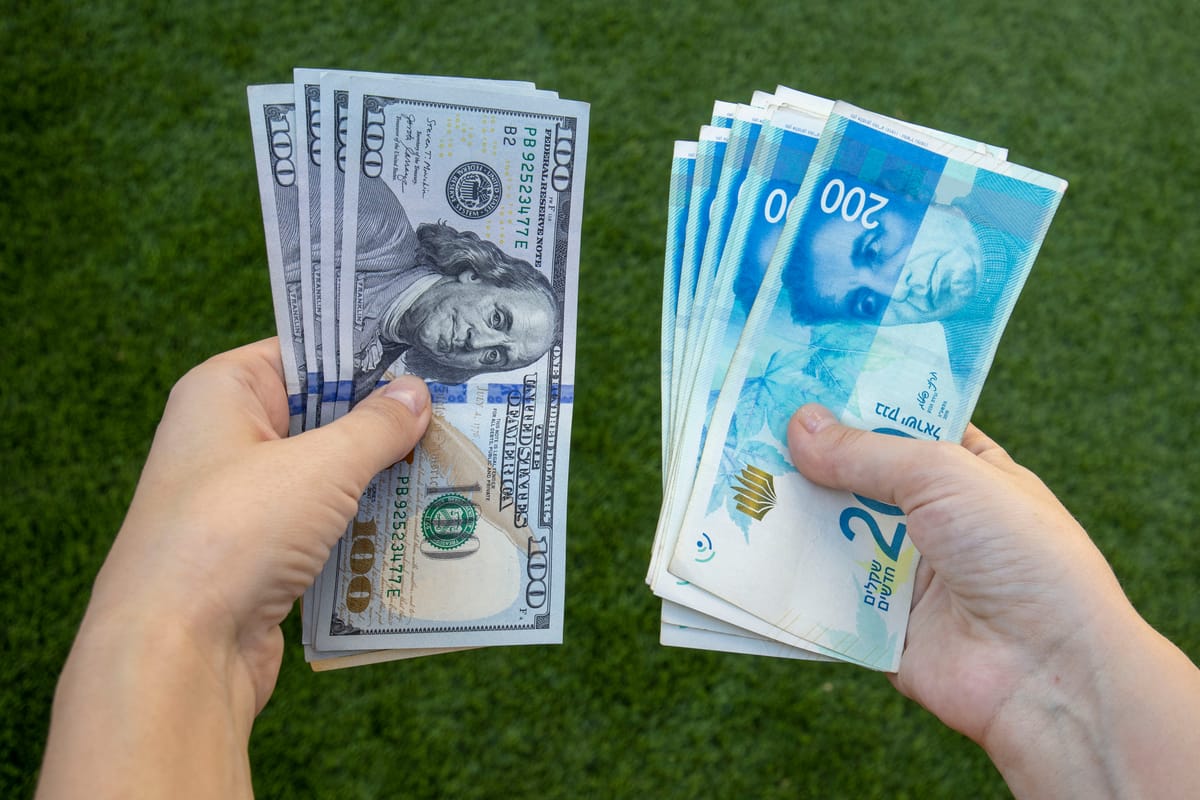
The U.S. dollar dropped sharply against the Israeli shekel on Tuesday, falling around 1.2% to roughly NIS 2.84, just one day after the Bank of Israel cut its benchmark interest rate from 4% to 3.75%. The euro also weakened, trading slightly above NIS 3.30 after falling about 1.4%.
The move surprised those who expected the rate cut to ease pressure on exporters by weakening the shekel. Instead, the Israeli currency continued to gain strength, driven by optimism over diplomatic contacts, lower global fuel prices, and market confidence in Israel’s inflation outlook.
The Bank of Israel’s Monetary Committee announced Monday that it was lowering the interest rate to 3.75%, saying policy would continue to focus on price stability, economic activity, and financial-market stability. The central bank said future rate decisions would depend on inflation, economic activity, geopolitical uncertainty, and fiscal developments.
The latest cut came after the shekel had already strengthened significantly and inflation remained within the government’s target range. Market data and economic reports indicate that the decision was supported by a strong shekel, contained inflation, and hopes for a possible agreement to end the war with Iran, despite continued geopolitical uncertainty.
The shekel’s strength has become a double-edged sword. For Israeli consumers, a stronger shekel can lower the cost of imports, overseas purchases, and flights. But for exporters, it can be painful, making Israeli goods and services more expensive abroad and reducing the value of dollar-denominated revenue when converted back into shekels.
Business leaders had pushed for more aggressive action. Industrial and business-sector representatives argued that a deeper rate cut was needed to slow the dollar’s decline and relieve pressure on exporters. But Bank of Israel Governor Prof. Amir Yaron rejected claims that the decision was political or the result of pressure, saying monetary policy was being guided by inflation, growth, and market stability.
Yaron has also signaled caution about direct intervention in the foreign-exchange market. Earlier this month, Bank of Israel Deputy Governor Andrew Abir said the central bank was not in a rush to intervene against the strong shekel, explaining that intervention remains a tool for specific situations rather than a routine response to currency strength.
For ordinary Israelis, the rate cut may slightly reduce monthly payments on mortgages tied to the prime rate, while banks are also expected to lower interest paid on deposits. At the same time, the strong shekel could help restrain prices by making imported goods cheaper.
For now, the message from the markets is clear: even after a rate cut, investors are still buying the shekel.