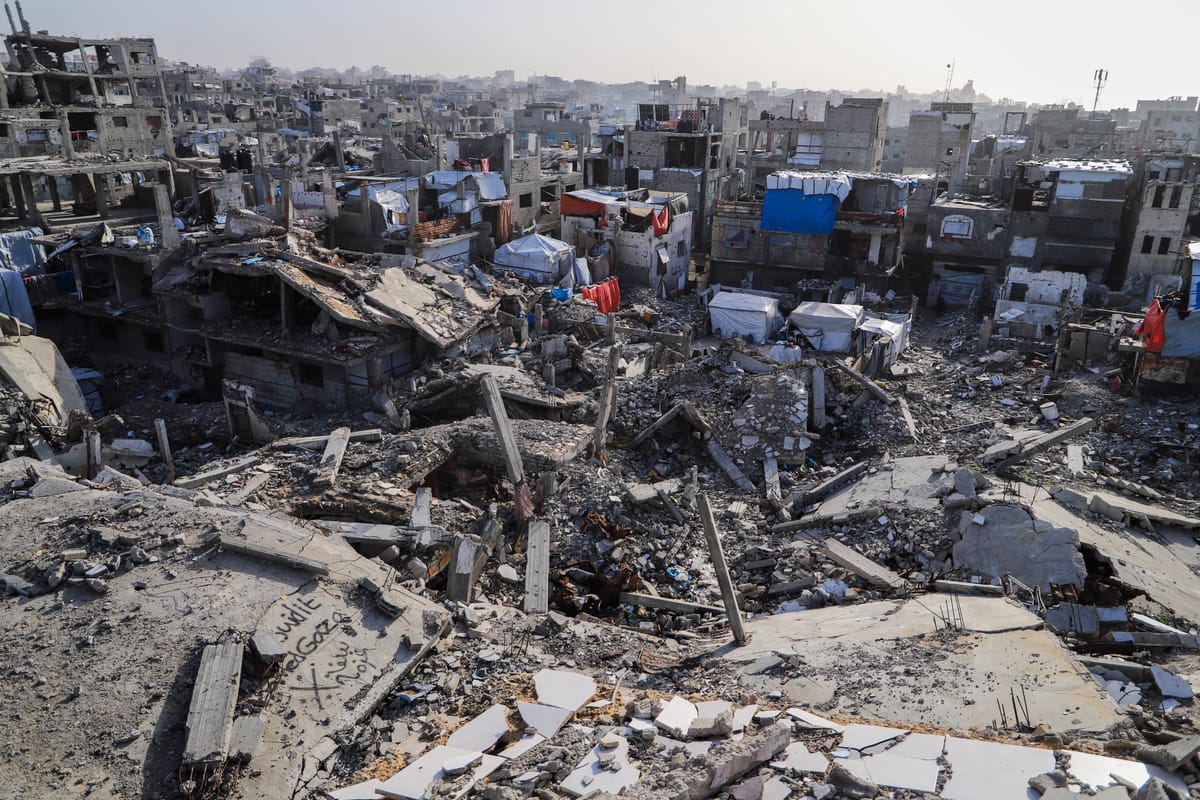
A sharp debate is erupting across Israel’s political and security echelons following the official launch of "Phase B" of President Donald Trump’s regional peace plan. While the IDF has achieved unprecedented tactical victories over the past two years, including the dismantling of Hamas’s organized military framework, a new diplomatic reality is taking shape that many fear sidelines Israel from the most critical decisions regarding its own backyard.
The Trump administration, led by Special Envoy Steve Witkoff and Jared Kushner, has unveiled a sophisticated three-tier governance structure for the post-war Gaza Strip. However, the names appearing in the "Board of Peace" and the "Gaza Executive Board" have raised alarms in Jerusalem:
The Board of Peace: Chaired by President Trump himself, this oversight body includes regional heavyweights like Qatar and Turkey.
The Gaza Executive Board: Among its members is Qatari diplomat Ali Al-Thawadi, a figure who recently stood in the Oval Office during a high-profile moment where Israeli leadership was seen as being pressured into a more conciliatory stance toward Doha.
The Technocratic Committee: The day-to-day administration will be led by Dr. Ali Sha’ath, a former Palestinian Authority official. While he is billed as an "apolitical technocrat," his mission, restoring public services and overseeing a $400 billion reconstruction vision, is seen by critics as a way for the PA to return to Gaza through the back door.
Analysts are drawing a chilling parallel to the aftermath of the Second Lebanon War. In 2006, UN Resolution 1701 promised a demilitarized South Lebanon; instead, it provided a diplomatic shield behind which Hezbollah built a massive missile arsenal.
The fear today is that Hamas is adopting a strategy of "strategic patience." By "lowering their heads," shedding their uniforms, and allowing Qatari-funded technocrats to rebuild the infrastructure, the group could effectively preserve its influence underground. Under the current plan, Israel lacks a formal veto over the reconstruction funds or the specific personnel entering the administration.
While the U.S. plan explicitly calls for the "full demilitarization" of Gaza and the disarmament of all "unauthorized personnel," the mechanism to enforce this remains vague. With the International Stabilization Force (ISF) still in the planning stages and few Arab nations willing to commit boots on the ground to confront Hamas remnants, the burden of security remains a giant question mark.
"The people of Israel did not fight for two years to see Qatar become the landlord in Gaza," one poignant op-ed noted this week. The sentiment reflects a growing national anxiety: that the heroism shown by soldiers on the front lines is being traded for a "deal" in Washington that prioritizes regional stability over Israel's long-term security red lines.