The IDF has known about fiber-optic drone capability since at least 2024, when Hezbollah used them on a more limited scale. Israeli military officials acknowledge they entered this phase of the Lebanon campaign without effective countermeasures. The defense ministry is now conducting an emergency procurement with, according to reports, no budget ceiling. There is a phrase for spending unlimited money to solve a problem that was visible for years: criminal negligence.
The Times of Israel put it with unusual bluntness: "the emergence of fiber-optic-guided drones should not have come as a surprise." It was not a surprise to the defense establishment, which had apparently discussed the threat internally. It was a surprise, apparently, to the procurement system, the training protocols, and whoever decided to send armored battalions into a contested buffer zone before fielding a single reliable counter-drone capability. The IDF is now deploying computer-vision rifle sights, mesh nets, and emergency research sprints. These things work in a laboratory. In southern Lebanon, they are arriving after the funerals.
The objective that disappeared
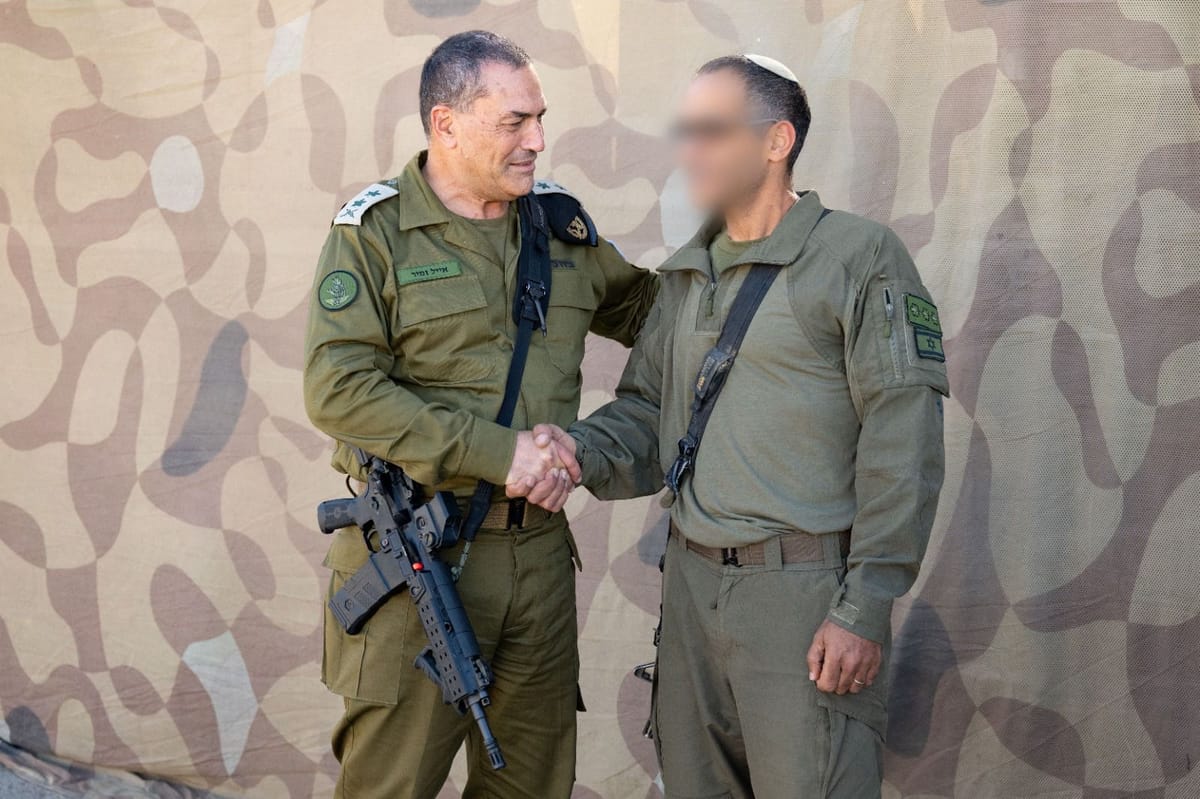
At the outset of the renewed fighting, Chief of Staff Eyal Zamir said Israel "would not relent from disarming Hezbollah." By April 3, the IDF had quietly revised that goal, acknowledging that militarily disarming Hezbollah was "unrealistic" because it would require occupying all of Lebanon, which, the army admitted, "surpasses Israel's means." In plain language: the stated objective of the war was impossible from the beginning, and took five weeks of fighting to officially abandon. The goal has since been reframed as "establishing a security zone" up to the Litani River and "continuing to attack Hezbollah's assets and personnel." This is not a strategy. This is an Israeli general's version of "we'll know it when we see it."
What, then, are the soldiers there to do? They are there to occupy positions in a security zone that Defense Minister Katz has declared will exist permanently, up to the Litani, even after the war ends. They are there to deter Hezbollah from firing rockets at the Galilee. They are there, in the meantime, to be killed by drones manufactured in workshops across southern Lebanon from components that cost $30 per kilometer of cable. Hezbollah has released multiple videos of its drones slamming into Israeli Merkava tanks. Those videos are recruitment material, propaganda victories, and operational intelligence, all delivered gratis by an army that cannot shoot down what it cannot jam.
And while the soldiers hold their hills and the drones find them, the men who could actually end this, Hezbollah's commanders, its logistical leadership, the political and operational nerve center sitting in Beirut's southern suburbs, are, for the most part, untouchable. Not because Israel lacks the aircraft. Because Donald Trump told Israel not to strike them.
The American veto and what it costs
The United States has brokered three-week ceasefire extensions, talked of Lebanon as "a separate skirmish," and explicitly pressed Israel to scale down "non-urgent" military action to give Beirut political breathing room on Hezbollah disarmament. Hezbollah, for its part, called the ceasefire "meaningless" and continued attacking anyway. Israel has struck central Beirut, but the Hezbollah command structure, the political and military leadership that directs the drone operators, operates with relative safety because every escalation runs into Washington's diplomatic guardrails.
Netanyahu, whose political survival depends on Trump's goodwill on the Iran file, cannot simply ignore those guardrails. So instead, Israel's soldiers occupy the buffer zone, take the casualties, and wait for a diplomatic process that Foreign Policy's analysts describe as heading toward "renewed military escalation" in any case. The soldiers are not a deterrent. They are a deposit, held hostage to a negotiation between governments over which they have no say.
There is an uncomfortable ghost haunting all of this. Israel maintained a security zone in southern Lebanon from 1985 to 2000. Eighteen years of occupation produced 1,216 Israeli soldiers killed, a daily attrition that eventually became politically unbearable, and a unilateral withdrawal that Hezbollah celebrated as a divine victory. The lesson drawn at the time was that you cannot hold territory indefinitely against a motivated guerrilla force with an unlimited supply of willing fighters and an Iranian patron with a bottomless arsenal. Twenty-six years later, Israel is recreating the exact same dynamic, with one crucial difference: the drones are now unjammable.
The right-wing argument — that withdrawal emboldens Hezbollah, that only permanent pressure can protect the Galilee, that October 7 proved the cost of restraint — deserves to be taken seriously. It is not incoherent. If Israel pulls back from the Litani without Hezbollah's disarmament, the rockets return. That is not a hypothetical. But the right-wing argument cannot explain why the answer to this is to send 19-year-olds into an unjammed drone kill zone without the tools to survive it. Hawkishness about strategic goals does not excuse negligence about the soldiers sent to achieve them.
What a real strategy would require
A serious approach would involve three things that Israel currently lacks: clear and achievable military objectives, the tools to protect soldiers in the field before deploying them to the field, and either the American permission to strike Hezbollah's command leadership or the diplomatic honesty to acknowledge that without it, the buffer zone is theater. Right now Israel has none of these. It has announced objectives it has already abandoned, deployed forces into a threat environment its technology cannot handle, and accepted American constraints it publicly pretends do not exist. That is not a coalition of the willing. That is a coalition of the unable to say no.
The IDF's own analysts say the fiber-optic drone gap is "the most significant vulnerability to open up in the current war." Not a vulnerability that might open. One that has already opened. One that is killing people right now, today, while the cabinet meets and the ceasefire is extended and the diplomats talk about Litani lines and disarmament timelines that everyone privately knows will not be honored.
Noam Hamburger was 23. Liem Ben Hamo was 19. Idan Fooks was 19. They were sent into a security zone whose security the army admits it cannot guarantee, against a threat the army admits it cannot yet counter, in service of an objective the army has already quietly discarded. The least their government owes them and the families of the next soldiers who will die in the same hills from the same drones, is an honest answer to the question Israel refuses to ask itself out loud:
What exactly are we doing there, and is it worth this?