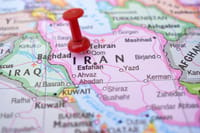
There is a number every serious person following this war should be watching, and it has nothing to do with body counts or bomb tonnage. It is a number in dollars, charged by the Islamic Republic of Iran, to ships that want to pass through a strait that international law has always said belongs to no one.
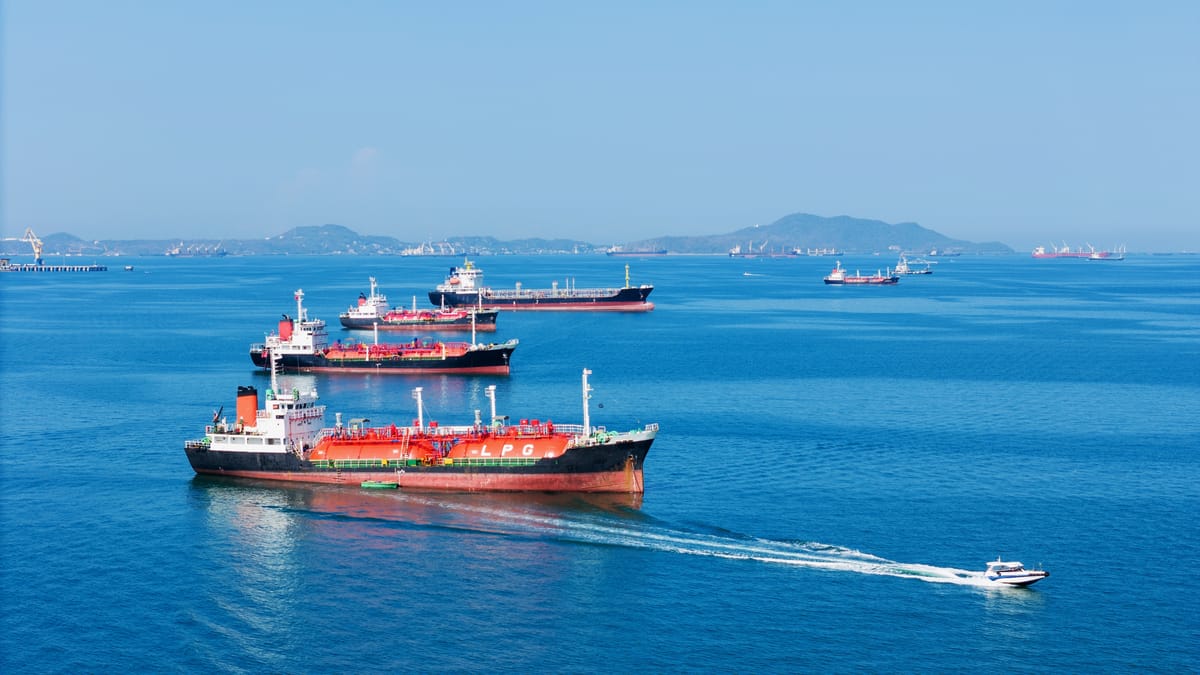
Since March, Iranian patrol boats have been rerouting commercial vessels away from the normal shipping lanes in the Strait of Hormuz and funneling them along the Iranian coastline, where crews hand over cargo manifests, ownership records, and crew lists to intermediaries of the Revolutionary Guard before being allowed to proceed. Some ships have paid roughly $1.5 million to $2 million per crossing. An Iranian lawmaker went on state television and called this a demonstration of Iran's strength. He was not being metaphorical. He meant it as a statement of sovereignty, and every ship that pays the toll without a fight is ratifying that statement.
Let that sit for a second. This is the strait through which a fifth of the planet's oil once flowed. This is the waterway that, before February, no nation on earth had the standing to charge a fee for crossing, because the Law of the Sea Treaty guarantees the right of innocent passage, a principle so old and so load bearing that a Sorbonne maritime law professor described its collapse as nothing less than the end of an international society. And now Iran, the same regime that spent months lobbing missiles at Israeli cities, that absorbed a war it started and, by most accounts, lost militarily, is sitting at the negotiating table demanding the legal right to keep collecting.
Secretary of State Marco Rubio has said Washington will not allow it. Good. He should hold that line with everything he has. But here is the brutal part nobody in the administration wants to say out loud: the fact that this is even a live negotiating point, four months into a war the United States and Israel launched, is itself the verdict on how this war has gone. Iran did not stumble into leverage over Hormuz. It manufactured that leverage deliberately, by making the strait too dangerous to use and then offering, for a price, to make it safe again, the exact playbook the Houthis ran in the Red Sea and got away with. If Tehran walks out of these talks with even a disguised version of that toll booth intact, dressed up as a "service fee" for security or navigation the way Iran and Oman are reportedly discussing, the world will have watched a rogue state get bombed for months and emerge with a legally laundered claim to a chokepoint it never had before the war began.
That is not a footnote. That is the headline. A war that was sold as the operation that would finally break the Islamic Republic's capacity for extortion may instead be remembered as the war that handed Iran its most durable extortion racket yet, one blessed, however reluctantly, by the very powers that fought to stop it.
And the costs were not abstract. Oil and fertilizer prices spiked worldwide the moment the strait closed. The United States drew down its strategic petroleum reserve to its lowest level since 1984 just to keep the lights on at home. Gulf allies who trusted Washington to keep the waterway open watched instead as it became, in the words of one shipping analyst, a literal checkpoint, ships boarded, inspected, and priced like trucks at a border crossing. Somewhere in Moscow, officials who have spent years dodging sanctions on their own oil are watching a fellow pariah state get a legal permission slip to toll a strait, and taking notes.
I do not say any of this lightly, and I do not say it as someone who thinks Israel was wrong to defend itself against a regime that has spent decades funding the murder of Jews, or that Trump was wrong to back that fight. I say it because I believe in looking at what actually happened rather than what we wanted to happen. A war fought in the name of ending Iranian impunity cannot be allowed to end with Iranian impunity codified into international shipping law. If that is where this settlement lands, the ledger does not read as victory. It reads as a transfer of power from missiles to invoices, and the invoices will keep coming long after the missiles stop.
The line Rubio has drawn needs to hold. Not as a negotiating tactic. As the actual test of whether this war meant anything at all.