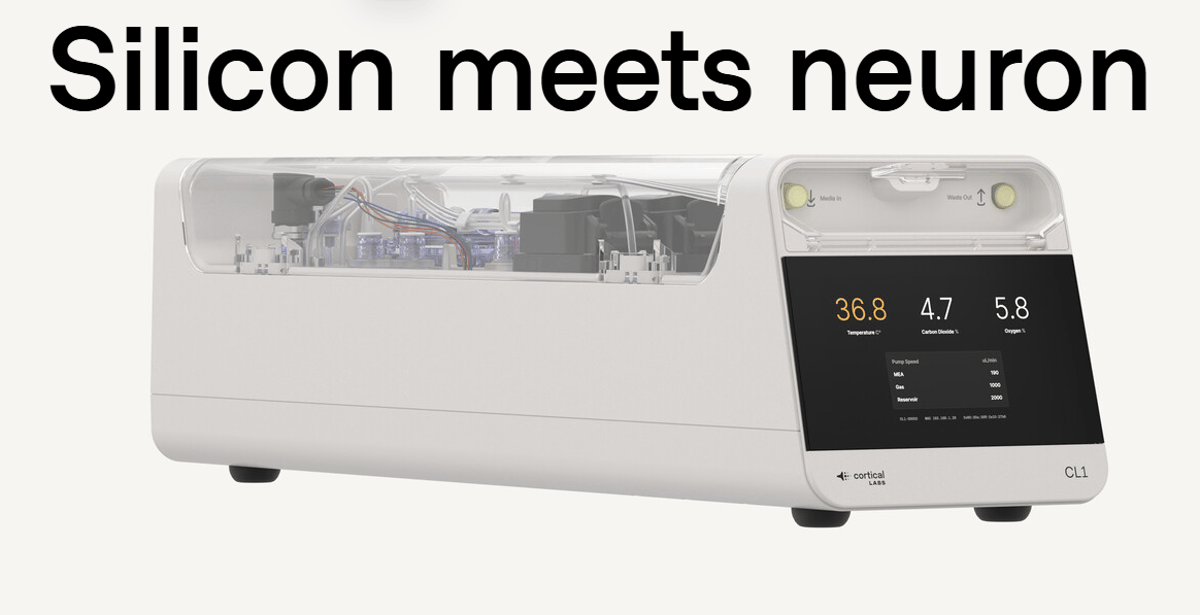
A groundbreaking prototype data center that uses living human neurons to process information has been unveiled in Singapore. The project represents a collaboration between the National University of Singapore's (NUS) Yong Loo Lin School of Medicine, data center operator DayOne, and Australian startup Cortical Labs. The system employs neurons cultivated from human stem cells to perform computational work, offering a potential alternative to traditional silicon-based processors that could dramatically reduce energy consumption in high-performance computing and artificial intelligence applications.
The initial installation at NUS's Life Sciences Institute features a single server rack containing 20 biological computing units, designated CL1 models by Cortical Labs. This marks the world's first autonomous integrated biological server facility. During the demonstration, researchers monitored neural network activity in real time while micro-electrode arrays transmitted electrical signals between conventional hardware and living cells.
How the Technology Functions
The approach, sometimes called "wetware," combines laboratory-grown neurons placed atop silicon chips equipped with electrodes. These chips send electrical stimulation to the neurons and capture their responses, while software systems translate the neural activity into computational operations. Each CL1 unit contains at least 200,000 lab-cultivated neurons that communicate with the computer through electrical signals.
Unlike standard processors, the cells in this system are not inert components, they require controlled living conditions, periodic feeding, and systems that supply oxygen, carbon dioxide, and nitrogen. The goal is to harness the natural ability of neural networks to learn, adapt, and operate with high energy efficiency, particularly for tasks involving limited data or changing conditions.
30 Watts Per Unit
According to Cortical Labs, a CL1 unit consumes approximately 30 watts, compared to advanced GPU processors that can reach hundreds of watts or even 600 watts. Beyond electricity consumption, the technology may also reduce cooling loads, one of the major energy expenses in data centers running AI systems. However, this remains an experimental platform undergoing testing and validation, not a proven replacement for GPUs in training large artificial intelligence models.
The Singapore system became operational on July 16. According to local reports, laboratory teams service the cells every three days using a mixture containing sugars, nutrients, and pH balancers.
From Laboratory to Data Center
The NUS project is designed as a validation phase before a possible transition to commercial production environments at DayOne's Singapore facility. If testing meets technological, energy, safety, and regulatory targets, the partners are considering gradual expansion to as many as 1,000 CL1 units.
The technology is already available through remote access: according to The Straits Times, clients can rent access to a CL1 unit's computing resources for $2,200 per month. Potential applications cited by the companies and university include drug discovery, medical and neurological research, robotics, cybersecurity, and energy optimization.
Not an Immediate Replacement, But a New Path
The project's promise is not to transform every data center into a "living brain," but rather to offer a complementary computing architecture for specific tasks. Its success depends on questions that still require proof: the ability to reproduce and scale production, long-term reliability, compliance with biological safety standards, regulation, operational costs, and the actual advantage over conventional AI hardware.
If the Singapore experiment succeeds, it may signal an intriguing (and frightening) transition: from computing that relies exclusively on silicon to hybrid systems where biology and digital hardware operate together.