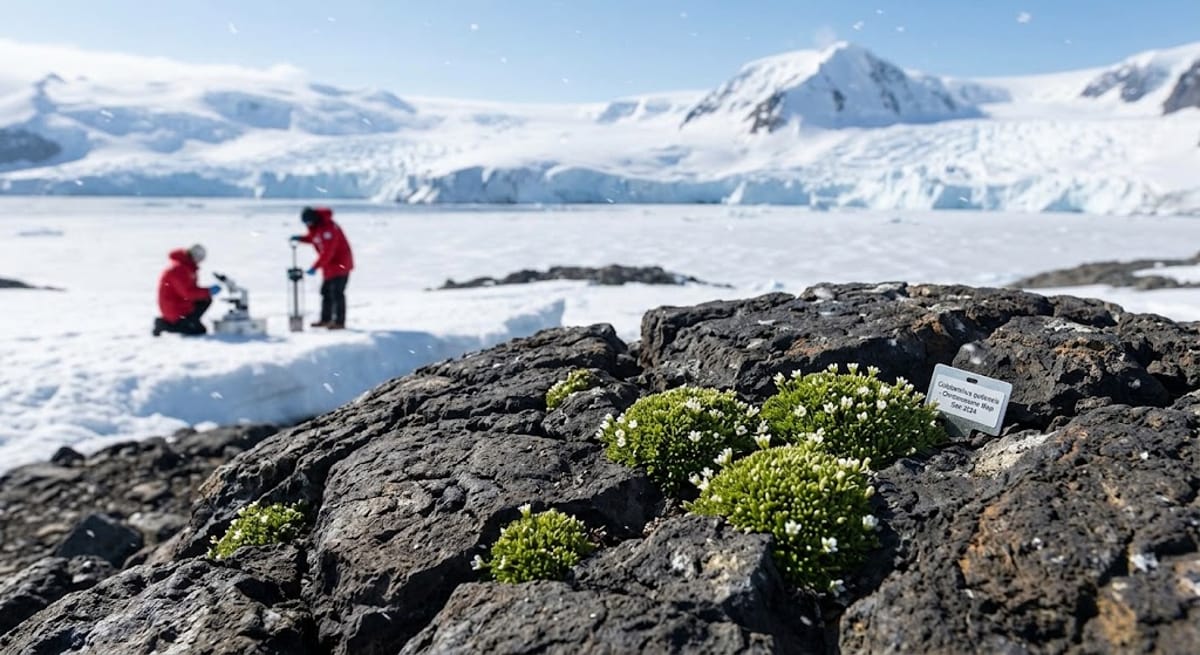
Scientists have completed the first comprehensive genetic mapping of the Antarctic pearlwort, one of only two flowering plants that grow naturally in Antarctica. The achievement could eventually help develop crops capable of withstanding the increasingly harsh conditions brought by climate change.
The tiny plant has evolved to survive in one of Earth's most inhospitable environments, enduring extreme cold, limited water availability, and intense ultraviolet radiation. These are precisely the challenges that agricultural systems worldwide now face with increasing frequency as droughts, heat waves, and unpredictable growing conditions become more common.
A research team led by Chilean scientists has now mapped the plant's genome at the chromosomal level, identifying 40 chromosomal structures spanning approximately 887 million base pairs. The findings were published in the scientific journal Genome Biology and Evolution.
For researchers, this genetic blueprint is more than an academic curiosity. It provides a tool to identify the specific biological mechanisms that enable the plant's remarkable survival capabilities. The goal is to understand which genes and systems allow it to thrive under conditions that would devastate most agricultural crops.
If scientists can pinpoint these mechanisms, the knowledge could potentially be applied to breeding programs or genetic editing of food crops. The researchers emphasize they are not necessarily aiming to create genetically engineered plants, but rather exploring gene-editing possibilities to transfer useful traits to nutritionally valuable crops.
Researchers estimate that commercial applications, if feasible, are likely five to ten years away.