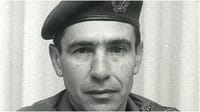
In a story that echoes the timeless Jewish ethos of perseverance and Tzedakah, Noam Lanir, the 58-year-old son of legendary Israeli pilot Avi Lanir, has transformed a life riddled with setbacks into one of extraordinary success and communal impact.
Lanir's early years were marked by profound challenges. Born into a modest family in Ramat Hasharon's Neve Rom neighborhood, a community of 300 pilot families, he grew up on a Defense Ministry pension after his father's heroic death in the Yom Kippur War, supplemented by his mother's meager salary as a teacher. "The last framework I successfully completed was mandatory kindergarten with Nanny Nechama," Lanir quipped, reflecting on his struggles in school.
Excluded from mainstream education, he turned to the streets, peddling door-to-door, from citrus fruits and fresh farm eggs to plasticware, honing survival skills in a world that offered little mercy.
Military service proved equally turbulent. Volunteering for the pilots' course, Lanir washed out after a year, with base commander Ron Huldai (now Tel Aviv's mayor) personally calling his mother to send him home. Assigned to the elite Duvdevan unit's founding team, he was dismissed shortly after.
Even a drone operator course, infamous for never failing anyone, saw him as its first expulsion candidate.
"I went from failure to failure," he recounted. "There were great successes and great failures... but nothing prepared me for the Independence Day ceremony marking the state's 50th anniversary." That event shattered him. Watching a seven-minute film about his father's legacy, Lanir confronted his own perceived shortcomings: "Dad had gone so far by my age, and I'd accumulated failures."
The stress culminated in a near-heart attack at 31, landing him in Ichilov Hospital's intensive care for a week. "For the first time, I felt settled and stable on medication," he said, crediting a psychiatrist's intervention.
Yet, it was his mother's embrace that proved lifesaving. "If there's one message I have, along your life, you'll meet people, children, who are awful and disgusting. They could be your kids, your spouses. If you know in that moment to hug them, maybe you'll change their lives, yours, and humanity's," Lanir emphasized. "Because if my mom hadn't hugged me, I wouldn't be sitting here today with a backbone and successes."
The turning point came in 1999, inspired by ICQ's $408 million sale. Despite lacking English or computer skills, Lanir bought a PC and dove into digital marketing. "I was the first in the world to do tracking on the internet," he explained, adapting nightclub methodologies from his '90s ventures to online.
By 2005, he IPO'd his company at a $1 billion valuation. Subsequent ventures soared, but Lanir paused business from 2006-2010 to aid Holocaust survivors. Since 2013, he's poured resources into pre-army programs, IDF enlistment initiatives, and preserving his father's legacy, embodying the Jewish imperative to give back.
Today, as a sought-after interviewee and podcaster, Lanir's saga resonates deeply within the Jewish community. From humble peddler to philanthropist, Lanir proves success isn't defined by origins but by the distance traveled, and the hands extended along the way.