
Get our mobile app
Download on the App StoreGet it on Google Play

Strategic Vulnerability

China Controls Metal Vital for AI Chips

Beijing dominates 80% of global tungsten production, a critical component in advanced semiconductors and defense systems. Recent export restrictions have disrupted chip manufacturers in Japan and raised alarm in Washington.

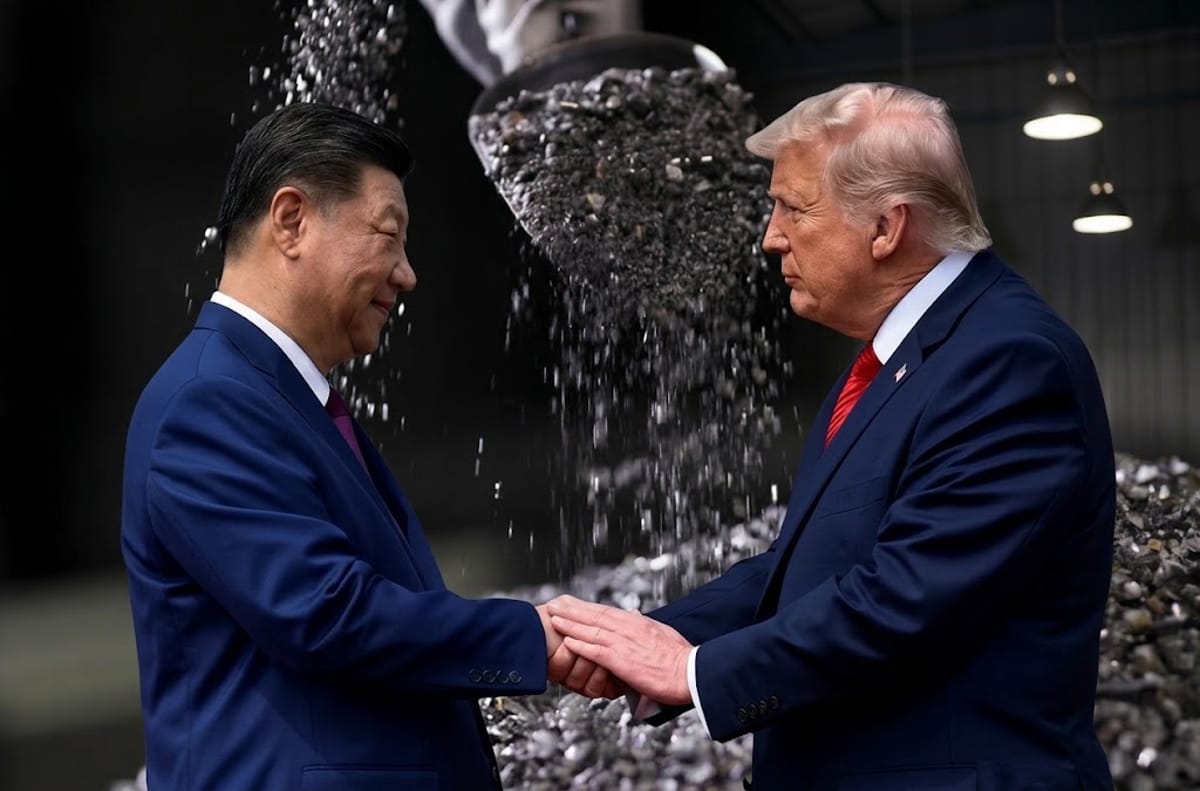
Trump and Xi

Beneath the high-profile competition over semiconductors, massive factories, and artificial intelligence lies a seemingly marginal raw material that is rapidly becoming a strategic pressure point: tungsten. China controls approximately 80% of global tungsten production, and the export restrictions it has imposed are already being felt far beyond the weapons industry.

Two Japanese manufacturers of tungsten hexafluoride, a gas used in chip production, struggled to obtain raw materials from China. Together, these Japanese producers accounted for roughly 25% of the global supply of the gas, and the shortage of raw materials forced them to halt production.
Tungsten
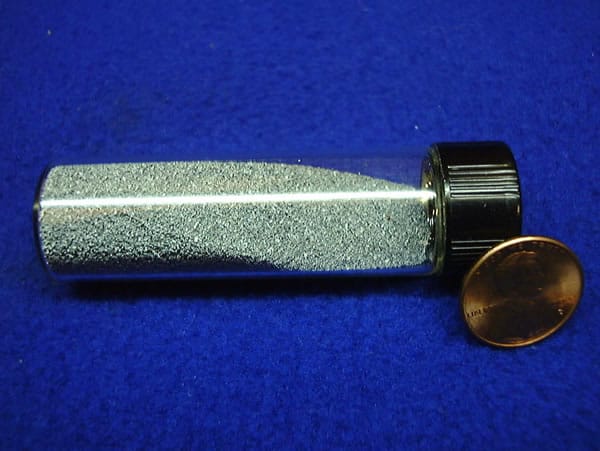
Tungsten (Photo: Wikipedia)

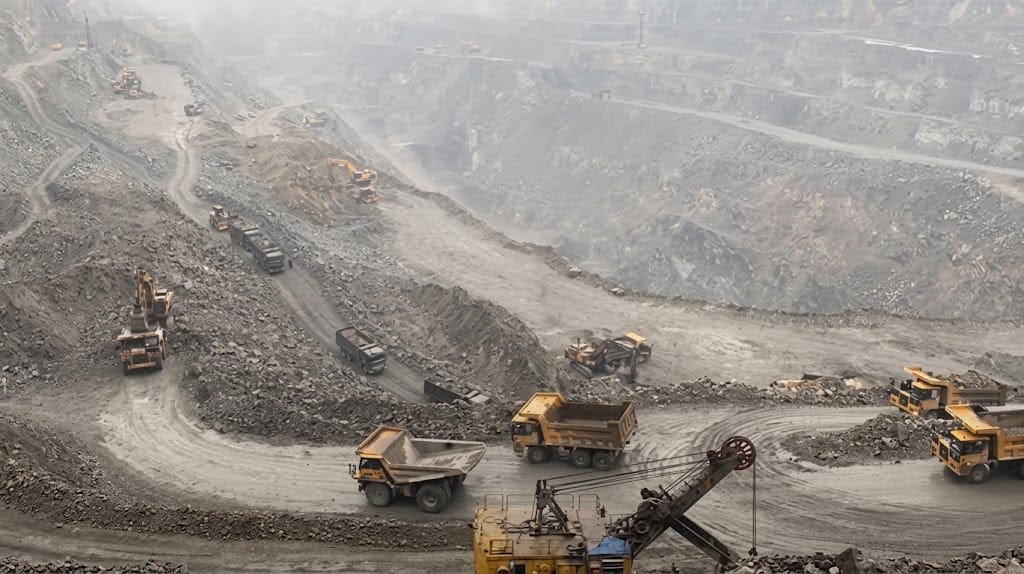
Tungsten is not simply "a metal inserted into a chip." The process by which it arrives there is much more complex. Tungsten is extracted from ores, primarily minerals such as wolframite and scheelite. After mining, it undergoes concentration and refining processes that ultimately yield pure tungsten compounds. One important intermediate product is tungsten powder, from which compounds used in the semiconductor industry can be manufactured.

In chip fabrication plants, tungsten reaches a particularly interesting stage: it is converted into tungsten hexafluoride gas. During chip manufacturing, this gas is used in a process where extremely thin layers of tungsten are deposited onto the chip surface. Tungsten forms conductive layers and microscopic connections within the chip's structure, making it especially important in producing advanced memory chips and semiconductor technologies.

The supply chain looks like this: the earth contains the ore, mines extract the tungsten, processing facilities convert it into pure material, chemical plants produce the specialized gas from it, and only then does it reach the chip factory—where it becomes part of the microscopic structure that enables the chip to function.

Tungsten site
Tungsten site (צילום: רשתות חברתיות)

This is exactly why the current shortage is raising concerns at giants like Samsung and SK Hynix. When one link in the chain is severed, it is not enough to simply find "more tungsten." One must locate raw material at the appropriate purity level, a facility capable of converting it into gas at the cleanliness grade suitable for the chip industry, and above all a reliable source that can supply large quantities over time.

The problem is not limited to chips. Tungsten possesses an exceptional combination of hardness, density, and resistance to extremely high temperatures, which is why it is also used in cutting tools, specialized alloys, industrial systems, and military components. The United States itself depends on tungsten imports, and in recent years pressure has been mounting in Washington to find sources not dependent on China.

In March of this year, the U.S. Department of Defense reached out to mining companies with the goal of increasing domestic supply of critical minerals, including tungsten. Simultaneously, the United States is attempting to rebuild a supply chain that does not rely on China.

AI Superpowers: Chip Giants  TSMC (Taiwan) Samsung Electronics (South Korea) SMIC (China)
AI Superpowers: Chip Giants TSMC (Taiwan) Samsung Electronics (South Korea) SMIC (China) (Photo: Wikipedia)

This race is becoming even more urgent because tungsten is not a material that can be replaced overnight. Opening a new mine, establishing a facility to process the ore, and achieving the purity level suitable for the chip industry could take years.

Thus a metal that most of the public barely knows has become a convergence point for three of the world's most strategic domains: weapons, chips, and artificial intelligence. And it is hardly surprising that here too, China holds control.

Ready for more?

Join our newsletter to receive updates on new articles and exclusive content.

We respect your privacy and will never share your information.

Enjoyed this article?

Yes (19)
No (1)
Follow Us:

Unmissable content


Loading comments...

Also of Interest