A major scientific discovery sometimes begins in the most unexpected place. In this instance, it all started with a short video posted on TikTok.
An international team of researchers has announced the discovery of a tiny, previously unknown subterranean fish found in the groundwater of Bihar state in northern India, within the Indo-Gangetic Plain region. The new species has been given the scientific name Gangaichthys indonepalicus, and it represents not only a new species to science but also an entirely new genus that had never been documented before. The research was published in the scientific journal ZooKeys.
The story began in 2024, when a video uploaded to TikTok documented a small, unusual fish emerging from a hand-pumped borehole well near the India-Nepal border. Its distinctive appearance caught the attention of researchers, particularly because no fish were previously known to live permanently beneath the ground surface in the Ganges basin area.
The researchers decided to locate the source of the fish and attempt to find additional specimens. The task proved exceptionally complicated. Rather than using nets or diving into caves, they had to access local wells and water pumps and extract enormous quantities of groundwater.
Only after pumping approximately 2,000 liters of water did the first specimen appear, but it was damaged during the pumping process and died. The researchers continued their efforts, and after an additional 500 liters, they successfully extracted an intact specimen from the same well, which later became the holotype, the official specimen scientists use to describe and define the new species.
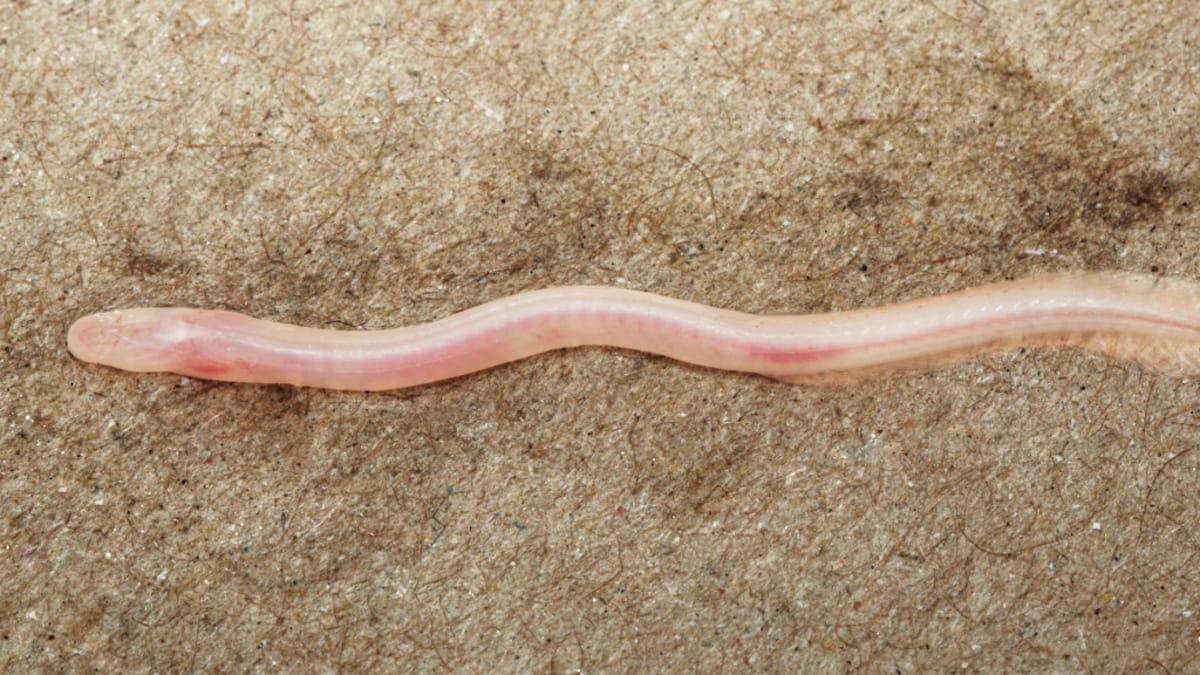
The newly discovered fish is exceptionally small, measuring only about four centimeters in length. Its body is long and slender, resembling a worm in appearance, placing it in a group of fish sometimes called "worm eels." It is almost completely lacking in pigment, with a semi-transparent body, degenerate eyes covered by skin, and according to the researchers, appears to lack ribs as well.
To determine whether this was indeed a new species, the researchers did not rely solely on external appearance. They conducted genetic testing and advanced micro-CT scans that allowed them to examine the fish's skeleton and internal structure without damaging the specimen. The combination of anatomical structure and genetic data showed that the fish differs sufficiently from its relatives to justify creating an entirely new genus within the Chaudhuriidae family.
The name Gangaichthys is derived from the Ganges River and essentially means "fish of the Ganges." The name indonepalicus was chosen because of its discovery location, near the border between India and Nepal. This is the first subterranean fish documented from aquifers in the Indo-Gangetic Plain and Ganges basin.
The discovery highlights how little is still known about life within groundwater systems. Unlike rivers, lakes, and open caves, subterranean aquifers are almost entirely inaccessible to researchers directly, meaning additional species may be living in them without ever having been documented.
In the case of Gangaichthys indonepalicus, this tiny creature might have continued living beneath the ground without science ever knowing of its existence, had someone not pulled out their phone, filmed a short video, and uploaded it to TikTok.