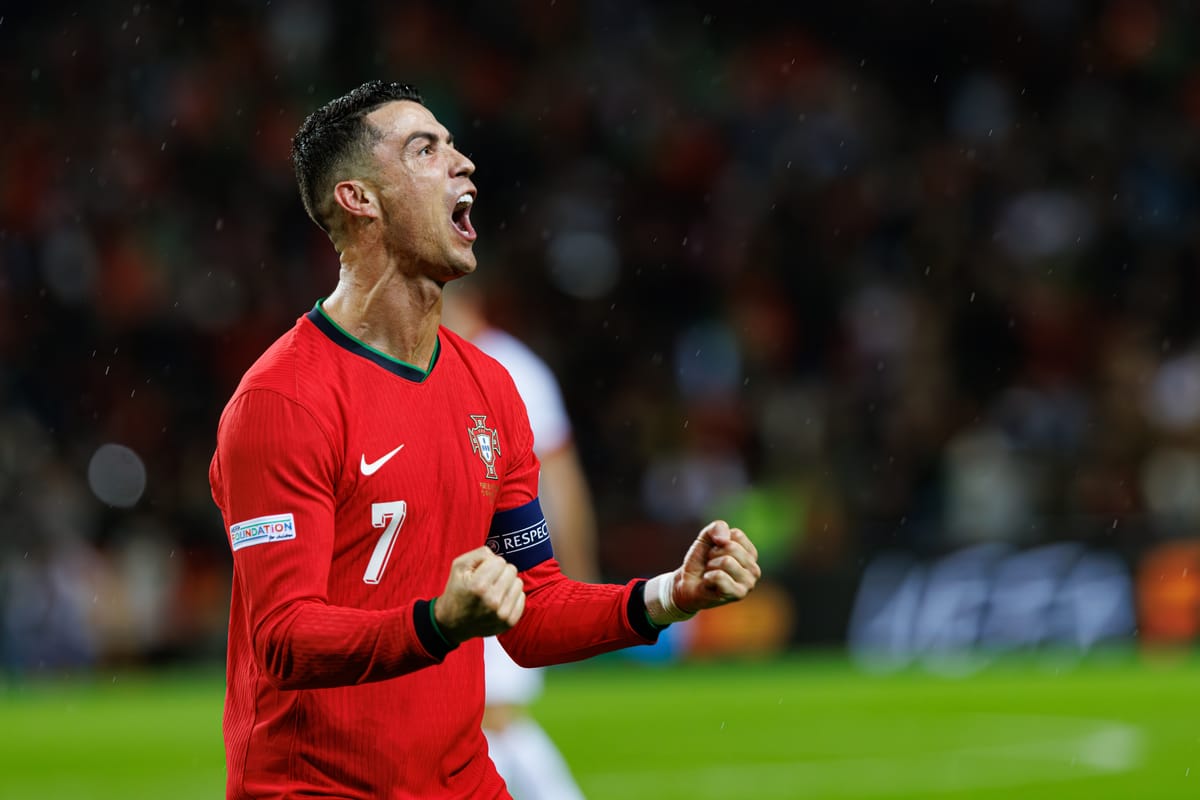
He has scored more international goals than any man who ever played the game. He has carried Portugal to its first major title, led his country to six World Cups, and built a legend so large it defies easy summary. On Wednesday, Cristiano Ronaldo walks onto the pitch at NRG Stadium in Houston to do it all one more time, at 41 years old, in what almost certainly will be his final World Cup.
Portugal faces DR Congo in the opening match of Group K, a game Portugal is heavily favored to win. But on a day like this, the scoreline almost feels secondary. The story is Ronaldo, and the story is time.
He was 21 years old and already the talk of the sport when he played in his first World Cup in Germany in 2006. That Portugal squad, led by a young, electrifying winger with a blinding smile and an even more blinding step-over, reached the semifinals. Since then, Ronaldo has scored at five consecutive World Cups, becoming the first male player in history to do so. He has scored 130 international goals for Portugal. He has done things on a football pitch that analysts still struggle to fully explain.
And yet.
Critics have not been shy ahead of this tournament. His pace is gone. His movement is limited. Portugal, many have argued, may be a better team without him at this stage. The next generation, led by Bruno Fernandes, Bernardo Silva, and the explosive Pedro Neto, is ready to carry the flag. Ronaldo, by this account, is a sentimental pick, not a tactical one.
Portugal coach Roberto Martinez has ignored all of it. Ronaldo is in the starting lineup. He is the captain. He is the focal point.
The man himself has shown no signs of wanting a graceful exit. He has spoken openly about believing he still has a role to play, that experience matters, that the weight of a World Cup moment is something you cannot teach a younger player. Portugal's squad, to their credit, seems to believe him.