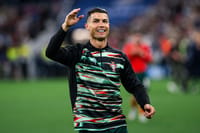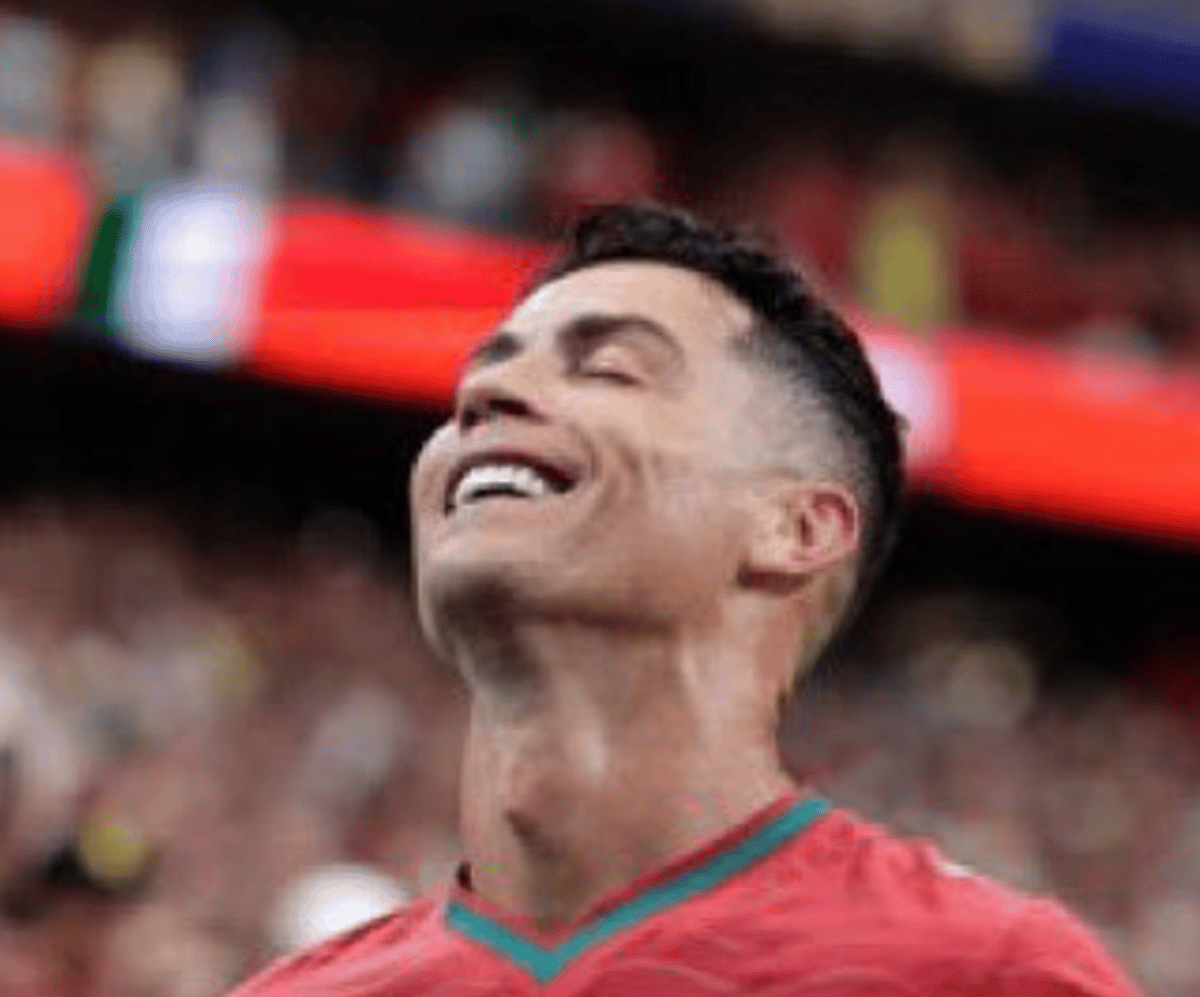
At 41 years old, with two goals and a World Cup record that no human being has ever achieved, Cristiano Ronaldo stood on a pitch in Houston Tuesday night and roared. Scoring in the sixth minute, he became the first player in history to score in six World Cup tournaments, surpassing even Lionel Messi, in a 5-0 annihilation of Uzbekistan that silenced every critic who had called for his head just days earlier. His second goal before halftime made him Portugal's all-time leading World Cup scorer, breaking a tie with the legendary Eusebio. His 144th and 145th international goals extend a record he holds by 23 over Messi.
There is something fitting about the moment. Because Ronaldo, more than almost any other athlete alive, knows what it is to be turned into a fiction, to have words put in his mouth and flags put in his hands and causes attributed to him that he never embraced.
For years, Iran's propaganda machine has been working overtime to claim him as one of its own.
In one of the most brazen episodes, Iran's state television broadcast a dubbed version of a 2016 Ronaldo video in which he appeared to say, "Israeli football fans, for me, are the most hated. I cannot tolerate them. I won't exchange my shirts with assassins." The original video was a Save The Children appeal about the suffering of Syrian children. His words had been completely fabricated.
The fake broadcast went further. State TV claimed Ronaldo said, "If I say that I like the Quds occupying regime just one time, FIFA will select me as the player of the year," using Iran's official terminology for Israel. The broadcast also included footage it claimed showed Ronaldo refusing to swap shirts with an Israeli player, but the player in the footage was actually Aron Gunnarsson, the captain of Iceland. It also showed Ronaldo holding a photoshopped sign reading "All with Palestine," when the original image showed him holding a sign reading "All with Lorca," a reference to a deadly 2011 earthquake in Spain.
The fabrication was so clumsy that even reformist Iranian media outlets denounced it. "Are we going to fight Israel with this stupidity?" one Iranian journalist wrote on social media. State TV's broadcast was called "ridiculous" and "full of lies" by the reformist Sharq daily.
The disinformation did not stop there. Over the years, false claims spread widely on social media that Ronaldo had refused to exchange jerseys with Israeli players, had donated his Golden Boot prize money to Palestinian children, and had refused to meet the Prime Minister of Israel, none of which has any basis in verified fact. Fact-checkers from Kazakhstan to Ukraine have debunked the fabrications. None of it has stopped the clips from spreading.
Ronaldo has remained largely apolitical and has made no direct comments about the conflict, despite his massive popularity in the Arab and Muslim world, where many have projected onto him a solidarity he has never publicly expressed.
What he has expressed, consistently, is something far more straightforward: a relentless obsession with football, and a determination to keep playing it at the highest level for as long as his body allows. He has confirmed that this World Cup will "definitely" be his last, telling CNN: "Let's be honest, when I mean soon I mean probably one, two years. I'm enjoying the moment. But when I mean soon, it's really soon, because I give everything for football."
Iran's state broadcasters tried to make him a symbol of their war against Israel. Instead, Tuesday night, he was just a 41-year-old man making history in Texas, screaming at the sky.