For most of the past century, a single city anchored American Jewish political life. New York, home to the largest Jewish diaspora community on earth, more than a million Jews, was the place where being pro-Israel was not a fringe position or a partisan one. It was a precondition of power. Mayors courted the Jewish vote. Congressmen marched in the Israel Day Parade. Senators who skipped it heard about it for years. The Jewish community of New York did not simply vote, it shaped the Democratic Party's posture toward Israel for the entire country.
That era ended, quietly at first and then all at once. Tuesday night, it was buried.
What Just Happened
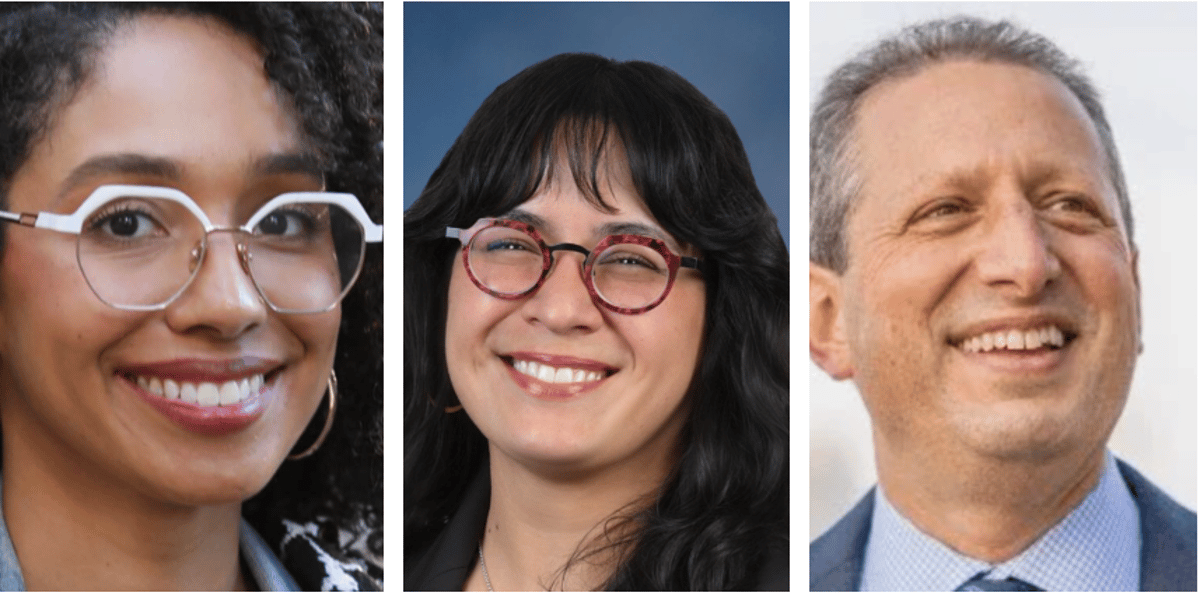
In a single evening, New York City's democratic socialist mayor, Zohran Mamdani, swept all three of his targeted congressional primary races, ousting two sitting pro-Israel incumbents and installing a bloc of Israel-critical allies who will head to Washington in January. The most dramatic upset came in the 10th Congressional District, where Brad Lander defeated incumbent Rep. Dan Goldman, considered one of the more pro-Israel voices in the city's congressional delegation, by a margin of 63 to 37. The capstone of the night came when Darializa Avila Chevalier, a Columbia University Gaza encampment leader, defeated Rep. Adriano Espaillat, a longtime establishment incumbent, in northern Manhattan. In Brooklyn, Assemblywoman Claire Valdez, a Democratic Socialist, defeated Brooklyn Borough President Antonio Reynoso for the seat being vacated by retiring Rep. Nydia Velazquez.
This was not a protest vote. It was not a fluke. It was the second consecutive election in which Mamdani's movement defeated the Democratic establishment on its home turf, extending a mandate that began when he won the mayoralty last November over Andrew Cuomo and extended it decisively Tuesday night to Congress.
Who Is Mamdani and What Does He Actually Believe?
Zohran Mamdani, 34, is a democratic socialist, the son of a Ugandan-Indian academic family, and the first Muslim mayor of New York City. He has never been subtle about what he believes regarding Israel.
"It is Palestine that brought me into organizing, and it is Palestine that I will always organize for," Mamdani said in 2021, adding that he was an anti-Zionist and that the state government where he served was a "bastion of Zionist thought." Anti-Zionism is not a critique of Israeli government policy. It is the rejection of the Jewish people's right to self-determination in their historic homeland.
His record in office has matched his rhetoric. On his first day as mayor, Mamdani nullified all executive orders signed by his predecessor after September 26, 2024, including four measures specifically designed to counter antisemitism in the wake of record-high incidents following October 7. Among them was former mayor Eric Adams's formal adoption of the International Holocaust Remembrance Alliance definition of antisemitism, the most widely accepted framework for identifying modern Jew-hatred, adopted by more than 45 countries and the European Union. Mamdani erased it within hours of taking office.
He also rescinded an executive order that had barred city procurement contracts and pension funds from being weaponized to advance BDS-style boycotts of Israel. Israel is New York State's seventh-largest source of imports, accounting for roughly $5.1 billion in goods in 2024. The door to economic warfare against Israel, through the machinery of the largest city government in America, is now open.
The ADL found that at least 20 percent of Mamdani's administrative appointees have ties to anti-Zionist groups, including Students for Justice in Palestine and Jewish Voice for Peace, with at least four appointees linked to Louis Farrakhan's Nation of Islam.
During the campaign leading up to Tuesday's primaries, Mamdani described AIPAC as "now is the time of monsters," quoting a Marxist philosopher, and demurred when asked to condemn a coffee shop owner who publicly humiliated Rep. Goldman, who is Jewish, and his young daughter, calling Goldman a "fascist" who sipped "genocide juice."
The Machine He Built
What makes Tuesday's result historic is not just that Mamdani won. It's that he has built an actual political machine, one capable of delivering primary victories across multiple districts simultaneously, against the united opposition of the governor, the House minority leader, and the Democratic establishment.
Mamdani celebrated the sweep as proof his movement had outgrown the mayoral campaign. "A year ago, it was not the end of a political movement," he told supporters Tuesday night.
The breadth of the sweep was staggering. Even downballot, Mamdani-aligned candidates romped, with public defender Eli Northrup defeating Rabbi Stephanie Ruskay, a seminary associate dean with deep roots in mainstream Jewish institutional life, in a Manhattan state Assembly district with a large Jewish population. In Queens, Palestinian-American activist Aber Kawas rode the mayor's endorsement to an easy victory.
The message is clear: the Mamdani movement is not a boutique urban phenomenon. It is a functioning political network capable of reshaping representation across all levels of government in the most important Democratic city in America.
The Jewish Community's Fracture
The most painful dimension of this story for the Jewish community is internal. Mamdani did not win in spite of Jewish voters. He won in part because of them.
CNN exit polls found approximately 64% of Jewish voters backed Andrew Cuomo in last year's mayoral race. But roughly one-third voted for Mamdani, despite his open anti-Zionism, his refusal to condemn "Globalize the intifada," and his repeated description of Israel as committing genocide.
That split reflects a generational rupture that has been building since October 7, 2023, and arguably long before. As many as 30% of Jewish voters between 18 and 29 may have voted for Mamdani, reflecting a weakening attachment to Israel, and often to Jewish identity more broadly, among younger, more assimilated American Jews.
As one post-election analysis put it: "We taught the Holocaust, but not covenant. We taught survival, but not sanctity. We taught tolerance, but not purpose. We let Jewish identity become a lifestyle brand instead of a moral calling."
In Tuesday's primaries, that fracture was visible again. Both Goldman and his opponent Lander are Jewish. Both Ruskay and Northrup are Jewish. The Jewish coalition emerging around Mamdani's mayoralty consists of anti-Zionist activists aligned with groups such as Jews for Racial and Economic Justice and Jewish Voice for Peace; liberal Jewish leaders who sharply criticize Mamdani while continuing to engage with him; and Satmar Hasidim, who oppose Zionism on religious grounds and have shaped their relationship with city hall around municipal services, not Israel. The mainstream Jewish establishment, the federations, the major rabbis, the pro-Israel donors, was not simply outvoted. It was outmaneuvered.
What This Means for Israel
The implications extend well beyond New York's borders, and they are serious.
Three new members of Congress who have called Israel's war a genocide and pledged to restrict or block U.S. military aid will take their seats in January. They will arrive as allies of a mayor who has pledged to arrest Prime Minister Netanyahu if he sets foot in New York, who supports BDS, and who commands the largest municipal political machine in the country.
For Jerusalem, the message is hard to ignore: the Democratic Party in New York is not moving as one bloc, but its center of gravity on Israel is shifting, and the pace of that shift is accelerating.
There was one bright spot: in the 12th Congressional District, the seat vacated by longtime Rep. Jerry Nadler, State Assemblyman Micah Lasher, backed by Nadler and former Mayor Bloomberg, defeated a crowded field including Jack Schlossberg, grandson of President Kennedy. Lasher's win offered some relief to establishment Democrats in a district with one of the highest concentrations of Jewish voters in the country. The establishment is not extinct. But it is losing ground, district by district, election by election.
The Deeper Problem
There is something historically disorienting about what is happening in New York. The city absorbed waves of Jewish immigrants who fled persecution in Europe and the Arab world. It built the institutions, the federations, the newspapers, the cultural life, that made American Jewry one of the most influential diaspora communities in history. For generations, being pro-Israel was woven into the fabric of New York Democratic politics so naturally that it barely needed to be said.
Now it has to be fought for, district by district, against a movement that has made opposition to Jewish statehood a badge of honor, and that is winning.
The question for American Jewry is not only who controls New York's congressional delegation. It is what it means when the city that has always been the center of Jewish life in the diaspora elects, again and again, leaders who reject the most basic premise of Jewish peoplehood: that the Jewish people are entitled to a state of their own.
New York is still the most Jewish city in the world outside of Israel. What happens there does not stay there.