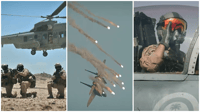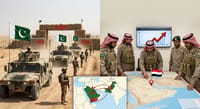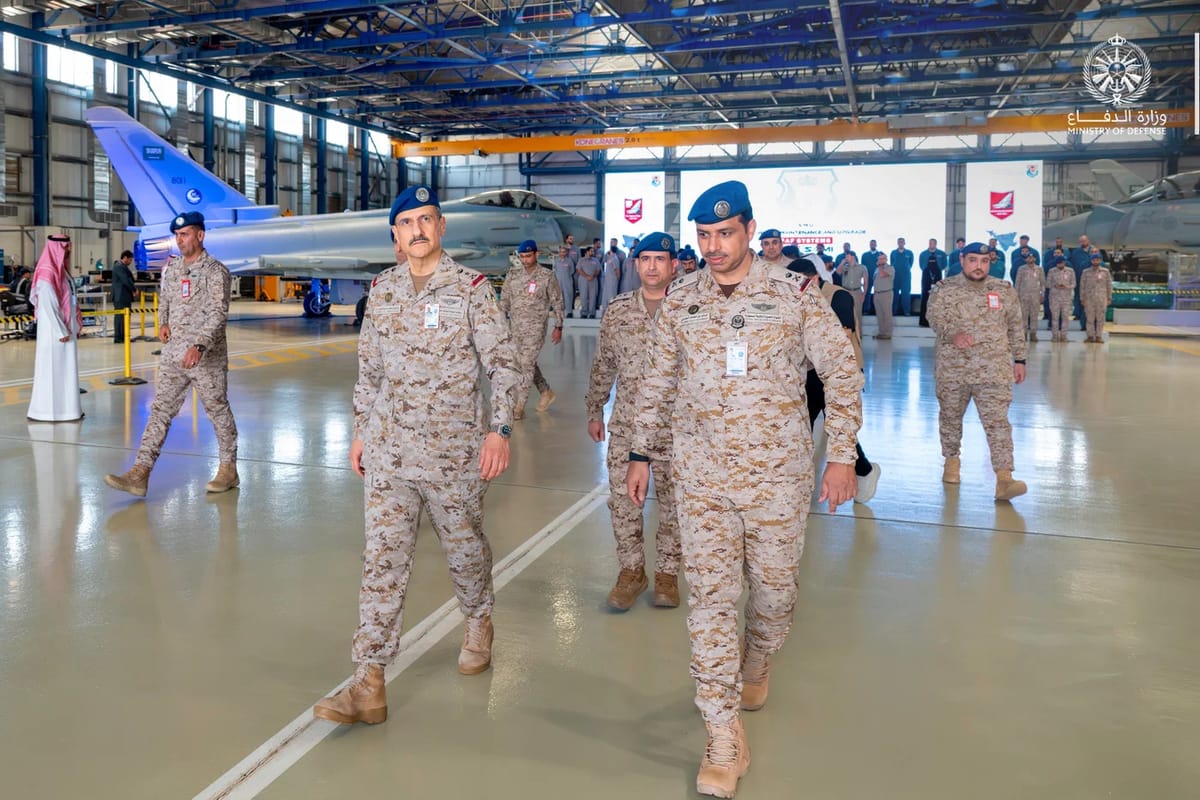
Saudi Arabia's decision to openly strike Iranian militias in Iraq marks not an impulsive escalation but the collapse of a strategic doctrine that has defined the kingdom's approach to regional conflict for five months. For the first time since the February 2026 outbreak of war between the US, Israel, and Iran, Riyadh has abandoned the public face of restraint and dialogue it has maintained throughout the conflict. The question is not why Saudi Arabia struck, but rather why it took so long.
The kingdom's shift from covert retaliation to overt military partnership with the United States reveals a hard-learned lesson: diplomacy without deterrence does not produce negotiation. It produces contempt. And contempt, in the Middle East, produces relentless attack.
For five months, Saudi Arabia pursued what one might call a studied ambiguity. Publicly, the kingdom called for de-escalation, urged restraint, and emphasized its commitment to regional stability. Privately, Riyadh authorized American use of its bases and airspace while conducting its own unacknowledged strikes on Iranian targets. The strategy was designed to balance two competing interests: maintaining the door to negotiation while signaling that the kingdom retained capacity and willingness to respond. In theory, this approach offered plausible deniability while preserving diplomatic options. In practice, it signaled weakness.
The historical context matters. The 2019 drone and missile strikes on the Abqaiq oil-processing facility drew only a limited American response, persuading Riyadh that the implicit bargain at the heart of the relationship, American protection in exchange for Saudi cooperation on oil supply and regional policy, was no longer operative in practice. That moment crystallized a fundamental Saudi realization: the United States could not be counted upon to provide automatic defense of Saudi interests. The kingdom would have to fend for itself.
Yet Saudi Arabia's response to that realization was not to match Iranian aggression in kind. Instead, Riyadh doubled down on restraint. For years, Saudi Arabia placed its faith in diplomacy as the least costly means of preserving regional stability, responding to attacks on its territory with a policy of strategic restraint, keeping the door to dialogue open, out of the conviction that Gulf security could not be built on perpetual escalation. This approach was grounded in a rational calculation: a region consumed by direct great-power warfare would benefit no one, and especially not the Gulf states whose entire economic model depends on reliable energy exports and open sea lanes.
What Saudi planners failed to anticipate was how Iranian-backed militias would interpret that restraint. Rather than seeing Saudi patience as a sign of commitment to peace, they read it as a sign of unwillingness to fight. Some Iran-backed militias came to view Saudi restraint as a sign of hesitation or a limited willingness to respond, pressing ahead with their attacks while steadily escalating their threats. The more Riyadh absorbed without direct retaliation, the more aggressive the attacks became.
The immediate catalyst for Wednesday's strikes was not a single attack but a cumulative judgment that deterrence had failed. In the 72 hours preceding the operation, Iraqi militias directed by Iran's Revolutionary Guards and Houthi forces in Yemen coordinated more than 30 drone and missile attacks on Saudi energy infrastructure and American military positions. This was not a spike in activity; it was a demonstration of the scale of aggression that Iran-backed forces felt emboldened to conduct. The implicit message from Tehran and its proxies was clear: Saudi restraint has no floor. We will continue attacking until you stop us.
Saudi Arabia's economic model made this unbearable. The kingdom cannot survive repeated attacks on critical infrastructure while pretending to pursue peace. Vision 2030 and its successor frameworks depend on predictable energy and revenue flows and a secure maritime environment. The blockade of the Red Sea and Houthi threats to Gulf shipping have already forced Riyadh to recalculate its export corridors and coastal development strategy. Simultaneous attacks on the refineries and processing facilities that generate export revenue transformed abstract strategic doctrine into an immediate economic crisis.
The maritime dimension provided particular urgency. A punishing blockade of its Red Sea oil exports and the need to restore deterrence before its enemies concluded that Saudi patience had no limit forced the kingdom's hand. The Strait of Hormuz and Red Sea together represent the arterial system through which Saudi Arabia's economic lifeblood flows. When the Houthis, explicitly backed and directed by Iran, declared a blockade of these passages and demonstrated capacity to enforce it through repeated attacks, Saudi Arabia faced an existential question: Does the kingdom have the will to defend its own survival?
The broken doctrine also reveals something about how restraint can paradoxically undermine the very stability it is designed to protect. When an adversary perceives that you will absorb repeated attacks without escalating, rational incentives favor continuing those attacks. Diplomacy functions only when both sides believe that aggression carries costs. If one side has demonstrated, through five months of strategic patience, that it will not impose costs on aggression, then diplomacy becomes irrelevant. The only language left is military force.
The Trump administration's orientation also played a role. The 2026 war confirmed that Gulf states were struck despite their efforts to stay out of the conflict, and Iranian missiles and drones struck Saudi energy installations. But Trump's approach has differed from Biden's in one critical respect: the current US administration appears willing to support partners in direct military action against Iranian assets rather than merely encouraging them to contain the problem. The joint strikes represent not just Saudi willingness to escalate but American willingness to do so alongside Riyadh. That alignment created an opening.
What Saudi Arabia has now abandoned is not merely a tactical choice but a strategic hypothesis: that Iran-backed proxies, operating under cover of deniability, could be managed through restraint and dialogue. The evidence of five months has refuted that hypothesis. The proxies interpreted restraint not as a call for negotiation but as an invitation to escalate. Deterrence, Riyadh has concluded, requires visible cost. That cost can only be imposed through overt military action.
The strikes on Iraqi militia sites represent not the beginning of a new escalation but the end of the fantasy that escalation could be avoided through patient diplomacy. Saudi Arabia is not pursuing war. It is pursuing the restoration of a basic equation: attack Saudi Arabia, and you will face direct military consequences. Without that equation, stability is impossible. With it, negotiation becomes possible again.