
The Hidden Toll

Iran Damaged U.S. Naval Base: $400M in Losses

WSJ investigation reveals Iranian strikes between February and June caused far greater destruction than publicly disclosed • Command headquarters, satellite facilities, warehouses hit | Reconstruction costs soar beyond initial estimates (World News)

Vice President JD Vance

A Wall Street Journal investigation has revealed that Iranian missile and drone strikes inflicted far more extensive damage on the U.S. Navy's primary Middle East headquarters in Bahrain than Washington previously acknowledged, with reconstruction costs estimated at $400 million and climbing.

According to the investigative report, Iranian attacks conducted between late February and June targeted critical infrastructure at Naval Support Activity Bahrain, home to the U.S. Fifth Fleet. The strikes damaged command headquarters facilities, satellite communications installations, storage warehouses, and residential structures — some of which remain non-operational months after the attacks.

The disclosure marks a significant escalation in the documented impact of Iran's regional military campaign and raises fresh questions about the vulnerability of American forward-deployed assets in the Persian Gulf. The Fifth Fleet coordinates all U.S. naval operations across a region encompassing the Arabian Gulf, Red Sea, Gulf of Oman, and parts of the Indian Ocean.
The Journal's findings suggest that the actual financial burden will substantially exceed the initial $400 million estimate, as the assessment does not account for operational disruptions, equipment replacement, or enhanced defensive systems likely required following the attacks. Pentagon officials have not publicly disputed the report's core findings.

The revelations come as the Trump administration navigates a complex diplomatic landscape following the establishment of a direct communication channel between U.S. Central Command and Iran's Islamic Revolutionary Guard Corps. Vice President JD Vance confirmed the unprecedented arrangement earlier this week, framing it as a mechanism to prevent further escalation.

Yet the damage assessmentpoints to the strategic challenge facing Washington. Despite recent diplomatic overtures and President Trump's willingness to conclude military operations even without fully reopening the Strait of Hormuz, Iran's demonstrated capability to strike American installations with precision has fundamentally altered the regional security calculus.

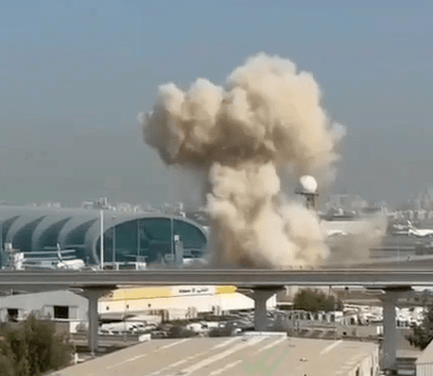
Iranian drone strike Dubai airport in a previous attack.

The UAE's ambassador to Washington, Yousef Al Otaiba, warned in a Wall Street Journal op-ed this week that any resolution to the Iran conflict must address the full scope of Tehran's military capabilities. "The UAE Stands Up to Iran" argued for a decisive conclusion that would eliminate long-term threats to Gulf stability — a position that appears increasingly prescient in light of the Bahrain damage revelations.

The timing is particularly sensitive. Iran has recently declared full control over the Strait of Hormuz and warned that all vessels must coordinate passage directly with Tehran. The Islamic Revolutionary Guard Corps Navy stated that any ship attempting transit without Iranian authorization would face enforcement action.

That assertion was tested Thursday when a Singapore-flagged cargo vessel was struck near Oman, marking the first major challenge to the U.S.-Iran agreement intended to reopen the strategic waterway. The incident occurred just hours after the IRGC issued radio warnings demanding compliance with Iranian-approved routes.

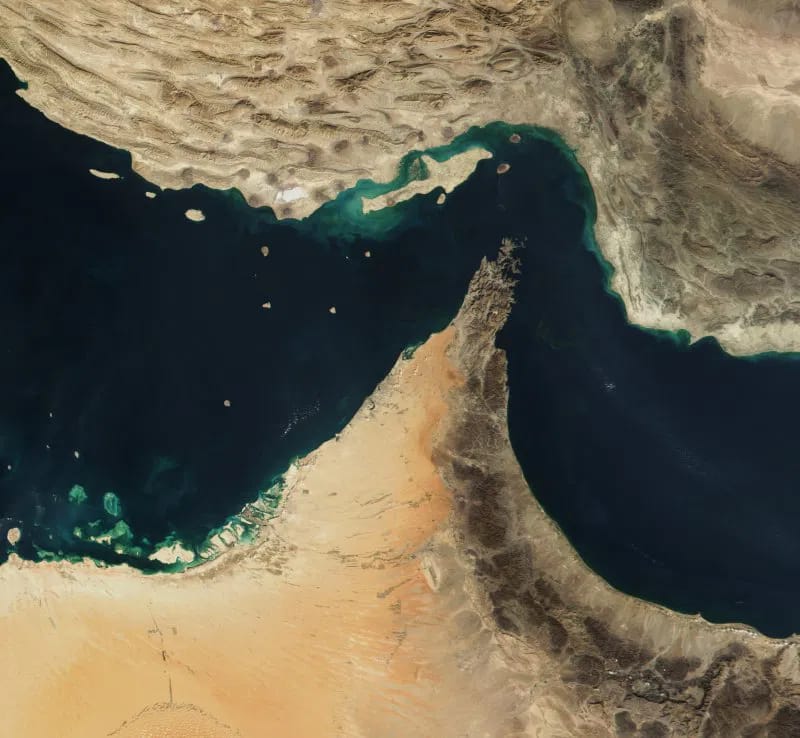
Strait of Hormuz
Strait of Hormuz

The Wall Street Journal investigation also arrives as European allies distance themselves from American military operations. Italian Prime Minister Giorgia Meloni revealed this week that Rome actively denied U.S. requests to use Italian facilities for combat operations against Iran, emphasizing constitutional constraints on offensive military support.

Meanwhile, Tehran has rejected international calls for nuclear inspections at facilities targeted in recent airstrikes. Iranian Deputy Foreign Minister Kazem Gharibabadi declared that monitors would be barred from entering bomb-damaged sites, effectively blocking efforts to independently verify the structural status of Iran's nuclear infrastructure.

As Trump turns to Congress for $80 billion for war expenses, while seeming to exact nothing more than hot air from iran, it makes us wonder if it was worth it at all.

Ready for more?

Join our newsletter to receive updates on new articles and exclusive content.

We respect your privacy and will never share your information.

Enjoyed this article?

Yes (16)
No (1)
Follow Us:
1

Unmissable content


Loading comments...

Also of Interest