As "Operation Roaring Lion" enters its 16th day, a senior IDF official addressed growing concerns regarding the military's stockpile of interceptor missiles, flatly denying claims of a shortage.
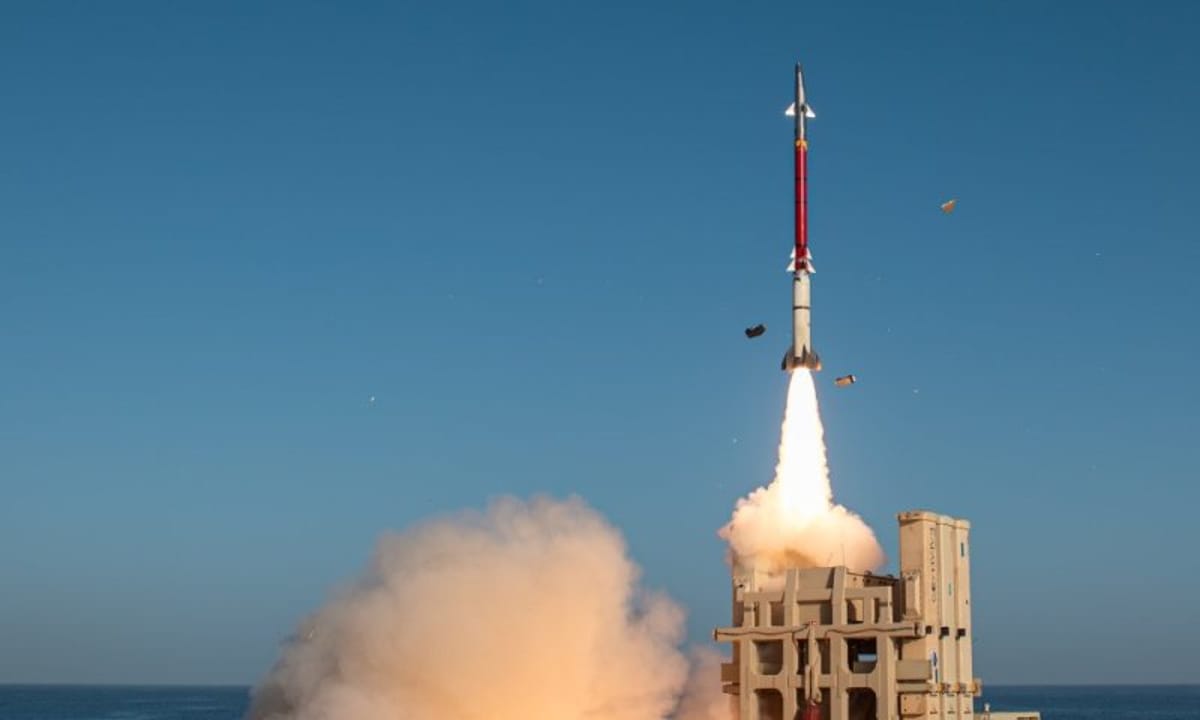
The statement serves as a direct rebuttal to reports surfacing in the United States yesterday, which alleged that Israel had informed Washington that its inventory of ballistic missile interceptors, specifically those used in the Arrow and David’s Sling systems, was reaching critically low levels.
"The war plan was prepared for several weeks in advance, and we have equipped ourselves accordingly," the official told Srugim.
While the intensity of Iranian fire is currently lower than the massive "waves" seen during previous escalations (such as the peak in June 2025), military analysts warn that a lower rate of fire is not necessarily a reprieve.
If interceptor stocks were indeed dwindling, even a small number of precision-guided ballistic missiles could pose a significant threat. In the lead-up to the current operation, Israeli intelligence anticipated a barrage of roughly 100 launches per day. While the current Iranian rate is far below that, Tehran appears to be pursuing a "war of attrition" strategy—launching just enough missiles to keep millions of Israelis in bomb shelters daily and continue the paralysis of the national economy.
The pressure on air defense systems is reportedly even more severe in the Persian Gulf. Kuwait, Qatar, the UAE, and Oman have faced relentless swarms of drones and missiles. Unlike Israel, these nations are less accustomed to sustained high-intensity conflict and are engaging hundreds of targets daily.
* Interception Rates: The Gulf states are utilizing short-to-medium range systems (similar to Iron Dome or Patriot) at a much higher frequency than Israel’s long-range Arrow system.
* Diplomatic Pressure: The heavy consumption of Patriot and THAAD interceptors by Gulf partners is a major factor in Washington's current strategic calculus. Gulf leaders have reportedly urged the U.S. to expedite resupply efforts, which may influence decisions regarding the duration of the current military campaign.