The British Royal Palace has long been synonymous with drama and intrigue, but one ritual has remained shrouded in secrecy and wrapped in fog. Does the Royal Family circumcise its male heirs? Who was the famous mohel who circumcised King Charles? And what's the connection to the mythical belief that the British throne is actually the continuation of King David's kingdom, complete with the stone Jacob used as a pillow, allegedly stolen by King Edward I?
A Complex History
The history of British Jewry isn't merely a story of immigrant communities, but a chronicle of a complicated relationship, sometimes bloody, sometimes respectful, with the residents of Buckingham Palace. From the Great Expulsion of the Middle Ages to the moment when a young princess named Elizabeth entrusted her firstborn son's fate to an elderly Jewish doctor, the connection between the monarchy and Judaism has been woven through ancient myths and one intimate, mysterious ceremony: brit milah (circumcision).
In early periods, Jews, some living in Britain under false identities as "New Christians" (conversos), were forced to reveal their true Jewish identity due to war with Spain, but received royal blessing to live, work, and pray according to their faith. Thus, without grandiose declarations but with crucial government backing, the gates opened for the historic return of Jews to the British Isles.
The Stuart kings, Charles II and James II, provided the young community protection from hostile local merchants, and King William III even granted the first knighthood to a practicing Jew, Solomon de Medina. But as the community became established, strange beliefs began developing in the palace that connected royal blood with Jewish blood.
The David's Throne Theory
At the heart of British royal mythology lies one of the most fascinating myths: the belief that the royal dynasty isn't merely British or German, but a sacred lineage descending directly from King David. This myth, known as "British Israelism," claims that the British people are actually descendants of the "ten lost tribes," and that the monarch sitting in London is the rightful heir to the Kingdom of Judah.
The theory gained momentum in the 19th century, when the British Empire was at its peak and the search for spiritual meaning to its supremacy was at its height. According to this view, after the exile of the ten tribes, they wandered through Europe and settled in the British Isles. The word "British," enthusiastic adherents claimed, derives from the Hebrew words "brit ish" (covenant man).
Legend tells that the famous coronation stone, upon which British monarchs are crowned, is none other than "Jacob's Stone," the one upon which Jacob dreamed at Bethel. The stone was supposedly brought to Ireland and then Scotland by the prophet Jeremiah, physically and spiritually connecting the Kingdom of Israel to the British Crown.
Queen Victoria's Conviction
The central figure in developing this myth was Queen Victoria. According to legend, Victoria was utterly convinced that she desscened from King David. It's said she employed genealogists who "proved" her connection to Jesse, David's father, and that this belief guided her most intimate decisions.
The most practical and shocking expression of this belief was the practice of circumcision. Legend claims Victoria insisted all her sons be circumcised on the eighth day, exactly according to Jewish commandment, to preserve the "covenant sign" of the House of David. (Though some argue the custom likely began with King George I, who brought the tradition from Hanover, Germany.) This myth became tangible reality in the public eye as the practice allegedly continued through generations: from Edward VII, through George VI, to King Charles.
The Snowman Brothers: Jeweler, Mohel, and Artist
Throughout Britain's illustrious history, many Jewish figures climbed the gilded stairs of Buckingham Palace, but Dr. Jacob Snowman's story was undoubtedly one of the most unique. He wasn't just a brilliant doctor, but the man chosen to circumcise the future king, Charles III, becoming a living bridge between the ancient world of halacha and modern science and the royal court.
Jacob Snowman was born on November 24, 1871, in St. Pancras, London. He was the eldest son of Abraham Snowman, a Jewish immigrant from Poland who established a successful picture-selling business, and Rachel Krock. The Snowman family embodied the Jewish immigrant success story in Britain, transforming within one generation into major suppliers to the Crown in three different spheres: Jacob as doctor-mohel, his brother Isaac as the beloved portrait painter of Queen Mary and King George V (a passionate Zionist who established a studio above Jaffa Gate and was attacked during the 1921 Jerusalem riots but survived), and their brother Emanuel as founder of the jewelry company "Wartski."
Queen Mary continued the tradition of royal patronage to the Jewish jewelry company managed by Emanuel Snowman. The company supplied luxury items to the Royal Family for generations, including wedding rings for Charles, William, and Harry. Emanuel's historic achievement was purchasing the Tsars' art treasures from the Soviet government between 1925 and 1938, acquiring nine valuable imperial Fabergé eggs for Wartski.
Jacob Snowman wasn't just a "professional," but a prolific author who wrote at least four books bridging medicine and Jewish tradition. His most famous work, "The Surgery of Ritual Circumcision" (1904), is considered a medical manifesto that incorporated strict sterilization principles into the brit ceremony, ensuring its survival in the modern era. He also wrote about Talmudic medicine and served as medical officer of the London Initiation Society for 27 years, training generations of mohelim in meticulous surgical technique.
In Good Hands
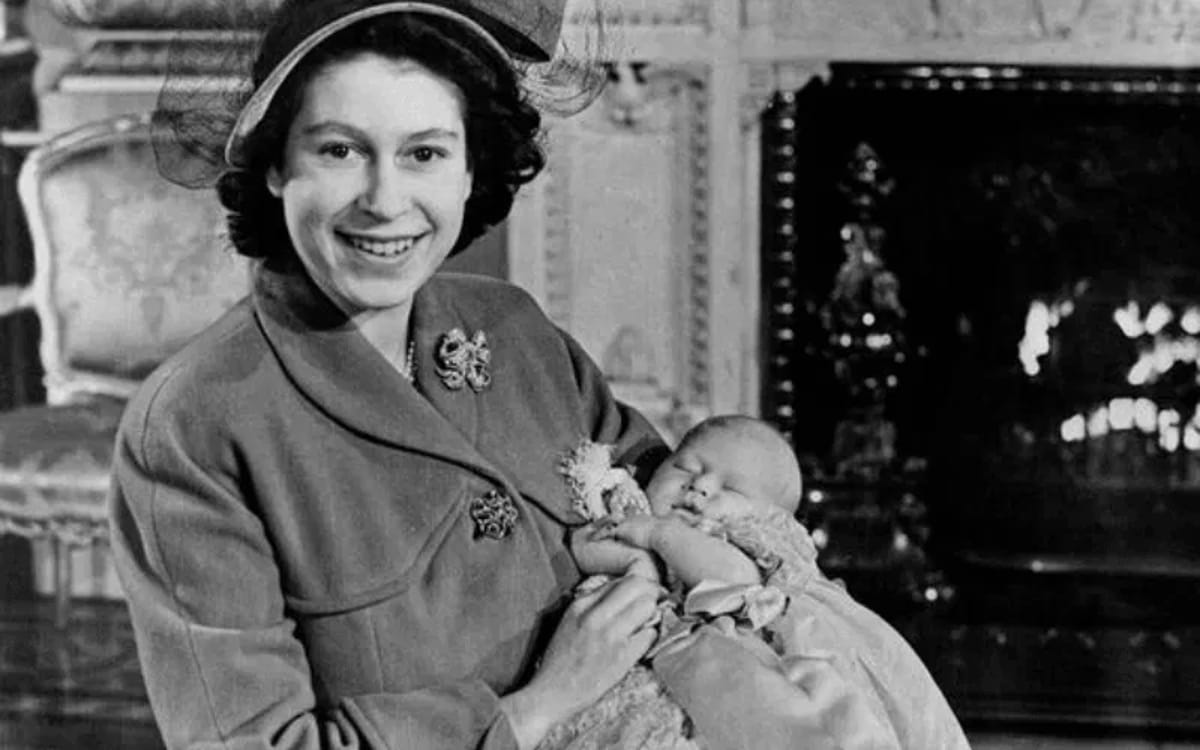
One of Dr. Snowman's most important moments came with King Charles's birth. On November 14, 1948, near midnight, the announcement of the heir apparent's birth was published, and London's streets erupted in overwhelming joy; thousands sang "He's a jolly good fellow" and the Trafalgar Square fountains were lit in blue.
Here occurred the most amazing story: despite rigid protocol, Princess Elizabeth (later the Queen) personally chose Dr. Snowman. She preferred the services of the experienced Jewish mohel over the royal court physician, believing that someone who had circumcised thousands of babies would ensure her son's health better than any general surgeon. Thus, in December 1948, five days after the prince's church baptism, Dr. Snowman, then already 80 years old, was summoned to Buckingham Palace.
It's said Snowman performed the procedure with such high professionalism that it became a source of immense pride for British Jews. The Jewish community estimated that while the medical elements were extremely rigorous, religious blessings were probably omitted for the Anglican royal family. This event cemented Snowman's status as the ultimate "royal mohel," reinforcing the long-standing myth connecting Jewish circumcision to the British Crown. The ceremony moved the Queen so deeply that not only Charles but also Princes Andrew and Edward were circumcised by Jewish mohelim summoned to the palace.
Dr. Snowman passed away in 1959, leaving behind a legacy that combined medical excellence with deep loyalty to his roots—and primarily brought to light the sensitive moment when a tradition thousands of years old met the British Crown.
## Then Came Diana
When Princess Diana entered "The Firm" of the British Royal Family in the 1980s, she was perceived as a fresh spirit seeking to challenge the palace's rigid and outdated traditions. One of the most persistent rumors accompanying her era, considered symbolic of her rebellion against conventions, was the claim that Diana broke a 150-year royal tradition and refused to circumcise her sons, Princes William and Harry.
This rumor became part of Diana's myth as an "outsider" seeking to protect her children from ancient and mysterious rituals, but as recently revealed, reality was far more complex.
According to most royal observers and biographers of the period, Diana showed no interest in the circumcision ceremony, which was then perceived as part of royal "oddities." While for generations it had been customary in the Royal Family to circumcise sons, many believed Diana vetoed the practice for her boys. Royal biographer Hugo Vickers noted that at that time (the 1980s), circumcision became less a "religious tradition" and more a "medical fashion" that was beginning to fade in Britain.
However, the rumor that the princes weren't circumcised dramatically cracked with the publication of Prince Harry's book, "Spare." In his memoir, Harry addresses the issue directly and debunks the urban legend: he confirms he was indeed circumcised, thereby clearing his mother of accusations of breaking tradition. This revelation only deepens the mystery: if the tradition wasn't broken, why did the palace choose to obscure the matter for so many years?
"He Earned It"
King Charles never spoke about his Jewish mohel, or such Jewish sentiments, but his famous biography tells a completely Jewish story.
During his service as an officer on the Navy ship "Jupiter" in 1974, a sailor from Charles's division was killed in a tragic car accident. Following naval tradition, a public auction of his personal belongings was held for the benefit of his bereaved family. When a simple green cardboard suitcase belonging to the fallen soldier was offered at a minimal price, a shout suddenly rang out from the back of the room: "400 pounds!"
It was the voice of the King (then Prince) Charles. This unexpected gesture "boosted" the entire auction; other sailors began offering high prices for the remaining items, and by day's end, an enormous sum of 1,500 pounds was raised for the family. A true king, whose word is his bond.