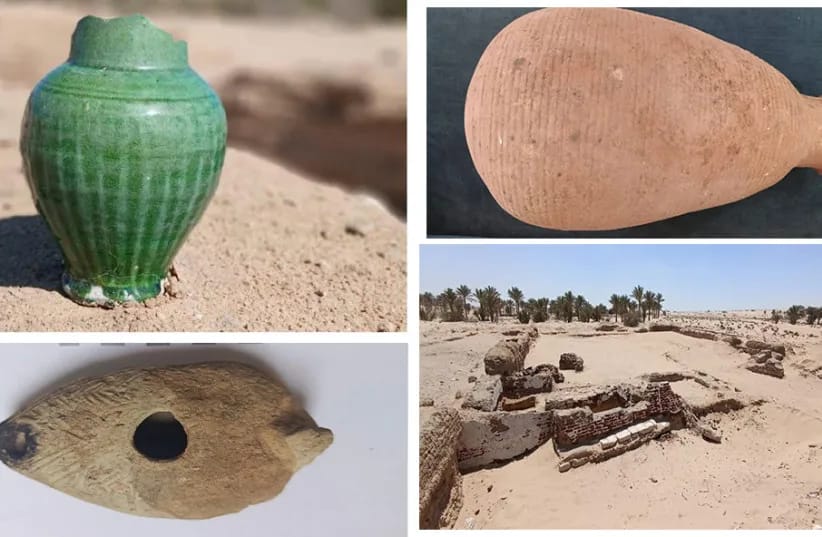
Archaeologists working in the ancient city of Asila in northern Sinai have uncovered the remains of a roadside inn dating to the Mamluk period. According to Egypt's Ministry of Tourism and Antiquities, the structure likely served as a rest stop for merchants, travelers and pilgrims making their way along one of the region's major trade and pilgrimage routes.
Asila was situated along the "Sultan's Road," also known as the Egyptian Hajj route, which for centuries connected Egypt with the Levant and the Arabian Peninsula. The road carried merchant caravans, pilgrims and military forces during the Islamic periods. In the 11th century, use of the northern section declined due to the Crusader threat, and the pilgrimage route to Mecca was later shifted southward through the Red Sea port of Aidhab, from where travelers continued to Jeddah.
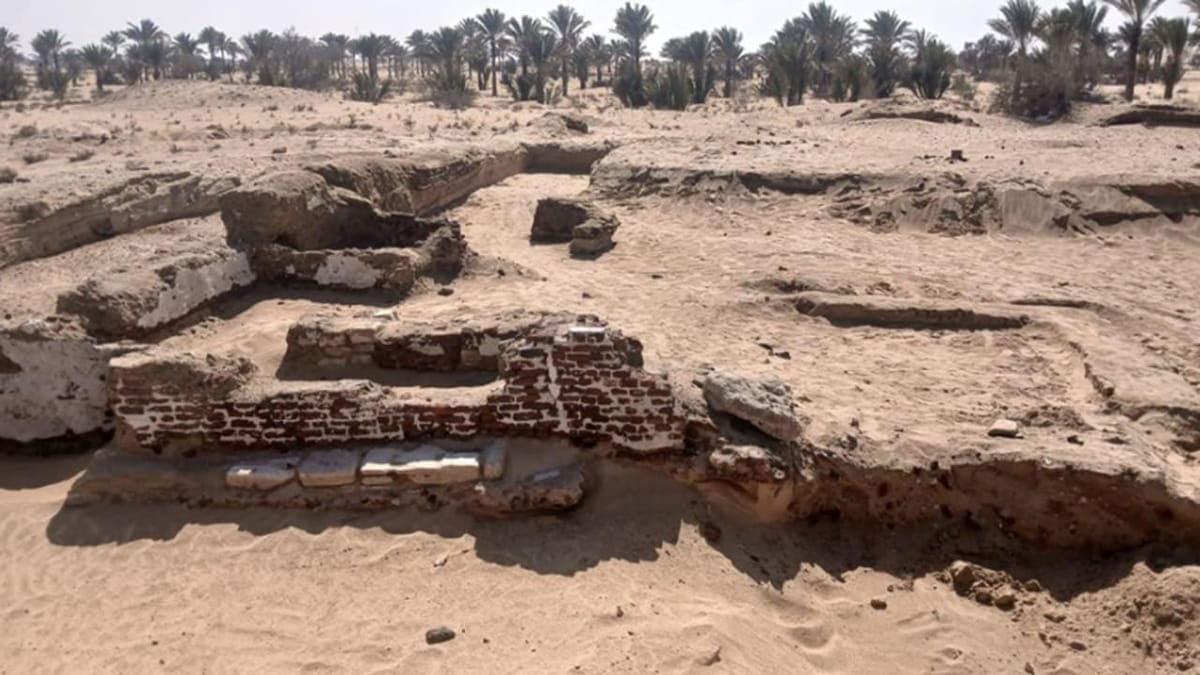
Excavators found walls constructed from mud bricks and red bricks, built on foundations reinforced with limestone. Dr. Hisham al-Laithi, secretary-general of Egypt's Supreme Council of Antiquities, said the walls extend in several directions, indicating the building once contained multiple interior rooms. Researchers believe some served as guest quarters while others functioned as shops and storage facilities attached to the inn.
The building's layout resembles another ancient commercial site in northern Sinai, Khan al-Khuwaynat. Though the complex uncovered at Asila is smaller, the architectural similarities reinforce the assessment that this too was a way station serving caravans of merchants and travelers crossing the desert.