
Get our mobile app
Download on the App StoreGet it on Google Play

From the Archives

1949: 87% turnout record still unbroken

Interior Ministry clerks went door to door to build the first voter registry; half a million citizens registered and voted in a turnout that has never been matched

Preparations for the elections
Director of the Knesset Museum
Director of the Knesset Museum (Photo: Knesset Spokesperson)

The year was 1949. The young State of Israel had risen from the ashes of war, with hundreds of thousands of new immigrants streaming across its borders. There were no computers, no digital databases, no infrastructure to speak of. Faced with the enormous challenge of establishing a democracy from nothing, one question demanded an immediate answer: how do you determine who is eligible to vote?

The remarkable answer has now been revealed by Dr. Moshe Foxman zt"l, director of the Knesset Museum, in new research drawing on state archives. The massive task of building Israel's first voter registry was accomplished through a method that was primitive but determined: Interior Ministry clerks went out into the field and visited families one by one, door to door, to ensure that every citizen would receive his basic democratic right.

The enormous effort bore fruit. More than half a million Israeli citizens registered in the historic voter registry and turned out en masse at the polls. The result was a phenomenal turnout of 87%, an all-time record in the history of the state that stands to this day, testimony to the excitement and sense of destiny that accompanied the birth of Israeli democracy.


From 1949 to 2026

The contrast between the first election and the upcoming election for the 26th Knesset underscores the transformation the state has undergone. On October 27, more than 7.3 million eligible voters will go to the polls, fourteen times the number in the first election. Of these, some 618,839 are new voters who have turned 18 since the previous election.

Across the country, 12,018 regular polling stations will be set up, compared to a far smaller number in the first election. For citizens evacuated from their homes due to the security situation, a special accommodation has been made: they will be able to vote at any polling station in the country designated as accessible to voters with limited mobility.

The election for the 26th Knesset marks another significant milestone: the 25th Knesset will complete its full term for the first time since the 11th Knesset, which finished its term in 1988, 38 years in which no Knesset has completed its full term.

Voting data from the election for the 25th Knesset in communities of over 50,000 residents demonstrates the strength of the chareidi public. The city of Modiin Illit led the list with an impressive turnout of 82%, followed by Beitar Illit with 81.3%, and the city of Bnei Brak recorded a particularly high figure of 76.5%.

The current election operation also includes unprecedented preparations in the IDF. The army is preparing for an unprecedented election operation to ensure that all soldiers can exercise their right to vote, for the first time while crossing borders and in a challenging operational reality. During the coming week, some 850 polling stations will be deployed in all units and all operational sectors, an increase of 150 polling stations compared to the previous election.

Early voting in the IDF will begin on October 20 and continue for seven days until the general election day. About 75% of the polling stations are stationary and about 25% are mobile, which will operate during early voting and move between several units according to a predetermined schedule.

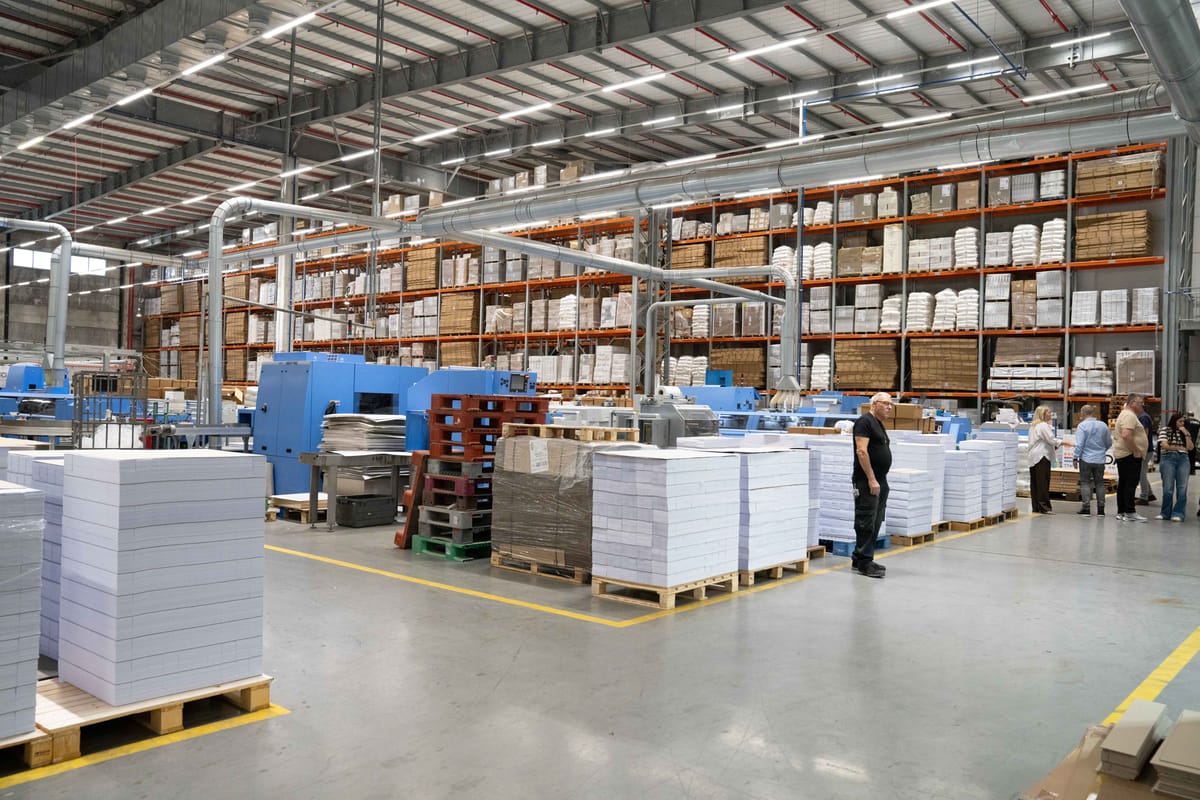
Meanwhile, the Central Elections Committee marked a significant milestone in preparations for election day with the start of the ballot printing operation. In the unprecedented operation, some 450 million ballots will be printed for the approximately 7.3 million eligible voters. For each list running for the 26th Knesset, approximately 11.5 million copies will be printed.

The Orda factory in Kiryat Gat, Israel's largest printing plant, is operating at an enhanced capacity to meet the strict deadlines. Due to the enormous scope of work, printing is being carried out around the clock in a format of 24 hours a day, six days a week, until election day.

"These ballots from here will be transported to 12,018 polling stations across the country," said Judge Noam Solberg, chairman of the Central Elections Committee, during a tour of the factory. "We have 7,336,553 eligible voters. We ordered according to the law's requirement the number of eligible voters, plus 30% that the law requires of us, and even more so that we will be fully prepared."

Ready for more?

Join our newsletter to receive updates on new articles and exclusive content.

We respect your privacy and will never share your information.

Enjoyed this article?

Yes
No
Follow Us:

Unmissable content


Loading comments...

Also of Interest