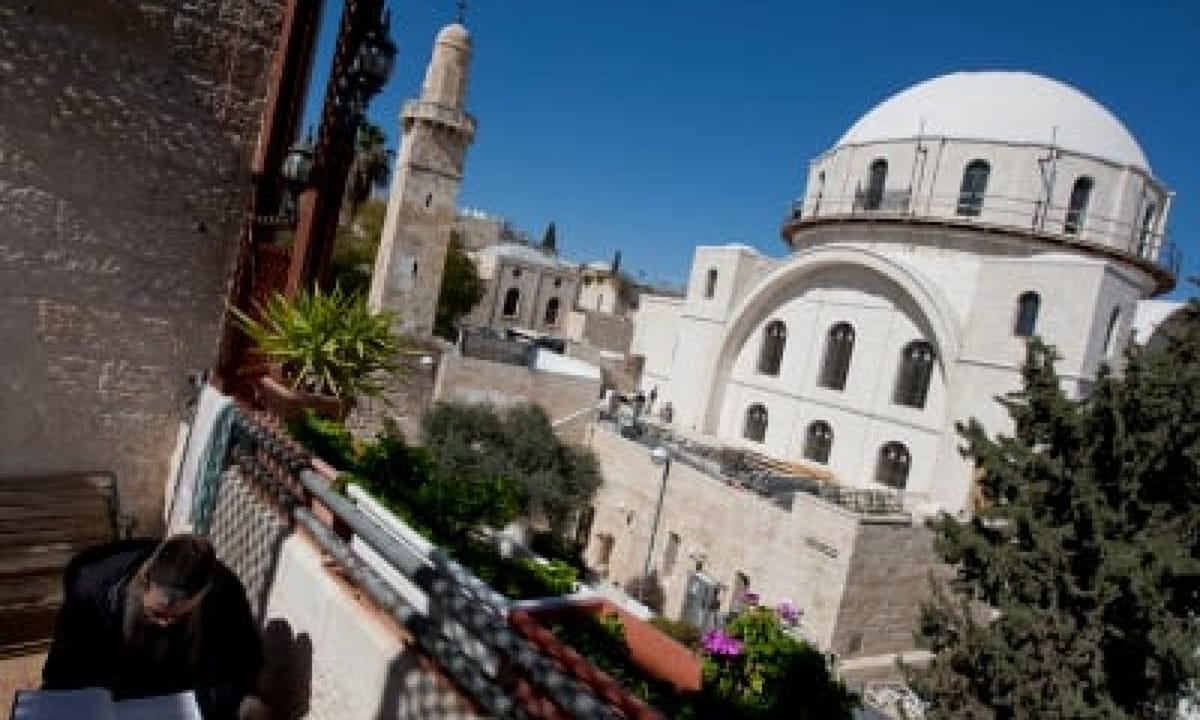
The Hurva Synagogue, standing tall in the heart of Jerusalem’s Old City, is far more than a house of worship. Its towering dome tells an epic story of construction, destruction, and ultimate restoration, embodying Jewish perseverance, faith, and historical justice. As the Jewish people prepare to celebrate the festival of Shavuot, a holiday deeply tied to Jerusalem and Jewish heritage, the Hurva stands as a powerful symbol of a community that refused to let its spirit be erased.
The saga began in October 1700, when a group of Jewish immigrants from Europe arrived in Jerusalem under the leadership of Rabbi Judah he-Chasid and established a synagogue. Just two decades later, in October 1721, Ottoman creditors destroyed the structure. The site lay in ruins for over a century, earning it the poignant nickname "The Hurva", Hebrew for The Ruin. It was finally rebuilt and rededicated in 1864, an event celebrated at the time as the beginning of the ultimate redemption.
The Hurva quickly evolved into the largest, most magnificent, and most important synagogue in all of the Land of Israel, serving as the beating heart of daily life in the Jewish Quarter.
A Symbol of War and Renewal
The synagogue’s prominence also made it a prime target. In May 1948, just two days after the Jewish Quarter fell during the War of Independence, Jordanian Arab Legion forces intentionally blew up the historic building as a symbolic declaration of victory. For the second time in its history, the site was reduced to a pile of rubble.
The continuity of Jewish life in the Old City was severed for 19 years until the 1967 Six-Day War. Following the reunification of Jerusalem, the debris was cleared, the area became an active archaeological site, and key historical elements were preserved. For decades, a lone reconstructed arch of the northern wall stood as a silent witness to the turbulent history of the site.
Recognizing the deep emotional and historical value of the landmark, the Company for the Reconstruction and Development of the Jewish Quarter made the monumental decision to restore the crown to its former glory. The synagogue was meticulously rebuilt exactly as it once stood and was officially rededicated in 2010.
A Modern Treasure with Ancient Secrets
Today, visitors to the Hurva Synagogue are met with an awe-inspiring sanctuary that seamlessly blends the past and the present. The site boasts several remarkable features:
- The World's Tallest Ark: The breathtaking Holy Ark stands as a centerpiece inside the massive hall.
- Vibrant Wall Paintings: The interior features beautifully recreated murals and stunning architectural details.
- Fascinating Archaeology: Visitors can explore ancient artifacts unearthed beneath the building during excavations.
- A Pre-State Secret: In a thrilling discovery during the recent reconstruction, workers uncovered a secret weapons cache (Slik) belonging to the Irgun (Etzel) underground resistance group hidden directly beneath the Holy Ark.
Visiting the Hurva
The Hurva Synagogue is a vibrant cultural and spiritual hub, offering guided historical tours, Bar Mitzvah ceremonies, weddings, and rooftop conferences.
For those visiting the Old City during Shavuot, climbing to the building's rooftop is highly recommended. The panoramic view offers a breathtaking, 360 degree look across the ancient rooftops of the Old City and the rolling Jerusalem hills, providing an unforgettable experience. Note that while the main sanctuary is accessible, the rooftop panoramic lookout is not wheelchair accessible.