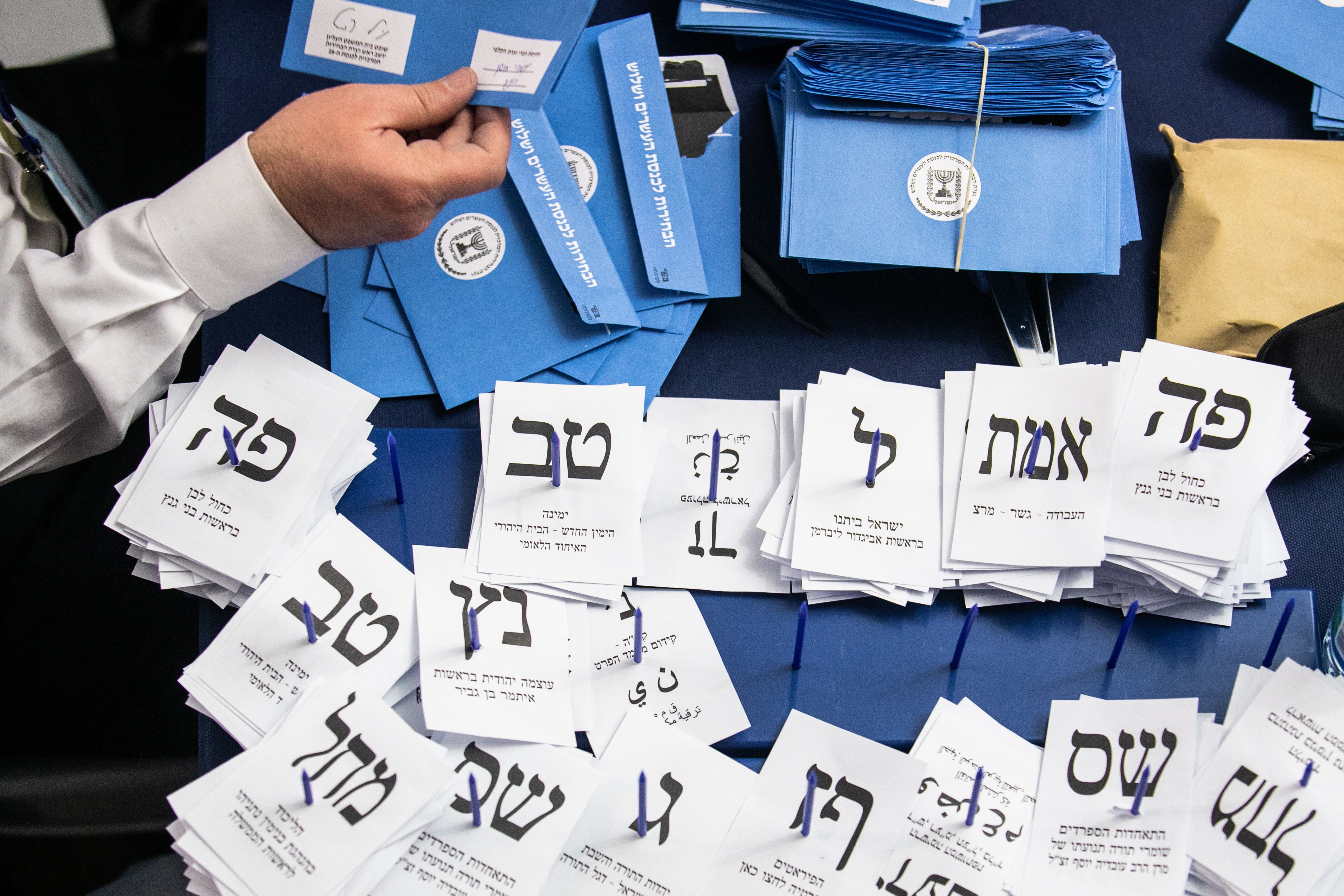
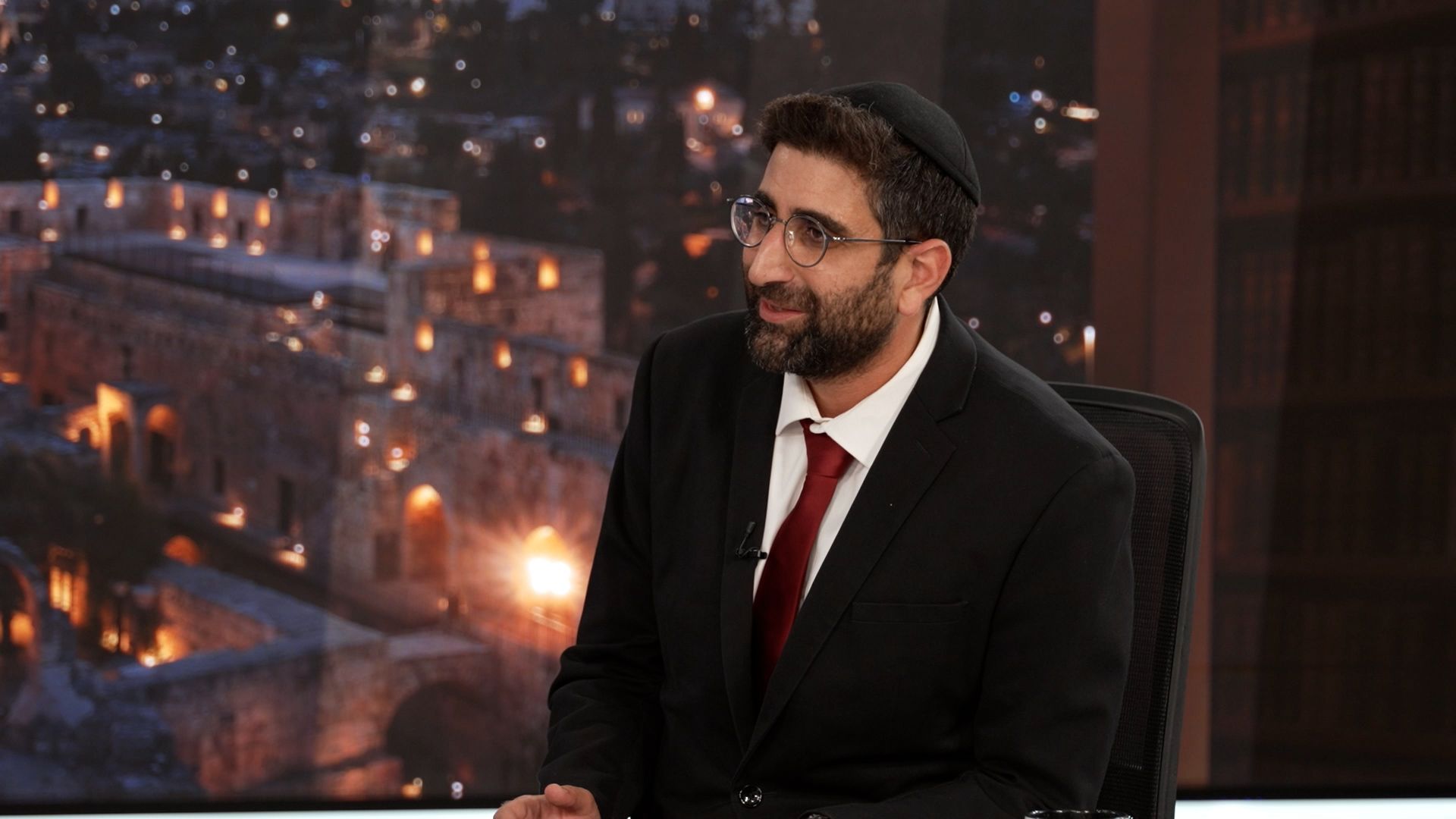
As public debate rages over allegations that Qatari and Turkish money was funneled into Israel's elections and that votes were bought, a Torah lesson by Rabbi Avraham Maimon has taken up a question beyond the politics: what does Jewish law say about an election won through bribery, and could it affect the binding force of the laws an elected government passes?
Halacha and Election Integrity
Halacha Weighs Bought Votes and Knesset Laws
Amid allegations of Qatari and Turkish money in Israel's elections, a Torah lesson by Rabbi Avraham Maimon traces how Jewish law treats an appointment won through bribery.

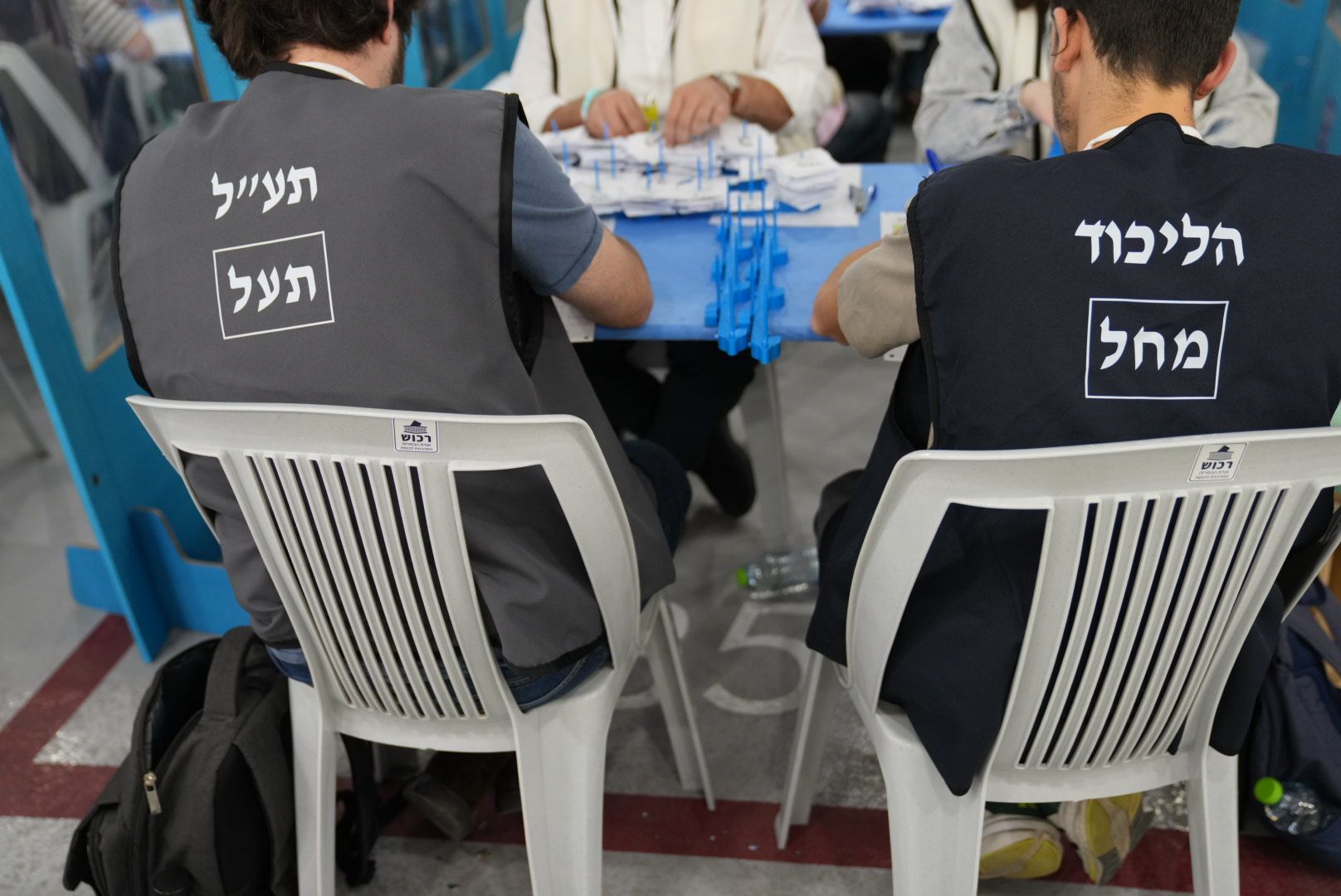
The lesson, published in the magazine of the chareidi news site Kikar HaShabbat, traces the sources from the Talmud to contemporary authorities. It opens with a hypothetical scenario. The day after an election, it emerges that envelopes of cash were handed out at polling stations in exchange for votes. The votes were counted, the seats allocated and a government formed. Are only the bought votes disqualified, is a new vote needed, or does the flaw bring down the entire result?
Had such a claim reached the Lishkat HaGazit, the seat of the Sanhedrin in Temple times, the first question would have been what could be proven. The harder question is whether, once it is shown that some voters took money, it is still possible to know whom the public truly chose. The Chatam Sofer ruled on exactly such a case involving a community that elected its rabbi, and the lesson builds from there toward the Knesset.
Before the question of bribery, the lesson asks who is entitled to vote at all. Rambam, in his Laws of Idolatry, discusses the prohibition of "lo techanem," which bars granting a non-Jew a hold on land in the Land of Israel. The argument presented is that the purpose of the prohibition is to prevent giving non-Jews control over the land, and that the right to vote is a far greater form of control than land ownership because it means taking part directly in deciding who leads the country. "There is no greater control than giving them the right to vote," the lesson states.
By contrast, the late Rabbi Ovadia Yosef, in his responsa Yabia Omer, discussed permitting the sale of land to a Muslim, who believes in one God, as can be derived from Rambam. That permission was limited, however. It relied on the sale being for a fixed period and under conditions, much like the sale of chametz to a non-Jew over Passover, which returns to its owner immediately after the holiday. A temporary, restricted permission, the lesson argues, is not comparable to a permanent right to vote that confers real political power.
The lesson adds that if even a Jewish apostate, who is treated as a non-Jew in certain respects, may not appoint a community leader, then a non-Jew certainly has no such right. It acknowledges that the full implications for Knesset voting still need to be established, and that in today's reality, in which "the hand of Israel is not strong," a law barring non-Jews from voting would only stir hatred and hostility toward Israel.
A second point bears directly on the claims of foreign influence. The Torah commands appointing a king "from among your brethren," and the Sages derived from this a broad rule that a leader must come from within the people rather than from an outside power. Rambam, in his Laws of Kings, rules that this applies not only to a king but to every public appointment, and the Minchat Chinuch extends the rule to all appointments. When funding or influence comes from a foreign source, the lesson argues, the issue is not only bribery but the basic principle that leadership must spring from the people, not from hands pulling strings from outside.

Even if voting rights are permitted today, the lesson stresses that there is a vast difference between granting a vote and buying one, and on the latter halacha is especially sharp. It cites the verses "You shall not take a bribe, for a bribe blinds the clear-sighted" and "Cursed is he who takes a bribe," along with Moses' oath before Korach, "I have not taken one donkey from them," and the prophet Samuel's question at his farewell, "From whose hand have I taken a ransom?"
Rambam rules in his Laws of the Sanhedrin that taking a bribe violates an explicit Torah prohibition, and the Talmud in Tractate Ketubot adds that a judge may not accept a benefit from one party even when he is certain he will rule justly. The Hebrew word for bribe, "shochad," is explained as "she'hu chad," meaning the giver and receiver become of one heart, so that the judgment can no longer be trusted.
The prohibition is not limited to judges. The Pilpula Charifta and the Aruch HaShulchan state that it applies to anyone appointed over the public or handling communal needs, "even in a matter that is not a Torah ruling," which would include elected officials. The lesson recalls Isaiah's rebuke of the leaders of his day, "Your princes are rebellious... every one loves bribes and pursues payments," and the Sages' warnings that appointing an unworthy judge is like planting an idolatrous tree in Israel, and that appointing someone for his money falls under "You shall not make with Me gods of silver." An appointment bought with money, the lesson says, is flawed at its root, and the appointment is void.
The central precedent comes from the responsa of the Chatam Sofer, one of the great halachic authorities of some 200 years ago. A community had gathered to choose a rabbi from four candidates. One won a majority, and then suspicion arose that some voters had been paid.
The Chatam Sofer ruled that suspicion is not enough. Two valid witnesses, who are neither members of the community nor relatives of the candidates, must testify that bribes were taken. If that is proven, the appointment is void from the outset, as though it never happened. The voters were supposed to decide with pure intent for the public good, and anyone who sold his vote in effect decided according to who paid him. The ruling is derived by analogy from a judge who took a bribe, whose ruling is void.
The candidate's own status was examined separately. If it was not proven that he knew of the payments, he could stand in a new election. Those who took money could not take part in that vote even if they returned it, and the Chatam Sofer raised the possibility of barring them from other posts until they repented.
The lesson then draws the link to today, arguing that a Knesset election is, in halachic terms, exactly the same thing: appointing people to public office by majority decision, like a community choosing its rabbi. Counting recorded votes is easy, it notes, but reconstructing what voters would have done had they not been promised money is far harder. "It is impossible to truly measure how much the judgment was distorted here," the lesson says. That raises the larger question of whether the flaw can be isolated to particular ballot boxes or whether the whole election has lost its foundation. The lesson cautions that a ruling about one community does not necessarily mean that every violation brings down an entire system.
The Avnei Nezer, a leading Polish authority, took the issue further. He cites a public proclamation signed by him and dozens of Polish rabbis concerning communities where rabbinic posts were bought with money paid to the community, to individuals or to both, until it became open practice. The proclamation declared that anyone obtaining a rabbinic post this way was under a ban and that his rulings could no longer be relied upon. In other words, the seat itself does not confer authority.
The Chavot Yair compares a public election to a lottery. Lots accompanied major decisions in Jewish history: the land was divided among the tribes by lot, Achan the thief was caught by lot, and lots were drawn in the Temple. A lottery conducted honestly carries heavenly validity, but once the outcome is secretly arranged, the process loses its sanctity and divine providence, as it were, withdraws from it. Fraud, on this view, damages the very thing that gives a decision its force.
If money was indeed sent from abroad to sway votes, a further question arises: does the bribery prohibition apply to non-Jews at all? Under halacha, non-Jews are bound by the seven Noahide laws, including the obligation to maintain a just legal system. Some authorities link a non-Jew's prohibition on bribery to that obligation, while others link it to the prohibition on theft, since perverting justice leads to taking money unlawfully. The Tumim and the Shoel U'Meshiv discuss the severity of the prohibition and the difference between giving and receiving a bribe. The lesson's bottom line is that, in halachic terms, the mere fact that money came from abroad does not prove that a bribe took place. That is a separate inquiry.
The most far-reaching question concerns the laws themselves. Halacha holds that "dina d'malchuta dina," the law of the land is binding, so that government laws such as taxes obligate citizens in Jewish law as well. Rabbi Ovadia Yosef ruled in his responsa Yechaveh Daat that the principle applies to an elected government without a king regarding taxes, municipal property tax and customs. Israeli law itself prohibits election bribery under Section 122 of the Knesset Elections Law, which bans even the offer of a bribe, regardless of whether money actually changed hands.
The scope of the halachic principle is disputed. Some tied it specifically to the existence of a king, which does not apply to an elected parliament. Others applied it to elected governments as well, and the Rivash held that a law that is not equal and applies only to some citizens has no force.
Against this background, the lesson raises its most provocative argument. Even according to the view that recognizes the halachic validity of state law, if an election is void from the outset because of bribery, the flaw could arguably extend to the halachic force of the laws its elected members passed. Authority disqualified at its root disqualifies what flows from it, just as a rabbi elected dishonestly gains no authority from the appointment. The lesson acknowledges, however, that comparing a city rabbi's authority with that of the Knesset requires further study. It stresses that the argument is a theoretical point of learning, conditional on vote-buying being proven, and not a practical halachic ruling against any particular government.
The lesson closes by returning to the Chatam Sofer's community, where an elected rabbi was already in office when suspicion arose. The names were known, the votes counted and the majority declared. Yet the authority went back to the moment before the count and asked whether each voter had chosen the person he thought worthy or had fulfilled a commitment to whoever paid him. Above all, the lesson concludes with one hope: "We need our righteous Messiah, for the kingdom is the Lord's and He rules over the nations, and the Lord shall be King over all the earth."