
Get our mobile app
Download on the App StoreGet it on Google Play

War Cabinet Controversy

Netanyahu Warned Against Ben-Gvir: Aide

Eli Feldstein says the National Security Minister was kept out of the war cabinet for an extended period following warnings about risks he posed. Ben-Gvir responds, blaming Gantz and Eisenkot for his exclusion.

Eli Feldstein

Eli Feldstein, who previously served as an adviser to Prime Minister Benjamin Netanyahu, made an unusual public statement Sunday claiming that Netanyahu received warnings about National Security Minister Itamar Ben-Gvir shortly after the October 7 massacre.

Writing on X (formerly Twitter), Feldstein was responding to political commentator Amit Segal, who had been discussing polling data and security statistics while examining how Ben-Gvir is perceived by security and political figures in Netanyahu's orbit.

"Shortly after October 7, I was in the Prime Minister's office when they warned him about Itamar Ben-Gvir, about the dangers and risks this man brings with him," Feldstein wrote. He added in parentheses: "It worked partially --- he didn't enter the restricted cabinet for a very long time."

Ben-Gvir issued a sharp response to Feldstein's claim. "Indeed, after October 7 I was excluded from the restricted cabinet, as a result of the boycott imposed on me by Eisenkot and Gantz, as a condition for their joining," the minister wrote. He said he was only added to the cabinet after the two opposition figures departed, and credited himself with helping shift Israel's security doctrine since then.

The National Security Minister listed what he characterized as major operations that occurred after "the leftist duo who boycotted me stopped sabotaging from within": the capture of Rafah and the Philadelphi Corridor, the elimination of Hezbollah leader Hassan Nasrallah, the pager operation, establishment of a security zone in Lebanon, and various military operations including "Iron Swords" and "Roaring Lion."

Ben-Gvir contrasted his approach with that of former war cabinet member Gadi Eisenkot, claiming Eisenkot had demanded ending the war and surrendering to all Hamas conditions. "If he were still in the role, Sinwar would still be alive today, controlling all of Gaza, our prisons would be empty of all terrorists, Nasrallah would be alive and Radwan Force would be sitting on the fences of northern communities," Ben-Gvir wrote. He concluded by suggesting that "the same forces on the right now want him in government instead of Ben-Gvir."
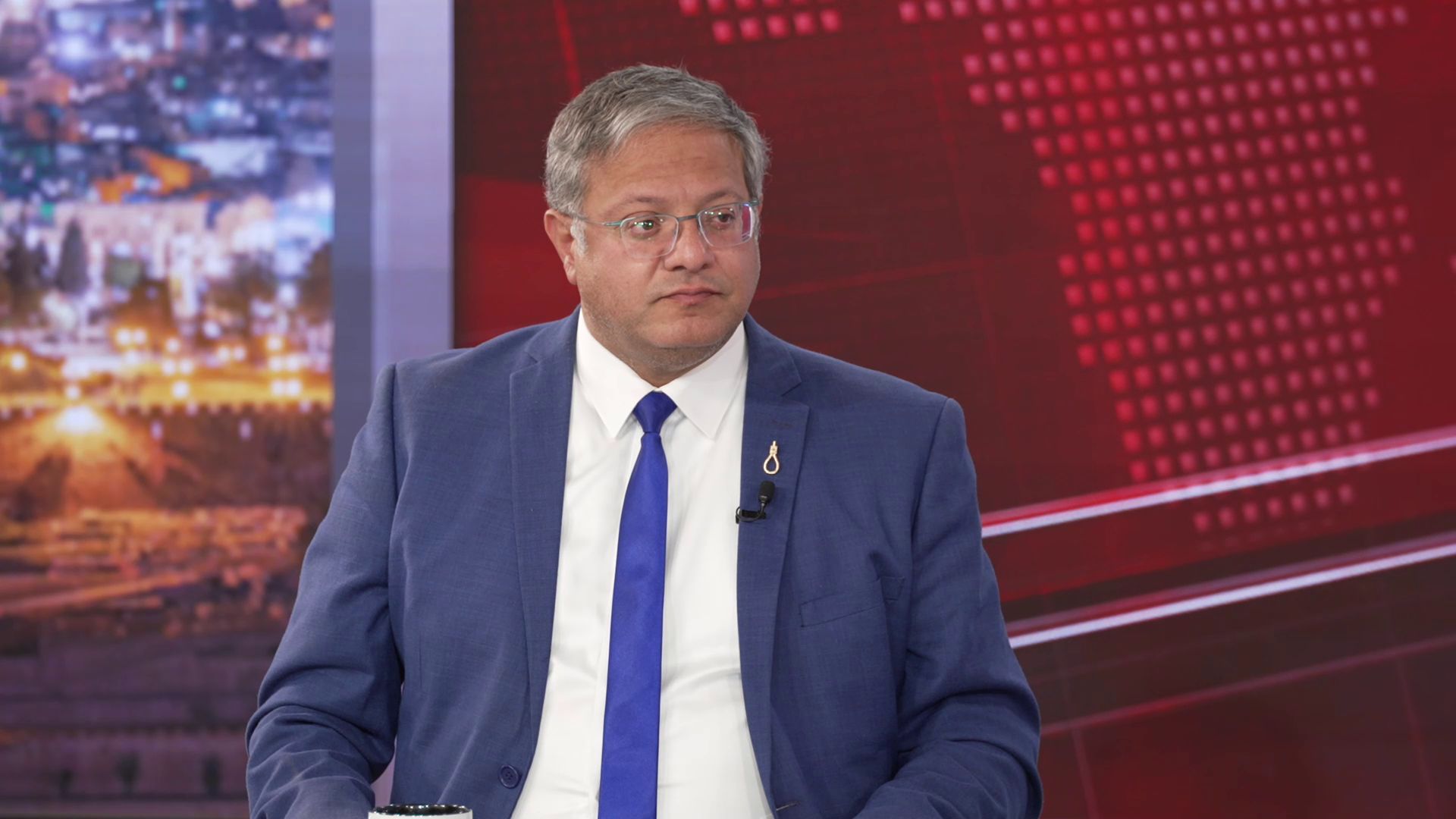

Ben Gvir is interviewed by Kikar HaShabbat

The exchange comes against the backdrop of a recent attack on Ben-Gvir by political commentator Amit Segal. In his weekly column in Israel Hayom last Friday, Segal argued that another government with Ben-Gvir in a senior role would be "a disaster for Israel." Despite four years of promises, Segal wrote, murder rates have spiked, protection services have become a permanent expense, and international travel warnings against Israel have been issued. Segal accused Ben-Gvir of short-term political provocations that caused strategic damage, claiming Netanyahu only brought him into government because of the "anyone but Bibi" bloc's boycott.

Ben-Gvir published a lengthy and personal response, acknowledging that Segal's words hit him "like a punch to the gut." The minister attacked what he characterized as arrogance within parts of the religious Zionist community who see themselves as an "elite" and look down on Mizrahi Jews (those of Middle Eastern and North African descent) and newly observant Jews. He said his pain stemmed not from factual omissions but from ongoing dismissal of his accomplishments, and expressed conviction that Segal's column was merely the opening shot in a campaign designed to legitimize a unity government with left-wing elements while excluding him from the next government.

Ben-Gvir also detailed what he described as a long list of revolutionary achievements during a single term: toughening conditions for terrorists in prison and ending what he called "summer camps," distributing some 300,000 weapons to civilians, establishing over 1,000 civil guard units, demolishing approximately 10,000 illegal structures in the Negev, and recruiting thousands of police officers including from the ultra-Orthodox community. He concluded his response with a call to the public to share his rebuttal and reject attempts to undermine the right-wing camp.

Ready for more?

Join our newsletter to receive updates on new articles and exclusive content.

We respect your privacy and will never share your information.

Enjoyed this article?

Yes (14)
No (1)
Follow Us:

Unmissable content


Loading comments...

Also of Interest