Get our mobile app
Download on the App StoreGet it on Google Play

Strategic realignment

Iran moves Iraqi militias to Yemen

Thousands of battle-hardened fighters from Iraq are being transferred to the Yemeni front as Houthis open official command centers in Baghdad • The structural shift in Tehran's axis of resistance

Militia fighters

Dramatic reports in Arab media outlets are revealing a deep structural shift underway in Iran's "axis of resistance" across the Middle East: an unprecedented operational coordination alongside a massive "flow of fighters" from Shia militias in Iraq directly to the Yemeni theater, joining the Houthi rebels.

In the past, Tehran managed its proxies in a decentralized model in which each organization had a defined sector. But the dramatic events of recent years, chief among them the fall of the Assad regime in Syria at the end of 2024 and the severe blow to Hezbollah's capabilities, have forced Iran to recalculate its course. Thousands of experienced fighters from groups such as Iraq's Harakat al-Nujaba and Kata'ib Hezbollah, who previously operated in Syria, have redirected their activities to new targets in the region.

Now, the Iraqi militias and the Houthis in Yemen have established a tight operational alliance. The Houthis have opened official command centers in Baghdad, and experts from both sides have begun exchanging advanced technological expertise in missiles and drones, and are even cooperating physically on the battlefield.

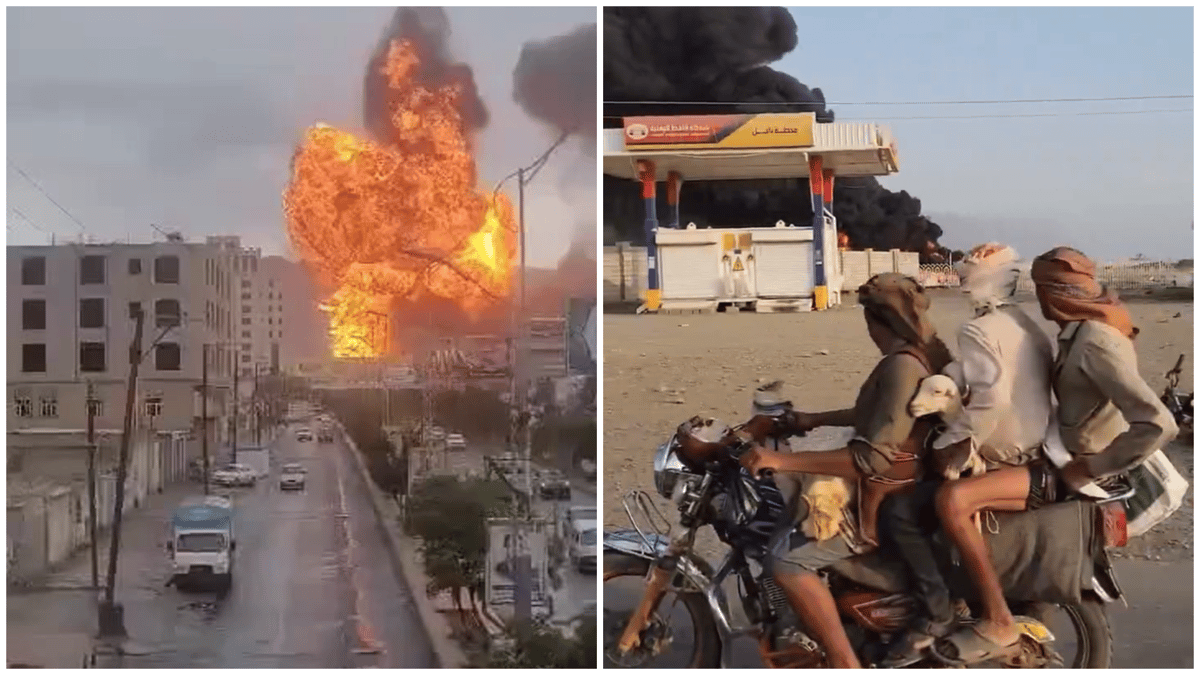
According to a Reuters report, the Houthis announced this week that they struck Riyadh airport and the pumping stations of the Saudi oil pipeline running from east to west. Saudi Arabia has not yet confirmed the reports of the attacks, but the rebels have already made airports and oil infrastructure regular targets.

While Saudi Arabia is dealing with severe attacks on its oil facilities, airports and transportation infrastructure, senior officials from three Muslim countries, Saudi Arabia, Turkey and Pakistan, traveled to Tehran to "discuss reducing tensions." The diplomatic move raises difficult questions: how can countries that are signatories to a mutual defense pact advance regional security when they are holding talks with the Iranian regime precisely at the moment when its allies continue to attack one of them?

Saudi Arabia, Turkey and Pakistan signed a joint defense agreement in August, designed to deal with threats to their sovereignty and territorial integrity. The agreement, which was supposed to resemble the NATO pact whereby an attack on one country is an attack on all three, failed before the ink was dry.

The geopolitical significance of the Iranian move is far-reaching. First, the Shia militias have become Tehran's regional mercenary army, with national borders completely blurred. Second, with Syria out of the equation, Iraq and Yemen have become Iran's two pillars, allowing it to encircle the Arabian Peninsula and Israeli territory from two directions.

The integration of the fighters is reigniting the Yemeni arena and poses a direct threat to Riyadh. In addition, it is a severe blow to the Iraqi government, proving that the militias operate entirely under Tehran's dictates and not under the authority of the state.

According to foreign reports published in October, following the completion of the withdrawal of United States Army forces from Iraq, Washington granted Israel increased freedom of action in the country's airspace. According to Western sources, the US removed operational restrictions that had been imposed on the Israeli Air Force. The move could pave the way for direct strikes against Iranian-backed militias operating on Iraqi soil.

The bottom line: the Iraqi militias are no longer just an internal problem, but a dynamic chess piece that Iran is moving across the entire Middle East, from Syria to Yemen. The structural change in the axis of resistance reflects Tehran's strategic flexibility, but also the weaknesses exposed in the wake of the severe blows it has suffered in recent years.


Ready for more?

Join our newsletter to receive updates on new articles and exclusive content.

We respect your privacy and will never share your information.

Enjoyed this article?

Yes
No
Follow Us:

Unmissable content


Loading comments...

Also of Interest