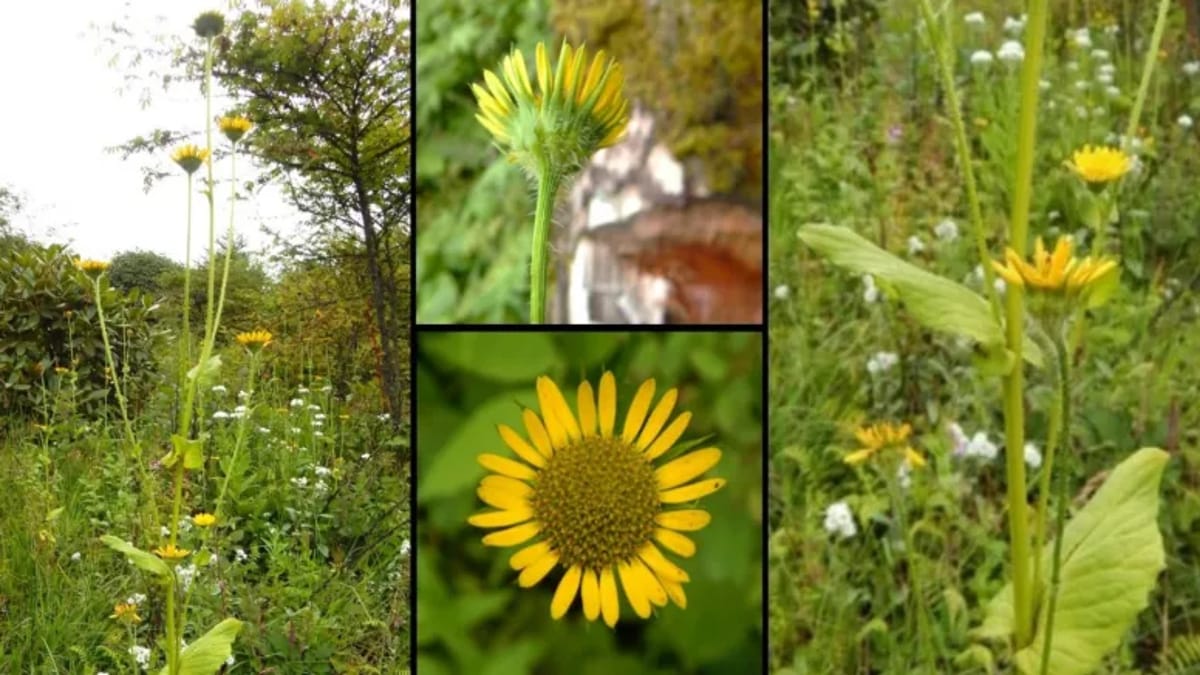
Researchers have identified a previously unknown plant species in the high-altitude slopes of the Himalayas in northeastern India. The newly discovered member of the daisy family features distinctive yellow blooms and heart-shaped leaves, and has been given the scientific designation Doronicum sanctum.
The discovery occurred in the Tawang district of Arunachal Pradesh state, at an elevation of approximately 13,400 feet above sea level. Scientists came across the plant growing on mountain slopes along the route to Damteng during a comprehensive botanical survey of the region, which is recognized as one of the Himalayan range's significant biodiversity hotspots.
According to researchers from the Indian Institute of Himalayan Resource Technology, the significance of this find extends beyond simply adding a new species to the botanical record. This marks the first documented occurrence in northeastern India of any plant belonging to the Doronicum genus, commonly known in English as Leopard's bane. Until now, Indian species from this genus had been recorded exclusively in the western Himalayan region.
Following field collection, scientists examined the plant's structure under microscopy and compared it against preserved specimens in herbaria and existing botanical literature. While the plant shares similarities with several species native to Tibet and China, researchers identified unique characteristics that distinguish it from its relatives.
Among the distinguishing features, scientists noted tiny, hairy ray florets at the flower head's margins and delicate bristles that shed easily. The plant also differs in the shape of the green bracts that encase the flower head and in the structure of the stems bearing the flowers. The scientific description was published in the journal Biologia by researchers Rahul Kumar and Vikas Kumar.
The species name sanctum, meaning "sacred" in Latin, was chosen because of the plant's location near the Chumi Gyatse waterfalls, considered a site of great spiritual importance to local residents.
However, alongside the excitement of discovery, researchers also point to cause for concern. Only 10 to 12 individual plants of the new species were found at the site, making it impossible at this stage to confidently determine its conservation status or the extent of its distribution. For now, it has been provisionally classified as "data deficient" pending additional surveys.